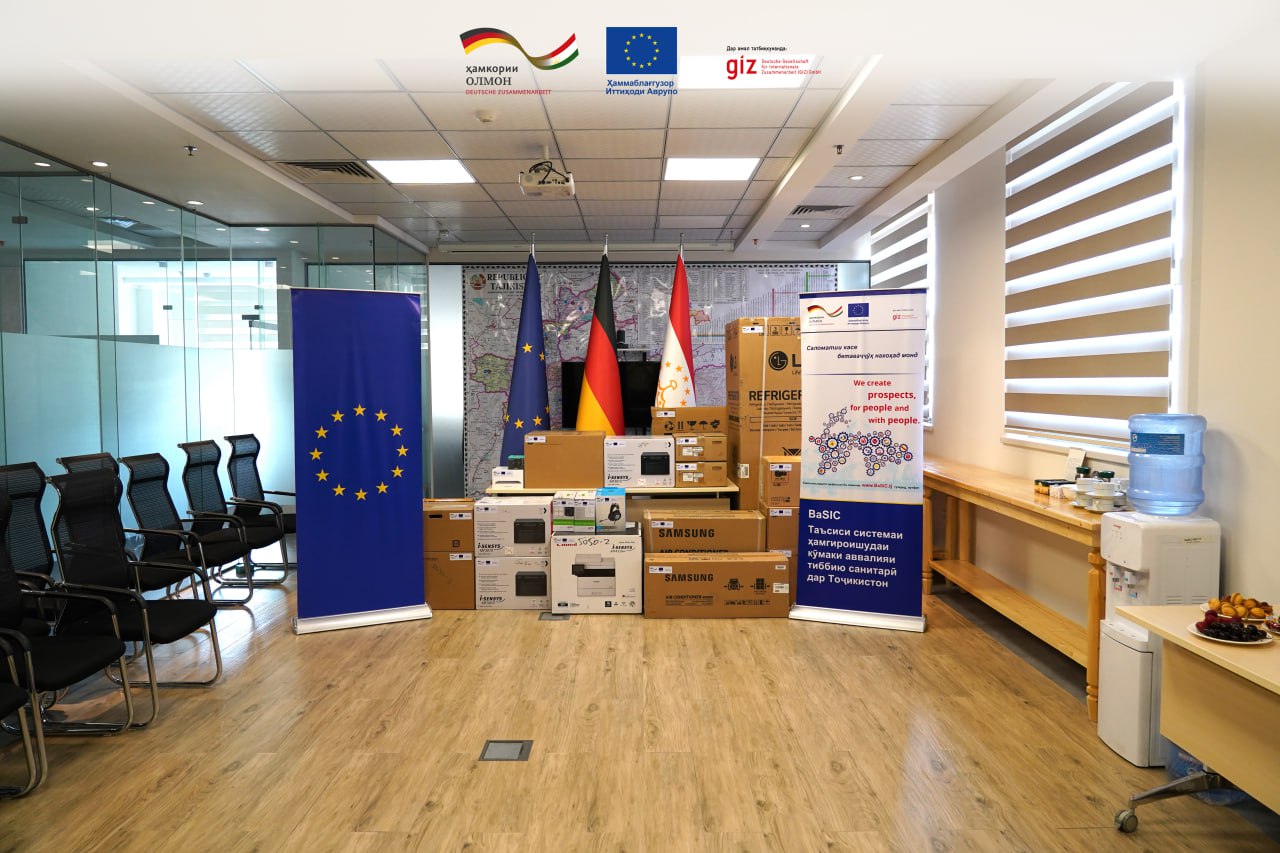
With the financial support from the European Union (EU) and the German Federal Ministry for Economic Cooperation and Development (BMZ), the Deutsche Gesellschaft für Internationale Zusammenarbeit (GIZ) and through the "Building a System on Integrated Primary Health Care in Tajikistan (BaSIC)" project, a wide range of training equipment has been donated to 19 training centers to support medical staff to improve their skills and capabilities. Medical staff working in remote areas will be able to update their skills and knowledge with the equipment provided by the BaSIC project, which will in addition give them access to information and communication technologies.
The activity is supported by the “Building a System on Integrated Primary Health Care in Tajikistan” (BaSIC) project, co- funded by the EU and BMZ and is being implemented by GIZ.
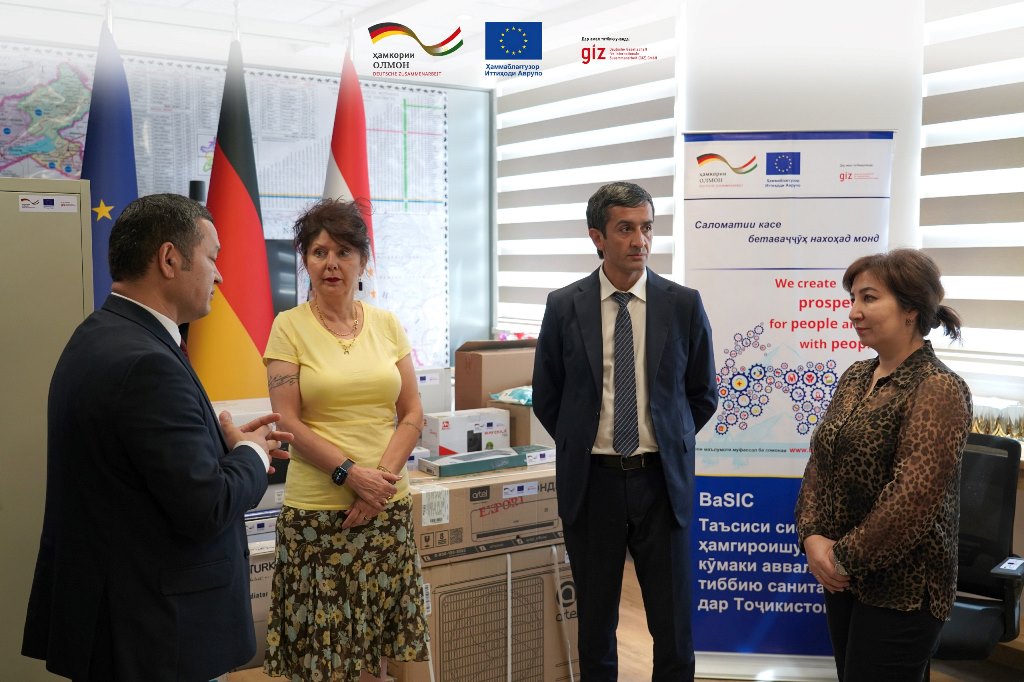
With high levels of poverty and two-thirds of the population living in rural areas, Tajikistan’s primary health care system and the quality of training for health care providers are critical to improving access to health care services for the population. Therefore, the “BaSIC” project actively promotes accessibility and quality of integrated primary health care services. “BaSIC” covers 28 districts and has four outputs. The project aims to strengthen the skills of family doctors, nurses, and midwives and the organizational capacity of PHC centers in order to assure the delivery of high-quality services in primary health care. This includes at the organizational level, the provision of basic medical and IT equipment to most PHC centers, as well as the development of skills and tools for proper maintenance. The core objective is to professionalize and standardize service delivery at the primary health care level, thereby improving the quality of services. As part of its support to beneficiaries in selected training centers at republican, regional, and district levels, the project has provided essential medical equipment to make sure quality standards are met and can be applied.
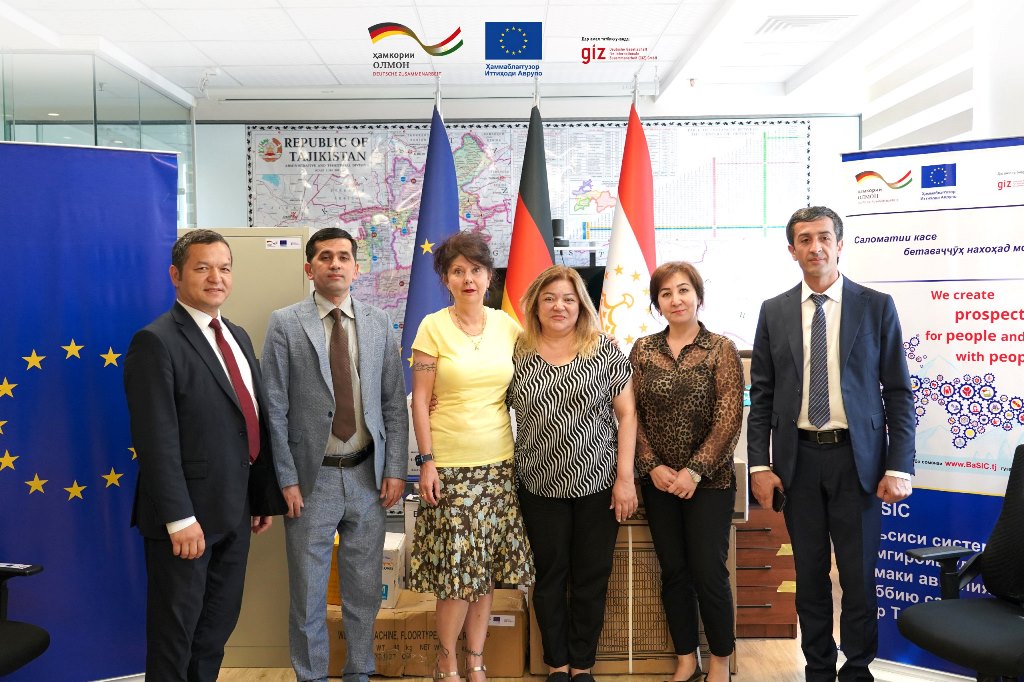
The BaSIC project is part of the Health Development Program of the European Union in the Republic of Tajikistan for the period 2021-2025.
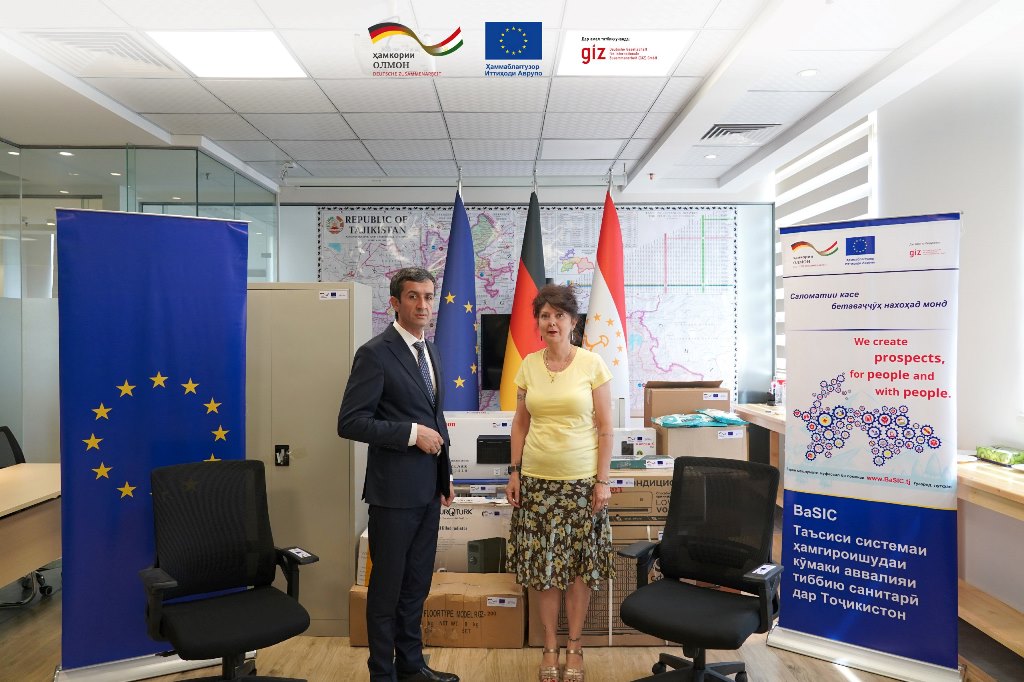
The handover ceremony was attended by the Programme Manager of the EU Delegation to Tajikistan – Denise Molica, the Director of the GIZ Health Programme in Tajikistan- Natascha Bohlmann, the Representatives of Medical Training institutions, and other officials.
The BaSIC project in Tajikistan aims to strengthen the knowledge and skills of family doctors, family nurses, and midwives through promoting continuous professional development and continuous medical education through a credit-based system; strengthening the mentoring system; and developing educational infrastructure for post-university specialty training.