The Committee for Architecture and Construction under the Government of Tajikistan (Committee) has endorsed an instruction providing for mandatory use of solar power for lighting buildings as well as during construction and reconstruction of buildings in the Tajik capital starting from April 1, 2024, says an order by the Committee head Nizom Mirzozoda posted on the Committee’s Facebook page.
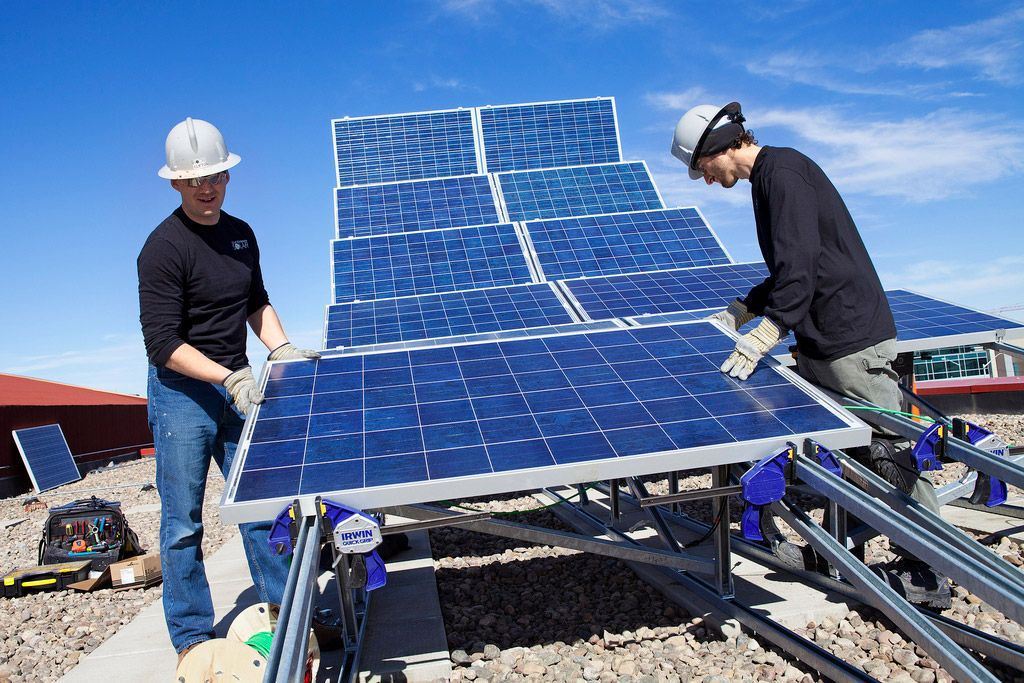
It means that in addition to the regular electrical network, the buildings will be equipped with solar panels with the ability to store electric power for the night.
Various types of buildings, including educational, medical, cultural, sports and catering facilities, malls as well as administrative and residential buildings and even entertainment parks and streets fall under this regulation.
Relevant government bodies will control the execution of this regulation when considering projects, as well as during the construction and acceptance of buildings.
The documents also provides for taking measures to regulate prices for materials and equipment for solar power systems.
Recall, Dushanbe Mayor Rustam Emomali instructed relevant agencies and officials last month to provide outdoor lighting of capital city-based schools, kindergartens, healthcare facilities as well as high-risу buildings and other enterprises and organizations with solar batteries.
The Dushanbe City Hall press center says the mayor announced this order at a regular sitting of the seventeenth session of the Dushanbe legislature of the sixth convocation on March 12. The mayor reportedly also instructed to provide large industrial enterprises under construction with autonomous boiler houses.
Besides, Rustam Emomali instructed relevant municipal agencies to take measures to strengthen the Smart City project and provide application of digital technologies in the system of lighting the city’s roads and pavements.
Meanwhile, the order posted on a Facebook Page of the for Architecture and Construction notes that projects for construction of new residential buildings should provide for solar lighting for at least one elevator and stair landings.
It is to be noted that estimated potential of solar energy in Tajikistan is about 25 billion kWh / year. This potential is not used, if not to take into account some of its use for water heating.
The potential of solar energy in Tajikistan is reportedly quite high. The country is located between 36°40′ and 41°05′ north latitude. Meteorologists call this zone a “golden belt” of sunshine.
According to the Agency of Hydrometeorology of Tajikistan (Hydromet), the duration of sunshine in the country is 2100-3166 hours per year, and the number of sunny days per year ranges from 260 to 300. This provides great opportunities for the use of solar power as an alternative.