The Agency for Statistics under the President of Tajikistan says that over the first three months of this year, gross agricultural product from all categories of farms has been little more than 3.530.9 billion somonis (in current prices), 6.7-percent increase compared to the same period last year, including crop growing products amounting to 112.4 million somonis, or 22.4 percent more, and animal husbandry – 3.418.5 billion somonis, or 6.3 percent more.
Over the reporting period, the share from dehqon (farmer-run) farms and farms belonging to the population in the overall gross agricultural product amounted to 74 percent
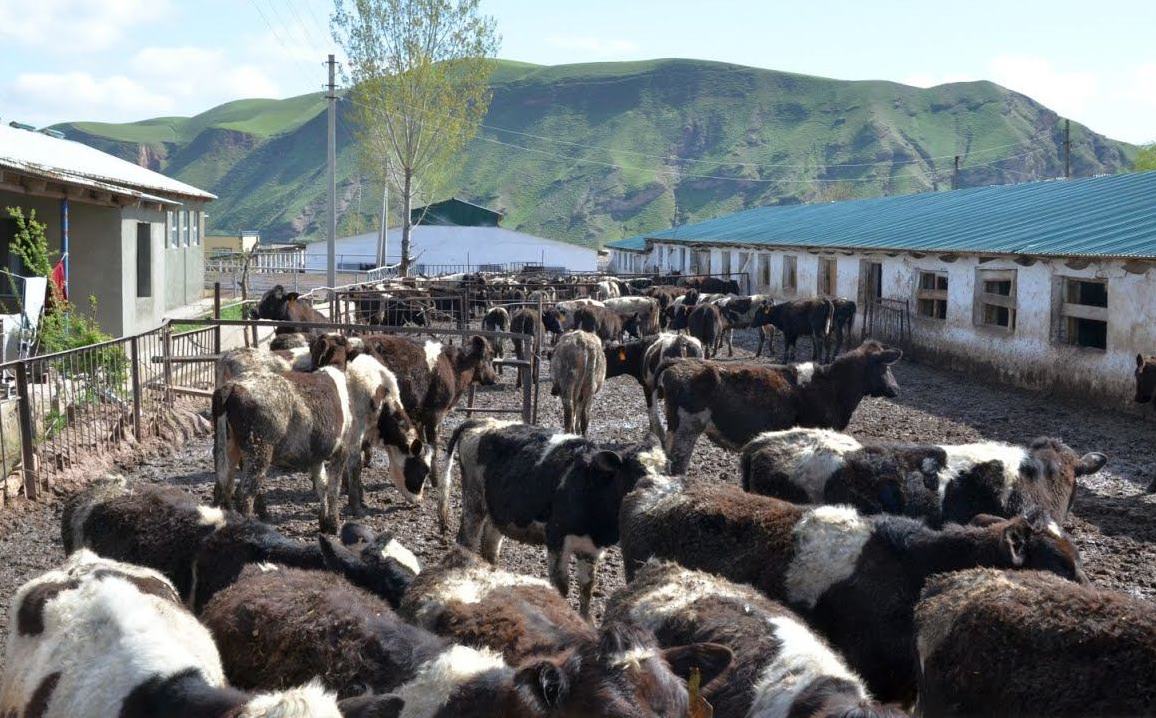
As of April 1, 2024, there were 2,697,400 head of cattle on all categories of farms, which is 119,200 head or 4.6 percent more than on that date of the preceding year.
The share from dehqon (farmer-run) farms and farms belonging to the population in the total cattle population amounted to 93.5 percent.
As of April 1, 2024, there were 7,044,600 head of sheep and goods in the country, which is 483,300 head or 7.4 percent more than on that date of last year.
The share from dehqon (farmer-run) farms and farms belonging to the population in the total population of sheep and goods reportedly amounted to 81.3 percent.
In January-March this year, all categories of farms produced cattle and sheep and goods (in live weight) – 44,176 tons, which is 14.6 percent more than in the same period last year.
Over the same three-month period, all categories of arms have reportedly produced 208,212 tons of milk, which is 6.3 percent more than in the same period last year.
To-date, Tajikistan has reportedly met the population's needs for meat within 60-70 percent and for milk – about 80 percent.
Currently a total area of pastures in Tajikistan is 2.7 million hectares, which is 76 percent of the country’s farmlands. Of the entire pasture area, only 284,853 hectares (7.5 percent) are the year-round pastures, while the rest of the area is used for seasonal grazing.
According to accepted standards, the required area of natural pastures without irrigation is 0.5-0.7 hectare for cattle, 0.25-0.3 hectare for horses and 0.0-0.08 hectare for sheep and goods.
Under current conditions, the productivity of grasses of spring, autumn and winter pastures is decreasing and is only 0.15-0.2 ton.
Due to the lack of pasture grasses in winter, sheep and goods lose from 10% to 25% of live weight. Experts believe that if the condition of pastures improves and their productivity increase 2 or 3 times.
In 2023, Tajikistan reportedly spent more than 40 million US dollars on the import of meat and dairy products.