Eurasianet reports that Kazakhstan is intensifying scrutiny of labor migrants from neighboring Central Asian nations, Tajiks in particular, in the aftermath of the late-March Krasnogorsk terrorist tragedy. Tajik guest workers are reportedly complaining that they are being subjected to mass detention and deportations.
The crackdown on Tajik labor migrants in Kazakhstan in some respects mimics the treatment that guest workers have experienced in Russia since Tajik nationals were implicated as the perpetrators of the Crocus City Hall attack, which left 144 people dead.
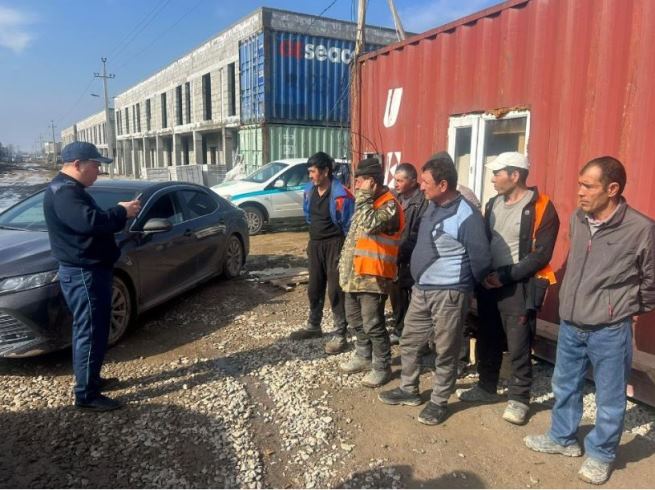
Radio Liberty’s Tajik Service, known locally as Radio Ozodi, reported on May 7 that Kazakh police were carrying out a security sweep across the country, featuring document checks designed to identify violators of Kazakhstan’s immigration regime.
“The situation for natives of Tajikistan has worsened. Raids are carried out and many are deported. There were cases when even those who had a temporary residence permit were detained and deported,” Radio Ozodi quoted a Tajik citizen who has been working in Kazakhstan for six years, speaking on condition of anonymity.
Kazakh police earlier in May reportedly released data from a security operation carried out in the central region of Ulytau, during which 16 Tajik and Uzbek nationals were taken into custody for not having required work authorization.
According to Eurasianet, law enforcement personnel have conducted security inspections in shopping malls, markets, educational institutions and other venues where large crowds congregate to ensure they have plans to contend with possible terror attacks. By the end of April, 1,800 establishments had been inspected for security procedures, resulting in 180 administrative cases filed for regulatory violations.
As Central Asia’s most prosperous country, Kazakhstan has traditionally attracted substantial numbers of guest workers from neighboring states, especially Uzbekistan. According to International Organization for Migration (IOM) statistics, almost 725,000 foreign nationals migrated to Kazakhstan between 2020-2023, mainly for work purposes, although some fled potential repression in Russia or evaded the military draft there. Uzbeks comprised the majority of migrants during the four-year period. Russians and Tajiks comprised the next two largest national groups of migrants.
Tajik official data indicates that in July 2022, more than 10,000 of Tajik citizens were working in Kazakhstan, although Tajik diaspora members contend that the figure undercounted the actual number of labor migrants in the country. Most are engaged in menial labor, such as construction. At that time, many Tajiks said they preferred working in Kazakhstan than in Russia because of a more welcoming atmosphere, but that may no longer be the case for many.
According to a 2023 academic study, titled Perspectives on Labor Migration: Insights from Kazakhstan, authorities have struggled to keep up regulatory pace with the influx of guest workers.
“Kazakhstan’s labor migration management is currently faced with pressing challenges,” the study asserts. “These include a disparity between attracting labor migrants and effectively regulating their flow, a lack of tools to assess regional demand for skilled foreign workers, and inadequate systems to monitor migrant movement and placement.”
A separate 2023 academic study, Labor Migration: A view from Kazakhstan, highlighted other gaps in the country’s labor migration framework, including “violations of labor laws by migrants and employers, including the employment or hiring of low-skilled foreign citizens without an employment contract.” The study also noted that some guest workers endured “restriction of personal freedom” and “wage discrimination.”
On May 7, the Ministry of Foreign Affairs of Tajikistan cautioned citizens going to Kazakhstan to be prepared for heightened security measures.