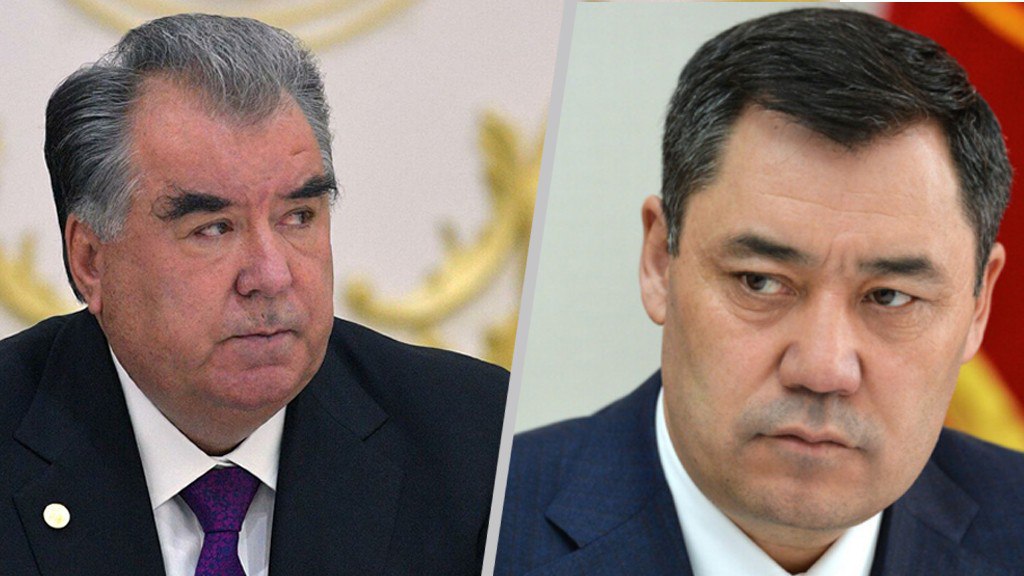
On Monday May 27, Tajik President Emomali Rahmon and his Kyrgyz counterpart Sadyr Japarov exchanged cables of congratulations on the occasion of the 20th anniversary of signing of the Agreement between Tajikistan and Kyrgyzstan on Good Neighborly and Partnership Relations, the Tajik president’s official website says.
Tajik leader, in particular, noted in his cable of congratulations that “this basic document, strengthening the legal foundation of relations between countries in the new conditions of statehood, has created favorable conditions for the expansion development of cooperation in all areas being of mutual interest.”
For his part, Kyrgyz leader noted in his cable of congratulations that “he is deeply convinced that strengthening good neighborly relations based on mutual respect, trust, harmony and equality is a necessary basis for the further expansion of bilateral multifaceted cooperation, which meets the interests of the peoples of the two countries.”
Signed in 2004, the Agreement between Tajikistan and Kyrgyzstan on Good Neighborly and Partnership Relations is one of the fundamental documents of bilateral cooperation between Tajikistan and Kyrgyzstan.
Diplomatic relations between the Republic of Tajikistan and the Kyrgyz Republic were established on January 14, 1993 by signing the Protocol.
The Embassy of Kyrgyzstan in Dushanbe has functioned since March 1997 and the Embassy of Tajikistan in Bishkek was opened in 2020.
The basic documents, which regulate the main directions and fundamental principles of the bilateral relations between Tajikistan and Kyrgyzstan are the Dushanbe Agreement on the Main Interstate Relations between Tajikistan Kyrgyzstan signed on July 12, 1996 and the Agreement between Tajikistan and Kyrgyzstan on Good Neighborly and Partnership Relations signed on May 26, 2004.
Tajikistan and Kyrgyzstan have not yet resolved the border delineation problem. Many border areas in Central Asia have been disputed since the collapse of the Soviet Union in 1991. The situation is particularly complicated near the numerous exclaves in the Ferghana Valley, where the borders of Tajikistan, Uzbekistan, and Kyrgyzstan meet.
The border of Kyrgyzstan and Tajikistan has been the scene of unrest repeatedly since the collapse of the former Soviet Union. Border talks between Tajikistan and Kyrgyzstan began in 2002. The countries share 972 kilometers of border and unresolved border issues have led to tensions for the past 30 years. To-date, the countries have reportedly agreed upon 90 percent of previously contested territory.