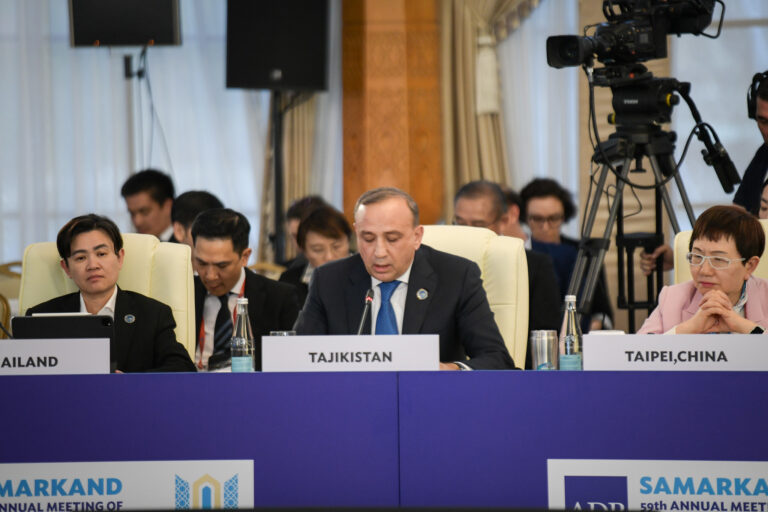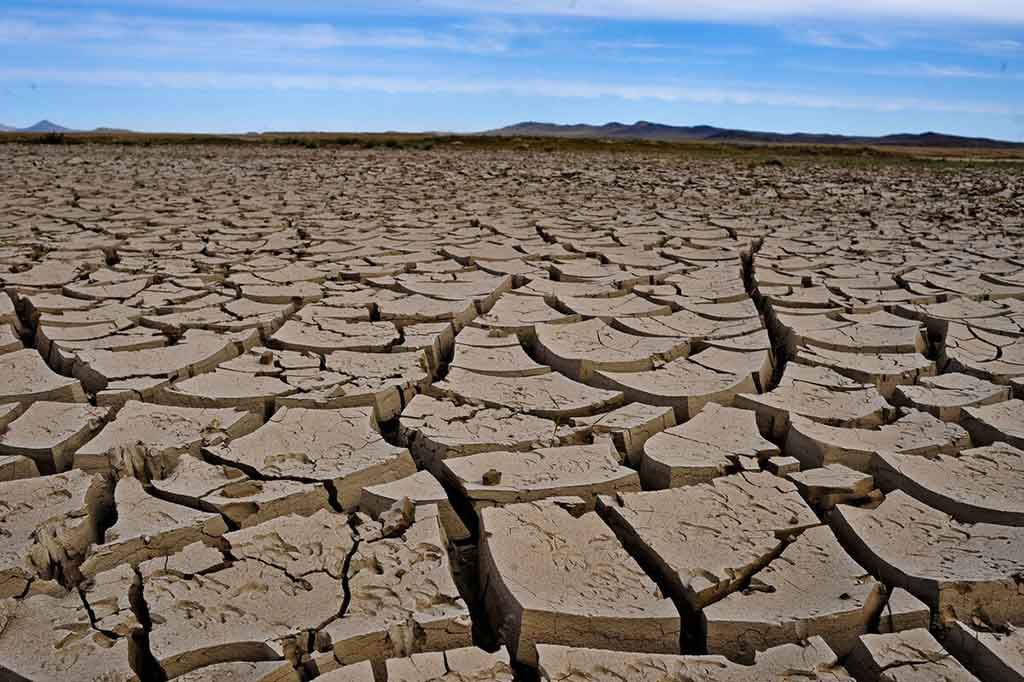
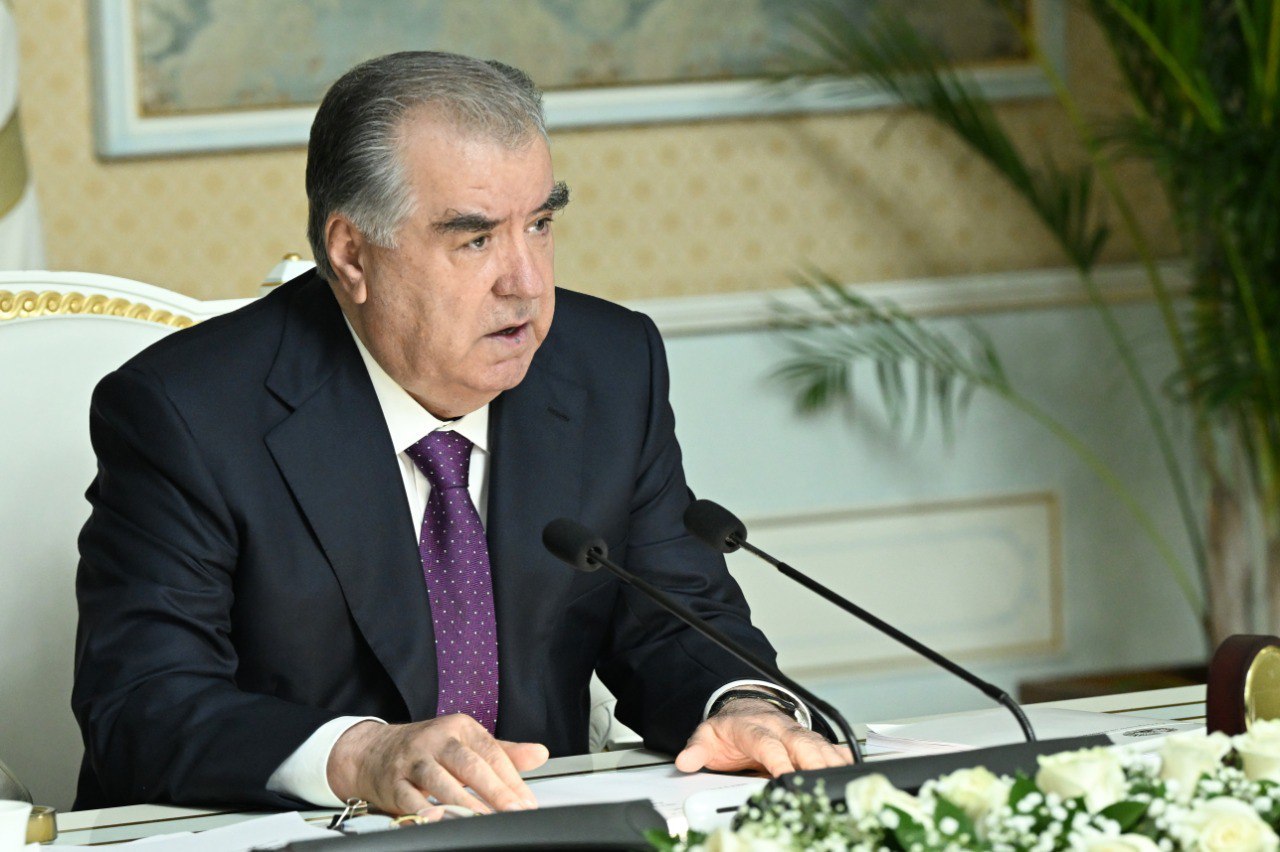
On Monday June 10, Tajik President Emomali Rahmon addressed the National Development Council in Dushanbe, warning farmers about the potential for drought, according to the Tajik president’s official website.
He reportedly highlighted that the continuous rains in the spring of 2024 caused significant damage to homes and agriculture.
“Last fall and winter, on the other hand, saw very little precipitation. This circumstance has led to a reduction in the sources of water resources in the region, more than 60 percent of which are located in Tajikistan,” said Emomali Rahmon. “In this regard, it is very likely that we will face another drought this year.”
Additionally, agricultural lands are annually going out of circulation due to environmental and economic factors. According to the head of state, more than 40,000 hectares of land are currently in poor reclamation condition.
“This situation creates additional pressure on the national budget. There are insufficient funds for implementing state investment projects in the areas of climate change adaptation, disaster prevention, bank protection works, land reclamation and irrigation, pasture restoration, and other areas,” he said.
In light of this, the President of Tajikistan deems it necessary to develop and implement new financing mechanisms to achieve sustainable results in preventing the negative consequences of natural disasters and reforming the land reclamation and irrigation sector.
To this end, the government has adopted the National Water Sector Reform Program designed for 2016-2025, and the Green Economy Development Strategy for 2023-2037, aimed at overcoming existing problems and achieving sustainable agricultural development.
As reported in a study by Chinese scientists published in the Nature Geoscience journal, the southern part of Central Asia, including Tajikistan, Turkmenistan, Uzbekistan, and Afghanistan, is expected to suffer the most in the near future.
The primary factor in this is the interdecadal Pacific oscillation. According to researchers, it will lead to a reduction in atmospheric precipitation in Central Asia.
The Interdecadal Pacific Oscillation, or IPO, is a large-scale, long period oscillation that influences climate variability over the Pacific Basin. The IPO operates at a multi-decadal scale, with phases lasting around 20 to 30 years.