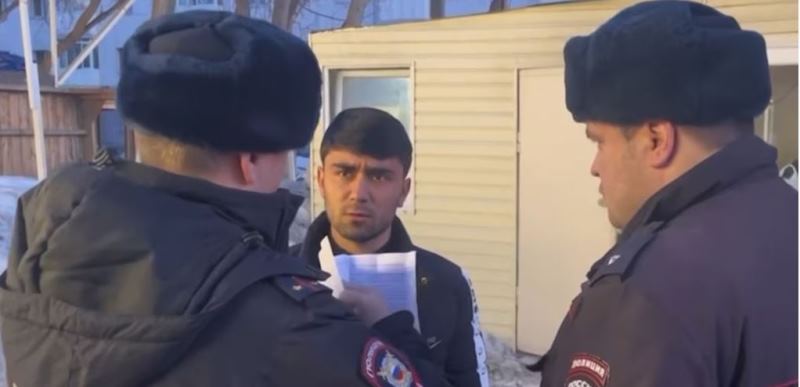
More than 30 Tajik nationals have been stranded at Moscow's Vnukovo airport since last week amid tightened passport controls almost three months after a deadly terror attack near Moscow, Radio Liberty’s Tajik Service, known locally as Radio Ozodi, reported on June 17.
Some of the stranded Tajiks told RFE/RL that Russian security officials did not allow them to enter the country, saying that "Tajiks cause problems in Russia."
In April, thousands of Tajiks were stranded in Moscow airports after they were barred from entering Russia amid anti-Tajik sentiments after 11 Tajik men were arrested for their alleged involvement in the attack on a concert hall in Krasnogorsk in March that left 144 people dead.
It is to be noted that lives of Tajik labor migrants in Russia have got harder with each passing year. Since January, the cost of a patent has increased sharply, by around 13-15 percent, depending on the region. In Moscow and the Moscow oblast, the fee for the document, which has to be renewed monthly, has gone up to 7,500 Russian rubles, up from around 6,600 Russian rubles.
In some regions, local authorities have introduced restrictions on where migrants can work. In the Kemerovo, Kurgan, Magadan, and Tula oblasts, expat laborers are prohibited from working in the production of baby food and dietary food products. Other off-limits areas are public transportation, the hotel industry, education and healthcare at all levels, and beauty and massage parlors.
Where they are able to work, labor migrant often run the risk of not getting paid.
Anti-Tajik sentiments have risen in the Russian Federation in the aftermath of the March 22 terrorist attack in Krasnogorsk.
Nearly all of the suspects in the deadly assault at the Crocus City Hall, including the four men accused of carrying out the assault, are Tajik citizens.
A backlash against Tajiks and other Central Asian migrants reportedly began almost immediately after Russian media reported that the terrorist attack was carried out by several men from Tajikistan.
Tajik nationals who were deported or denied entry to Russia described it as a financial blow to their families.
According to data of the Russian Interior Ministry, Russia is home to an estimated 1 million Tajik migrant workers and others who are dual citizens. Working in Russia provides a lifeline for them as there are not many jobs or other opportunities in Tajikistan.