Tajikistan is one of the most vulnerable to climate change countries. Rising temperatures led to glacial melting and changes in precipitation patterns. This is becoming an acute problem for the country’s hydropower system, which generates more than 95% of the country’s electric power. The experts believe the country has to use alternative methods of generating electric power more actively. The country’s significant renewable energy potential is underutilized due to multiple financial, technical and social barriers.
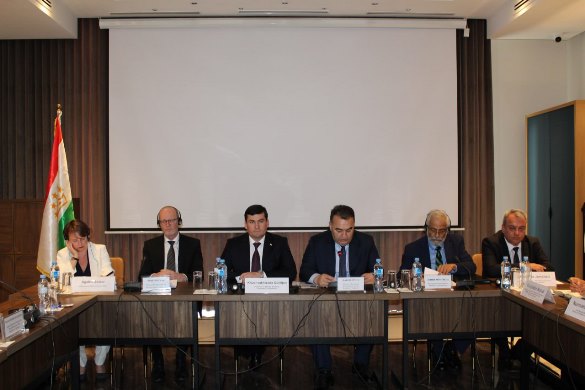
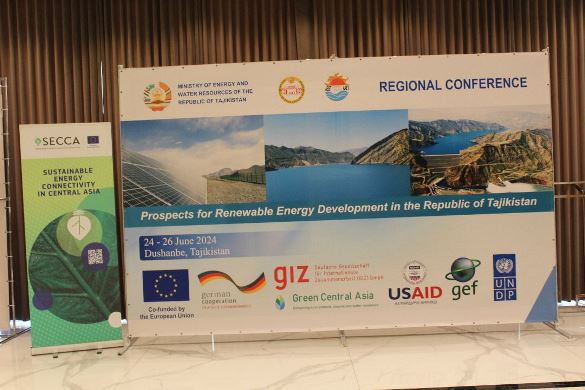
Organized by the Ministry of Energy and Water Resources of Tajikistan, the country’s National Academy of Sciences and the Association of Renewable Energy Sources of Tajikistan, a three-day regional conference entitled “Prospects for Renewable Energy Development in Tajikistan” kicked off in Dushanbe on June 23.
In a statement delivered at the conference, the Minister of Energy and Water Resources, Daler Juma, revealed yesterday that 36 investment projects (their total worth is estimated at 2.7 billion US dollars) have been implemented in Tajikistan since 2021.
Currently, 18 investment projects totaling 1.5 billion US dollars are reportedly being implemented in the country. They are aimed at constructing large hydropower plants and renewable power (solar and wind) plants.
The minister further noted that in accordance with the country's National Development Strategy for the period to 20230, the electricity generation capacity must be increased to 10 billion gigawatt (GW), the electricity exports must be increased to 10 billion kWh, and the electricity losses must be decreased to 10 percent and 10 percent of the country’s electricity must be generated by other sources (solar, wind and others).
Currently, about 98% of generated electric power in Tajikistan comes from hydropower plants. Along with the positive environmental and financial aspects of this indicator, it significantly increases the energy sector’s dependence on the volume of water flow in rivers and weather conditions in the face of climate change.
Tajikistan is continuing cooperation with partners for development on construction of solar power plants.
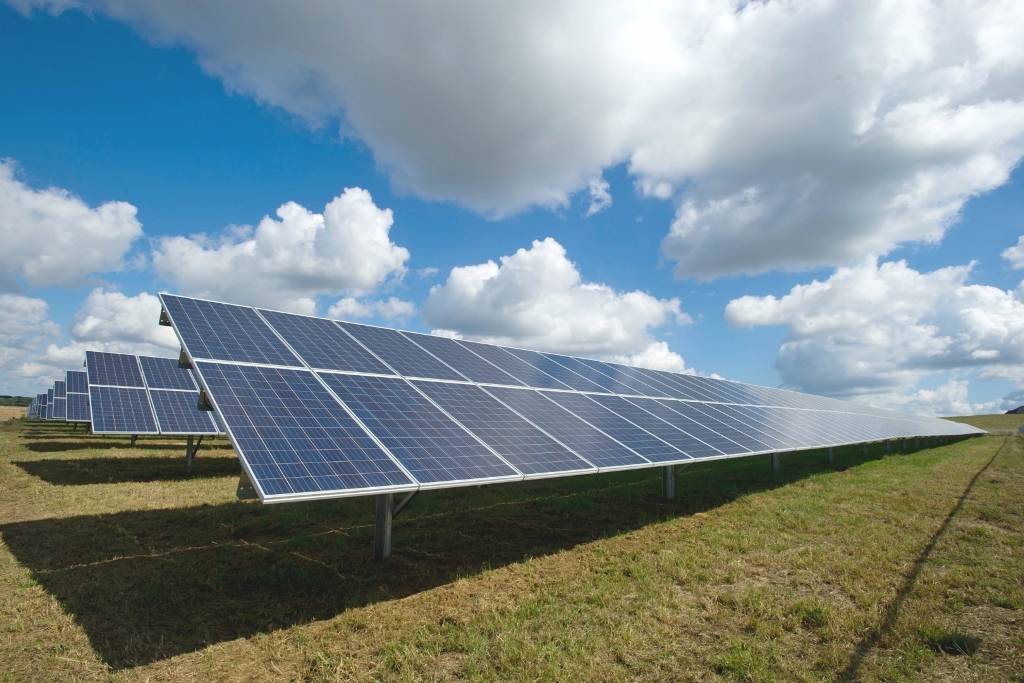
Estimated potential of solar energy in Tajikistan is about 25 billion kWh / year. This potential is not used, if not to take into account some of its use for water heating.
The potential of solar energy in Tajikistan is reportedly quite high. The country is located between 36°40′ and 41°05′ north latitude. Meteorologists call this zone a “golden belt” of sunshine.
According to the Agency of Hydrometeorology of Tajikistan (Hydromet), the duration of sunshine in the country is 2100-3166 hours per year, and the number of sunny days per year ranges from 260 to 300. This provides great opportunities for the use of solar energy as an alternative, especially in mountainous regions where there are no power lines.
The preliminary calculations of the Ministry of Energy of Water Resources of Tajikistan have reportedly shown that the potential for the use of solar energy is 3,103 billion kWh per year. This amount would be enough to cover the winter power shortage partially in Tajikistan in regions of the country where 70% of the population lives in rural areas.
The potential for wind is relatively unknown, but CABAR.asia estimates of its energy production are promising, with the forecasted figure standing at 30 billion-100 billion kWh per year, effectively rivaling the production of some hydropower plants.