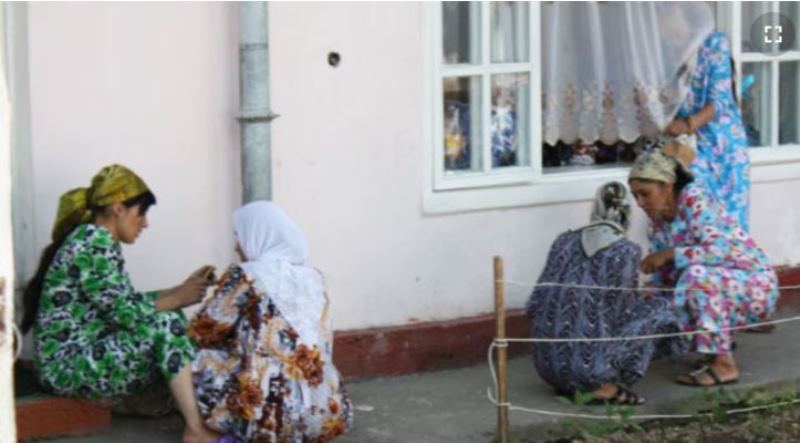
Tajikistan has toughened the punishments for soothsaying and performing "healing sessions" for sick and disabled people as part of an ongoing campaign against those involved in fortune-telling, sorcery, or witchcraft.
Radio Liberty’s Tajik Service reported yesterday that according to amendments introduced to Tajikistan’s Penal Code last week, sorcerers and fortune tellers will now face up to two years in prison or a hefty fine of up to 144,000 somonis (US$13,350) .
Previously, according to a 2008 law that outlaws soothsaying as a form of witchcraft, the punishment did not envision imprisonment, while the fine for performing fortune-telling was up to 3,000 somonis (US$280).
The campaign against witchcraft has been ratcheted up in recent weeks after multiple videos showing men and women “repenting” for performing soothsaying and “healing sessions” for disabled persons to earn money were aired on television.
RFE/RL notes that it is not clear where and in what conditions the videos were shot.
Relatives of some individuals shown in the videos “repenting” for their soothsaying activities told RFE/RL that not all those who were shown on television as magicians were engaged in fortune telling or healing activities.
Known Tajik lawyer Shokirjon Hakimov questioned the showing of “repenting” individuals on television before their trial.
Hakimov told RFE/RL that the authorities showed their “incompetence” in understanding the concept of presumption of innocence, adding that showing “repenting” people on television across the country was “an act of humiliation.”
An Interior Ministry official reportedly defended the practice, telling RFE/RL that it helped society tackle a “widespread and deep-rooted problem.”
Although 90 percent of the country’s population is Muslim – Islam considers soothsaying to be a sin — many Tajiks hold superstitious beliefs in magic, fortune tellers, and paranormal powers.
In 2012, in an apparent effort to eradicate widespread soothsaying practices, Tajik authorities even introduced higher taxes for soothsayers, as if the profession was legal.