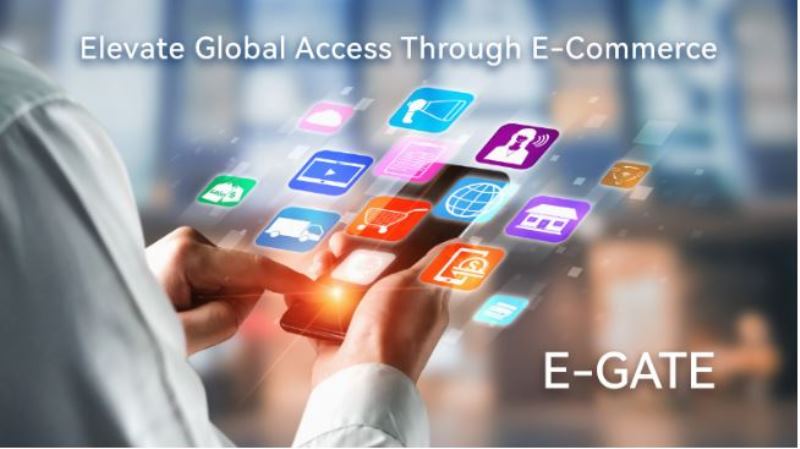
Elevate Global Access Through E-Commerce (E-GATE) seeks to alleviate poverty by opening new opportunities and broadening market access for Central Asian producers and smaller business entities (SBEs), says press release issued by the World Bank.
Launched in 2023, E-GATE in Central Asia is a World Bank program, funded by the UK Foreign, Commonwealth & Development Office (UK FCDO) under the Effective Governance for Economic Development (EGED) program.
E-commerce is a driver of economic development in a globalized world, bringing traditional commerce online and simplifying trade. In 2024, global B2C e-commerce sales hit $6 trillion, surpassing the GDPs of Germany and Japan, while B2B sales reached $20 trillion, roughly equal to the GDPs of the USA or China.
E-GATE will champion and grow e-commerce in Kyrgyzstan, Tajikistan, and Uzbekistan, working with governments, business associations, and the private sector by:
- Developing an e-commerce readiness index for Central Asia;
- Providing capacity-building on business intelligence, e-commerce intelligence (including livestream e-commerce), and onboarding local MSMEs to international e-commerce marketplaces;
- Conducting awareness-raising events to promote local producers worldwide and attract global e-commerce players and potential investors to the region;
- Measuring e-commerce volume through the World Bank “Listening 2” surveys;
- Providing analytical help in updating legal documents related to the regulation of e-commerce in the countries of Central Asia.
Using the “Listening 2” (L2) tool, E-GATE reportedly surveyed over 1,500 households in the Kyrgyz Republic and Tajikistan in 2023-2024, showing that the vast majority of households shop online by placing orders through social media or messenger apps rather than through marketplaces.
In 2024, the E-GATE team is implementing an E-GATE component focused on onboarding selected producers (up to 100 firms) from Kyrgyzstan, Tajikistan, and Uzbekistan and providing financial and non-financial support for their membership on the Alibaba B2B marketplace. Non-financial support includes conducting thematic workshops and webinars, providing individual hands-on support for selected producers, and more. The goal of the component is to help local producers increase their income by selling on cross-border e-commerce marketplaces.