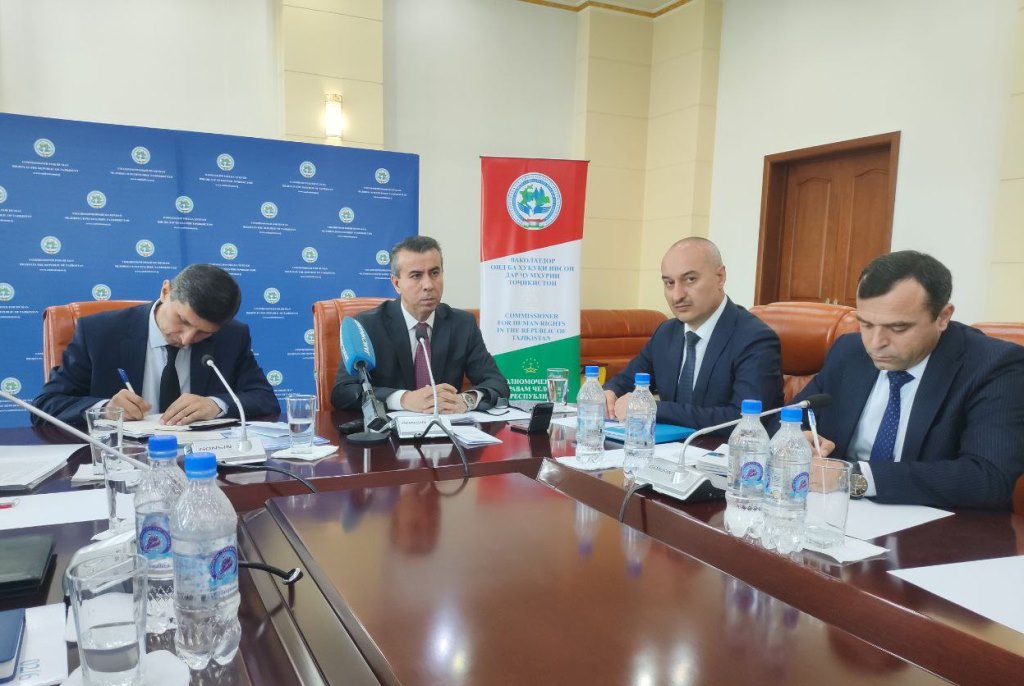
Tajik Ombudsman Umed Bobozoda has linked the mass deportation of Tajik migrants from Russia to the involvement of Tajik citizens in the Crocus City Hall terrorist attack.
During his meeting with reporters in Dushanbe, Mr. Bobozoda yesterday also cited new Russian legal requirements affecting migrants from Central Asia.
“While there were no reported cases of torture against Tajik migrants over the first six months of this year, four or five such cases were registered over the same period last year,” the ombudsman noted.
Bobozoda further emphasized ongoing efforts to protect migrant rights and dialogue with Russian authorities. “We have talked with migrants about deportation issues and other problems facing them as well as discussed these issues at various events taking place in Tajikistan and Russia,” he said.
Meanwhile, asked how many times he contacted Russian authorities regarding ill-treatment of Moscow terrorist attack suspects, Mr. Bobozoda said, “There was no written request on this subject.”
“After news of torture appeared, I got in touch with Russian ombudsman on this issue [by phone], after which he stated in the media that suspects should not be tortured,” Bobozoda said.
At the same time he said that there were also no official complaints about torture and ill-treatment of the four main Crocus City Hall terrorist attack suspects from the suspects themselves or their relatives.
It is to be noted that the life of Tajik migrant workers in Russia has consistently deteriorated in recent years, especially after the launch by Russia of the so-called “special military operation” in Ukraine in February 2022. However, after the Crocus City Hall terrorist attack, the pressure on labor migrants from Tajikistan has increased even more.
In late March, Russian police officers have conducted mass raids in a number of Russian cities on places where migrants stay. In St. Petersburg alone, the courts ordered the deportation of more than 400 migrants.
An official source within the Tajik Foreign Ministry told Asia-Plus on May 1 that during the period from April 26 to April 30, out of 3101 Tajik nationals arriving at Moscow's Vnukovo Airport, 643 were deported after having been left stranded without appropriate conditions.
More than 30 Tajik nationals were stranded at Moscow's Vnukovo airport in early June amid tightened passport controls almost three months after a deadly Crocus City Hall terrorist attack. Some of the stranded Tajiks told Radio Liberty that Russian security officials did not allow them to enter the country, saying that “Tajiks cause problems in Russia.”
Besides, dozens of Tajik migrant workers returned to Tajikistan on July 8 after Russian authorities refused them entry to the country five days earlier amid a wave of anti-Tajik sentiment. The labor migrants had reportedly been stranded in Moscow since July 3, while Russian authorities did not explain the reason for the ban. They arrived in Moscow on a flight from Bokhtar, the capital of Khatlon province, and spent five days at Sheremetyevo Airport without receiving permission to enter Russia.