Salaries Increased: Statistics Agency director explains rise in meat prices

The Director of the Agency for Statistics under the President of Tajikistan Statistics Agency, Jamshed Nurmahmadzoda, links the increase in meat prices at the country's bazaars to rising wages and increased consumer demand for meat.  He made this statement at a news conference in Dushanbe on August 7. According to Nurmahmadzoda, the production of beef […]

Asia-Plus

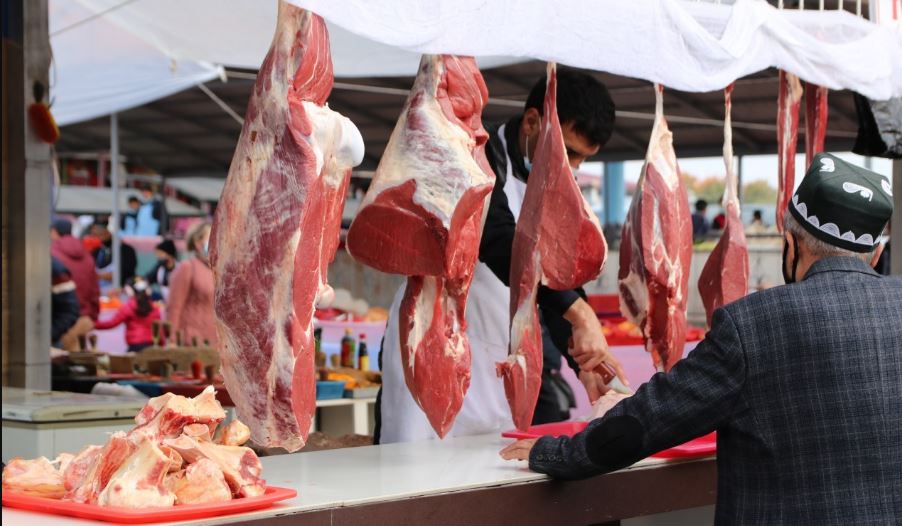
The Director of the Agency for Statistics under the President of Tajikistan Statistics Agency, Jamshed Nurmahmadzoda, links the increase in meat prices at the country's bazaars to rising wages and increased consumer demand for meat.  He made this statement at a news conference in Dushanbe on August 7.

According to Nurmahmadzoda, the production of beef and mutton (live weight) has increased by 14% over the six months of 2024 compared to the same period last year, totaling more than 88,000 tons.

“There is no meat shortage in the country; it is plentiful at all bazaars.  Wages have increased by 40%, the average salary has risen by 13%, and this rise in wages impacts meat prices because people's incomes have increased, thereby increasing their purchasing power,” Nurmahmadzoda explained.

He emphasized that their studies show there is plenty of livestock in the country.  "Households typically have up to 10 heads of large and small livestock," he added.

Nurmahmadzoda noted that to meet the population's demand for meat, it is necessary to increase the number of livestock farms and import high-quality breeds from Belarus, Russia, and Kazakhstan.  He mentioned that there are currently 100 farms in the country.

Deputy Minister of Agriculture, Ms. Nigina Anvari, stated at a news conference in Dushanbe on July 25 that currently, Tajikistan neither exports meat abroad nor imports it into the country.  “We provide 99.9% of the population with meat, but the ongoing price increase is due to increased consumer demand and the import of livestock feed from abroad,” Anvari said.

As of now, the price for a kilogram of beef and mutton at Dushanbe’s bazaars is 87 and 90 somonis, respectively.  Previously, beef was priced at 76-78 somonis, and mutton was around 80 somonis.
Join us on social media!

Article translations:

Related Article

Оби зулол
Оби зулол
Tenisi

Most Read

Коммерсбонк Точикистон

Recent Articles

Ensuring Safe and Clean Air: A Global Priority

In recent years, the importance of safe and clean air has become a focal point for governments, environmental agencies, and health organizations worldwide. With...

“Hit with fists on the lower back and abdomen.” A teacher from Nurobod, claiming he was beaten by a student’s brother, details the attack

According to him, he is being threatened with murder, and law enforcement agencies have not yet detained the attacker.

International internet starts coming back in Iran after long shutdown 

Western media reports says Iranians ​isolated by a long...

Tajikistan listed among countries with low generative AI usage

Among the Central Asian countries, Kazakhstan has the highest rate.

Prices in Tajikistan rise almost 2% in January-April: apples, fuel, and utilities become particularly more expensive

In April, inflation was 0.6%: food products became more expensive, non-food products increased in price comparatively less, and tariffs for paid services remained unchanged.

Drought in Central Asia becoming a chronic threat, IWMI expert warns

The temperature in the region is rising faster than the global average.

Emomali Rahmon congratulates Tajikistanis on Eid al-Adha and calls for thrift

The President reminded that Idi Qurbon is not a wedding but a religious ceremony that should take place without ostentatious luxury.

Gazpromneft – Tajikistan launches the “Welcome Skidka” program for corporate customers

New clients - legal entities and individual entrepreneurs - can take advantage of special conditions until the end of the current year.

In Dushanbe, 28 sellers fined for unjustified price increases

On the eve of Idi Qurbon, inspections are being conducted at the capital's retail outlets.