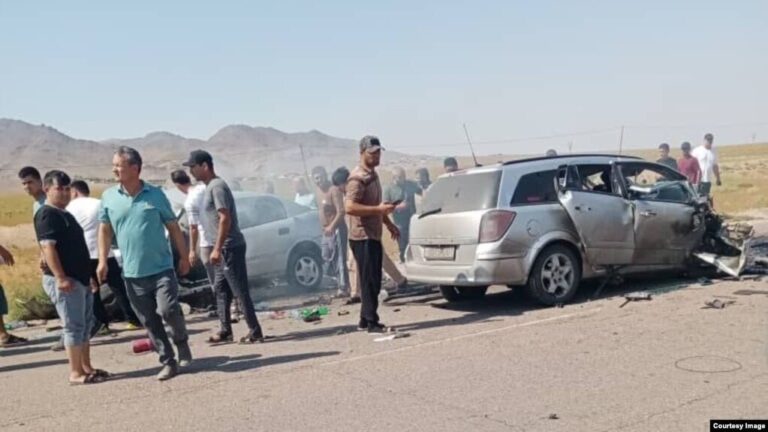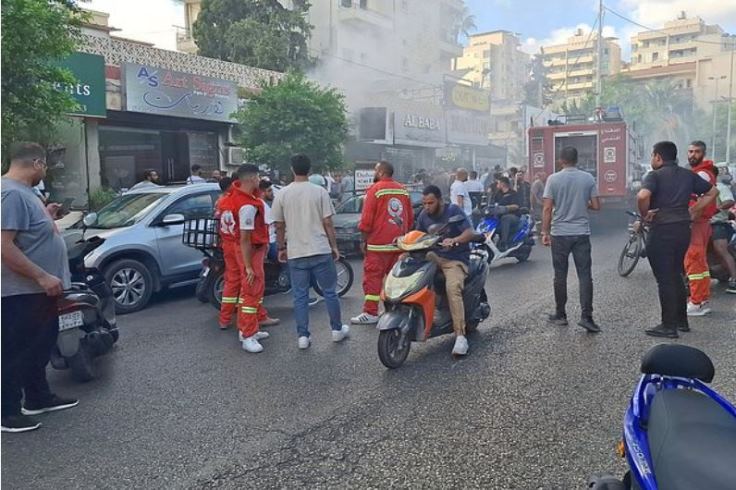
Reuters reports that hand-held radios used by armed group Hezbollah detonated yesterday across Lebanon's south in the country's deadliest day since cross-border fighting erupted between the militants and Israel nearly a year ago, stoking tensions after similar explosions of the group's pagers the day before.
Lebanon's health ministry reportedly said 20 people were killed and more than 450 injured on Wednesday in Beirut's suburbs and the Bekaa Valley, while the death toll from Tuesday's explosions rose to 12, including two children, with nearly 3,000 injured.
According to Reuters, Israeli officials have not commented on the blasts, but security sources said Israel's spy agency Mossad was responsible. One Hezbollah official said the episode was the biggest security breach in the group's history.
The United States, which denied any involvement in the blasts, reportedly said it was pursuing intensive diplomacy to avert an escalation of the conflict.
Al Jazeera reports that there are reports of several different devices blowing up. Among them are walkie-talkie radios, mobile phones, laptops and even some solar energy systems.
A regular walkie-talkie is a handheld, two-way radio device that allows people to exchange messages with the walkie-talkie base or others holding mobile receivers. They are short-range devices and need to stay close to their base to transmit.
The devices being called walkie-talkie radios are apparently IC-V82s, manufactured by the Japanese company ICOM.
Radios have a much bigger range than regular walkie-talkies, and the IC-V82s, according to The Jerusalem Post, are typically used by amateurs for personal use rather than for commercial or emergency broadcasting.
Meanwhile IRNA reports that Iran’s second mobile operator Irancell has denied it has had any role in the supply of pager devices to the Hezbollah movement after the pagers were targeted in a major sabotage operation by the Israeli regime.
According to IRNA, Irancell issued a short statement on Wednesday to deny reports suggesting that it had provided advice to Hezbollah before the group purchased the pagers several months ago for the purpose of establishing safe communication between its members.