The primary reason for the increased seismic activity in recent days in Khorog, the capital of the Gorno-Badakhshan Autonomous Region (GBAO), is aftershocks that followed the earthquake on August 27 of this year, an official source within the Emergency Committee under the Government of Tajikistan told Asia-Plus in an interview today morning.
"Several tremors were recorded in the Gorno-Badakhshan Autonomous Region over the past 24 hours, raising many concerns among the population. To prevent panic and misunderstanding, the Emergencies Committee sought clarification from the Geophysical Service of the National Academy of Sciences," the sources noted.
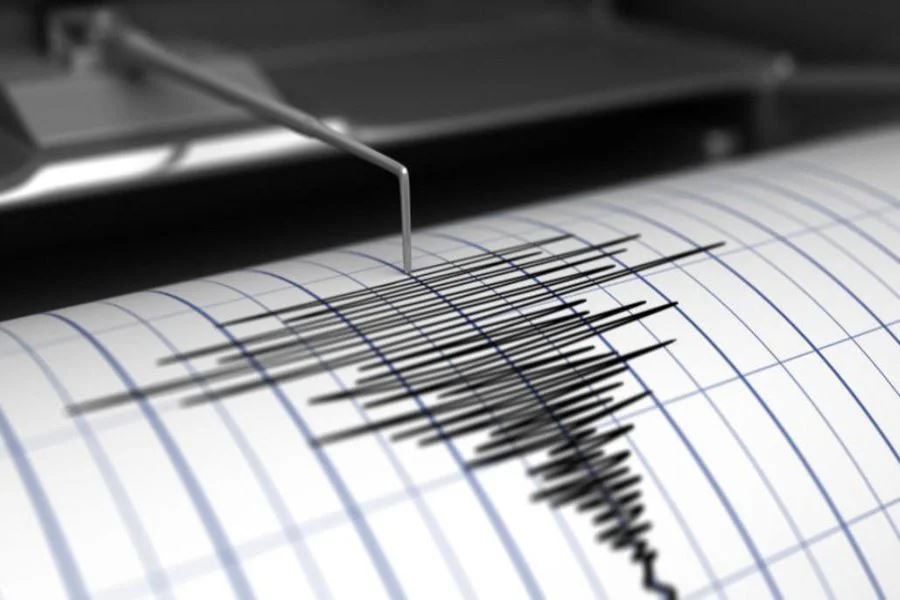
In seismology, an aftershock is a smaller earthquake that follows a larger earthquake, in the same area of the main shock, caused as the displaced crust adjusts to the effects of the main shock. Large earthquakes can have hundreds to thousands of instrumentally detectable aftershocks, which steadily decrease in magnitude and frequency according to a consistent pattern. In some earthquakes the main rupture happens in two or more steps, resulting in multiple main shocks. These are known as doublet earthquakes, and in general can be distinguished from aftershocks in having similar magnitudes and nearly identical seismic waveforms.
According to a statement released by the Emergencies Committee today, the epicenter of the August 27 earthquake, with a magnitude of 4.9, was located 25 km northeast of Khorog, near the Bartang-Pshart fault. In Khorog, the tremors were felt at a strength of 4.0 to 4.5 on the Richter scale.
After this earthquake, three more tremors reportedly occurred during the night of September 18, with magnitudes of 4.3, 4.2, and 4.1, which are also linked to the same fault and are considered aftershocks.
"These tremors may continue for several weeks to months after the main earthquake, which is a common phenomenon," says the statement. CES reminded.
The Emergencies Committee urges the local population not to worry, as the GBAO is known for its high seismic activity, and earthquakes are regularly recorded there.
"The buildings in Khorog are capable of withstanding tremors with magnitudes of 8-9, providing additional safety," the Emergencies Committee emphasizes.
The Committee also stresses the importance of residents in seismic zones being aware of earthquake safety precautions and remaining calm. Proper actions during such events can significantly increase the chances of staying safe.