On Wednesday October 23, the Asian Development Bank (ADB) approved a US$86.67 million grant to help Tajikistan further improve national road connectivity by developing a demonstration green corridor in the country.
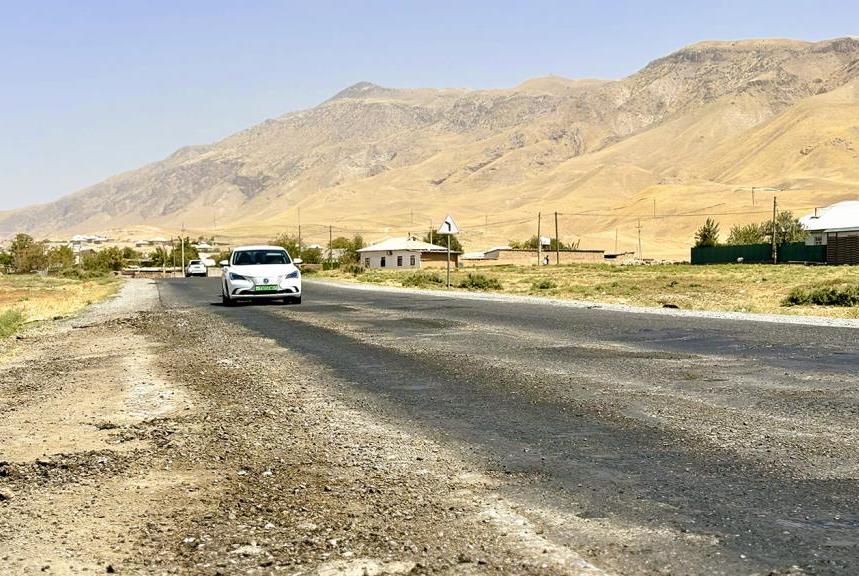
Press release issued by the ADD Tajikistan Resident Mission (TJRM) says the project will upgrade the existing degraded two lane 49-kilometer Danghara–Guliston road, widening this to four lanes. The project is the first to pilot the innovative methods promoted in the ADB green roads toolkit.
ADB Director General for Central and West Asia Yevgeniy Zhukov notes that ADB, in partnership with other organizations, promotes safe, accessible, and green transport infrastructure and services in its developing member countries.
According to him, the Danghara–Guliston road, which was constructed in the 1930s and reconstructed in the 1970s, will become the first road in Tajikistan to incorporate climate adaptation and specific design elements that account for women and girls.”
Applying the green roads toolkit to the road design reportedly improves the quality of life for those living in the vicinity of the road; strengthens road network climate resilience and disaster preparedness; reduces pollution; and conserves biodiversity. While a lack of electric vehicle chargers in rural areas limits the potential growth of this market in Tajikistan, the project will fund two pilot charging stations and develop investment frameworks to catalyze private sector investment in a national charging infrastructure rollout.
To enhance safety, the newly reconstructed road will include dedicated cycleways and sidewalks for women with children and people with disabilities. It will also have improved lighting, as well as safe and well-marked crossings—with the design and location of safety features determined through a community co-design process. Special toilets and changing facilities will be provided for travelling mothers and babies, while public transport facilities will include preferential seating for people with disabilities.
To improve livelihood and employment opportunities for local villagers, the project will arrange training for women living in and around the project area on how to open and run small businesses. ADB’s project will also award entrepreneurship grants to selected participants.
The Government of Tajikistan will provide counterpart funding of US$23 million, while the European Bank for Reconstruction and Development (EBRD) will provide a US$40 million cofinancing loan subject to the EBRD Board approval in early 2025. The Ministry of Transport will be the executing agency for the project, which is due to be completed in 2030.
Developed in collaboration with the International Road Federation and MetaMeta Research, ADB’s green roads toolkit guides the planning, design, construction, and maintenance of roads while ensuring environmentally sustainable practices. The toolkit helps engineers, planners, decision makers, and practitioners balance economic, social, and environmental objectives to make roads in Asia and the Pacific greener.
Tajikistan joined ADB in 1998. For 26 years, ADB has supported a wide range of sectors from strategic road and energy infrastructure to health, education, agriculture, urban development, public sector management, and finance for a total of over US$2.7 billion in assistance—including over US$2.2 billion in grants.