The baseless initiation of criminal cases over Internet ‘likes’ and the recognition of "materials and videos shared on social networks as evidence" were among the issues raised by Tajik President Emomali Rahmon on October 29 during the opening ceremony of the State Institution for Training Highly Qualified Military Personnel in Dushanbe.
Speaking at the ceremony, the head of state said that alongside the significant successes achieved by law enforcement agencies, numerous shortcomings also persist.
“For example, recently, authorities have considered it evidence that some citizens merely like certain materials and videos on social networks, which has led to considerable challenges. In other words, certain agencies are unjustifiably initiating criminal cases against these individuals, and such actions must be stopped,” Rahmon said.
According to him, the weak performance of Tajikistan's representatives in the Russian Federation is another serious deficiency, “where a working group has been dispatched to carry out their duties.”
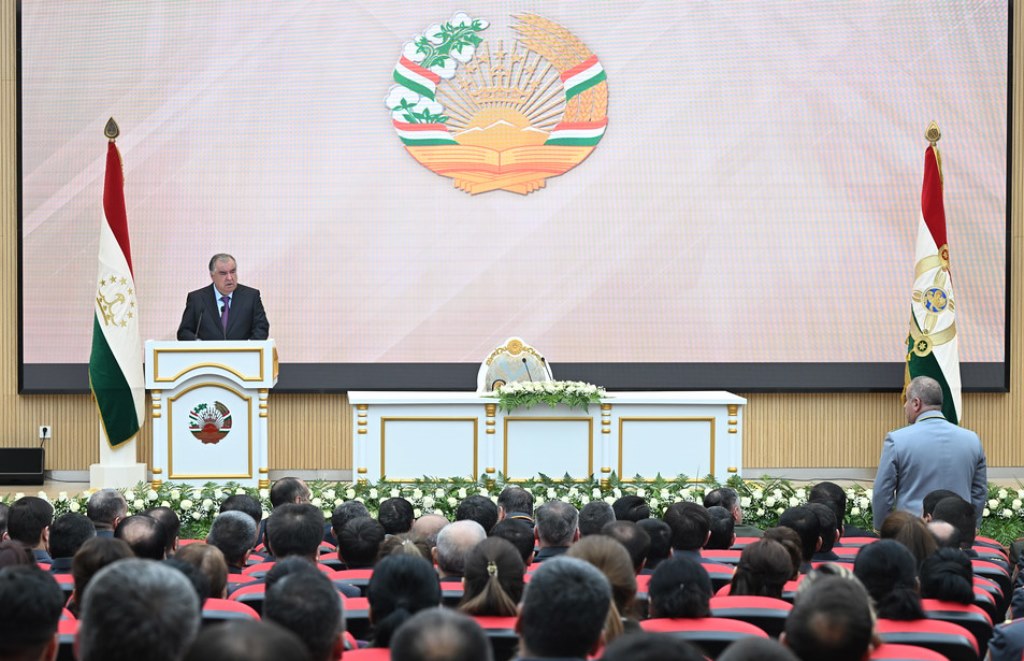
The president stated that "such actions must be stopped."
What prompted Emomali Rahmon's criticism? How can the president’s directives be implemented to address the situation?
In the country’s parliament, no clear answers were provided regarding whether legislative changes are planned following the president’s criticism. Meanwhile, a legal expert noted that the president’s instructions must be implemented and the relevant legal provisions revised to align with international standards.
What’s the issue?
In June 2018, amendments were made to Article 307 of the Tajik Criminal Code, introducing penalties for "public justification of terrorism" and "public calls for violent changes to the constitutional order of the Republic of Tajikistan" via the Internet.
Under these amendments, such actions were punishable by imprisonment for 5 to 15 years. This provision became widely known among the population as "punishment for ‘likes’ and reposts of prohibited materials" published and shared online.
After these amendments, several criminal cases were initiated against individuals for likes and reposts, many of whom were sentenced to various prison terms. This sparked criticism from Tajik human rights organizations.
In this context, President Emomali Rahmon's remarks about punishment for likes were seen by the public as a signal to end the practice of criminal prosecution.
What triggered the president’s criticism?

Tajik legal expert Ranzhet Yatimov identifies three possible reasons for Emomali Rahmon’s critique of government actions in this area:
- Preserving the country’s reputation — Tajikistan, as a member of respected international human rights organizations, must uphold the principles of freedom of expression and citizens' rights. Arrests and prosecutions for expressing opinions could harm the country’s global reputation.
- Public dissatisfaction — The growing number of arrests and criminal cases for likes and posts on social networks could increase public discontent and negative attitudes toward law enforcement agencies. The president may have decided to act to restore trust in the judicial and law enforcement systems.
- Inconsistencies in legal norms and their application — A selective and subjective approach to likes and posts on the Internet has led to broad interpretations of the law. The president may have aimed to highlight the need to clarify legal provisions, Yatimov noted.