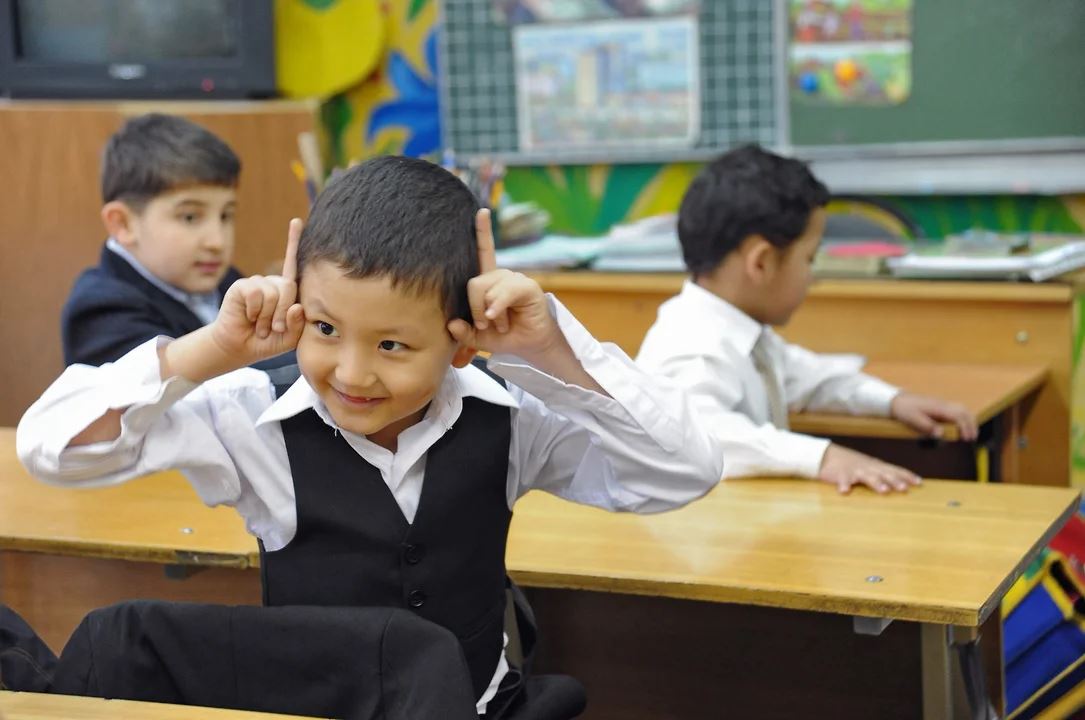
Findings of a Russian language proficiency test conducted in Russian schools last month show that more than 58% of migrant children have successfully passed it. Over 23% reportedly showed difficulties with learning, and nearly 18% either have poor language skills or know no Russian at all.
RBC cited Ksenia Gabdrahmanova, head of the International Relations Department at Bashkir State Pedagogical University named after M. Akmulla, as saying that the testing was part of a monitoring project on the integration of foreign minors into Russia’s general education system, as reported by. She explained that the initiative aims to assess the current state of education for foreign children in Russia, including language proficiency and adaptation programs. The monitoring was conducted at the initiative of the Russian Ministry of Education.
As of the beginning of the 2024/25 academic year, 154,800 foreign children underwent the language proficiency test, making up 74.4% of the total number of migrant children enrolled in educational institutions across Russia.
The monitoring covered the entire country. In 28 Russian regions, 100% of migrant children were tested. In 32 regions, the proportion of those tested ranged from 80% to 99.9%, while in 16 regions, the figure was between 60% and 79.9%. In 12 regions, between 20% and 59.9% of foreign students underwent testing.
According to the diagnostic guidelines, students who took the test were categorized into three groups: children who do not speak Russian or who speak at an elementary level; children who speak Russian at a basic level, requiring language support in learning; and children who speak Russian at an advanced beginner level.
For children who do not speak Russian, the guidelines recommend additional language lessons totaling at least 40 hours. For those who speak Russian at a basic level, additional extracurricular lessons twice a week are suggested, while those with a good command of the language should have one lesson per week focusing on socio-cultural adaptation.
One primary school teacher told RBC that the tests this year had become significantly easier. In her opinion, even children with limited language skills should have no trouble passing the tests. She noted that to achieve an advanced level, students only needed to correctly complete half of the tasks, and that points were easily accumulated.
In November, a bill was submitted for consideration to the State Duma (Russia’s lower chamber of parliament). If passed, it will ban the admission of foreign children who have poor knowledge of the Russian language into schools. According to the bill, language testing would become mandatory for migrant children. Prior to this, politicians had repeatedly discussed the need to assess Russian language proficiency when admitting foreign students. However, language proficiency is not yet a basis for denying school enrollment for such children.
At the same time, the Ministry of Education recommended that schools and kindergartens admit no more than three migrant children with poor Russian language skills per class or group. This was explained by the reduced effectiveness of education when there are too many migrant children in one class who struggle to understand the teacher, classmates, and the required materials.