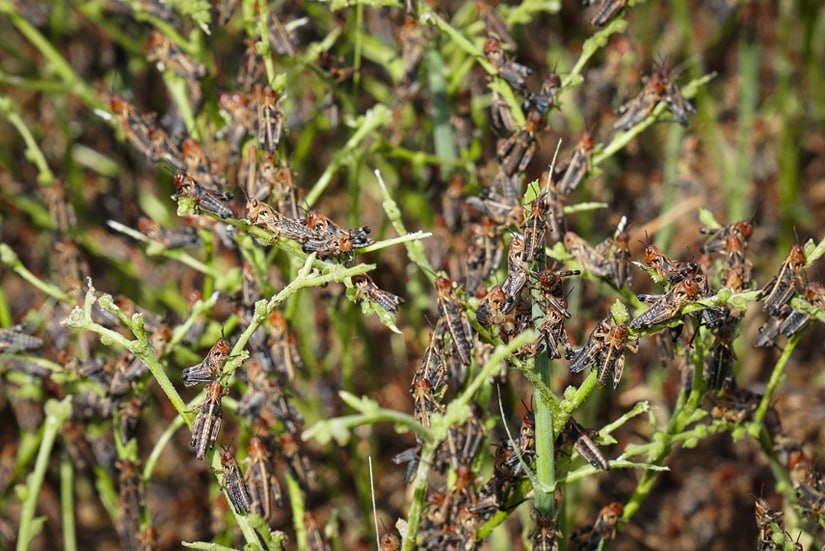
A series of training sessions on modern methods of locust control has concluded in Tajikistan. Specialists from Sughd and Khatlon regions, as well as districts subordinate to the center (RRP), have studied advanced monitoring techniques and response strategies to combat locust infestations.
The training sessions took place in December 2024 and January 2025, supported by the Food and Agriculture Organization of the United Nations (FAO) and the Japan International Cooperation Agency (JICA) as part of a regional locust control program in Central Asia. The events were organized by the State Locust Control Expedition under the Ministry of Agriculture of Tajikistan.
A total of 57 participants were trained in monitoring and data collection on locust populations. They learned about the most effective and environmentally safe methods for treating infested areas.
The training also covered risk reduction in pesticide use, with special attention given to biopesticides as an alternative to chemical treatments. Experts emphasized safe handling, storage, transportation, and disposal of pesticide containers.
One of the key innovations introduced during the sessions was the Automated System for Data Collection (ASDC). This technology enables real-time tracking and analysis of locust outbreaks, allowing for a faster response to potential threats. Additionally, Tajikistan is actively promoting the use of biopesticides, which are considered an environmentally friendly alternative to chemical treatments.
“Our collaboration with FAO and JICA is helping Tajikistan build a sustainable agricultural protection system. These training sessions are not just theoretical—they provide practical knowledge that will help farmers safeguard their crops,” said Agasi Harutyunyan, Acting FAO Representative in Tajikistan.
Following the success of these training programs, the Ministry of Agriculture plans to expand specialist training and continue implementing modern locust control methods. Future training sessions could cover more regions, increasing the country's preparedness for potential infestations.
Locusts pose a serious threat to food security in Tajikistan. In recent years, climate change and extreme weather conditions have increased the likelihood of locust outbreaks. If left unchecked, these pests could destroy crops, leading to economic losses for farmers and higher food prices.
The Ministry of Agriculture believes that investing in specialist training is essential to preventing large-scale agricultural losses. Early detection and safe, effective pest control methods are crucial for protecting harvests.
Developing national expertise in pest management is a key step toward sustainable agriculture. The more specialists trained, the better the country can safeguard its crops and ensure food security, officials emphasize.
Increasing access and affordability of health services: Tajikistan marks progress at high-level meetings in February supported by the European Union