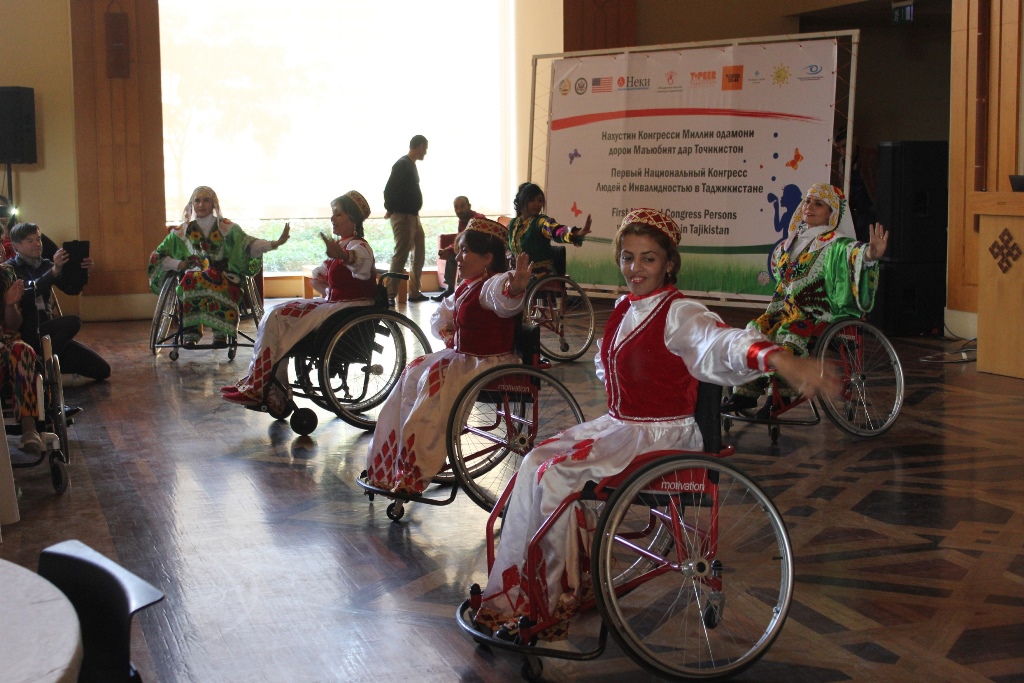
Enterprises where at least half of the workforce consists of people with disabilities are now exempt from taxes.
Amendments have been made to Tajikistan's Tax Code (TC) to support employers hiring individuals with disabilities.
According to the additions to Article 160 ("Tax Exemption") of the TC, enterprises where at least 50% of employees are people with disabilities are not subject to taxation.
The same benefits apply to enterprises where at least 50% of wages and other material support, including in-kind assistance, are allocated to the needs of people with disabilities.
However, exemptions do not apply to enterprises engaged in trade, brokerage, supply and distribution, and procurement activities.
Additionally, amendments to Article 347 ("Benefits") of the TC grant tax exemptions on real estate owned by legal entities where at least 50% of employees are individuals with disabilities in Groups I and II. These properties must also be directly used by these individuals to fulfill their statutory duties.
Disability statistics in Tajikistan
As of February 1 of this year, official data shows that 942,778 permanent residents of Tajikistan have disabilities, accounting for 10.33% of the total population.
Among them:
- Group I disabilities: 152,414 people (1.67% of the population)
- Group II disabilities: 357,763 people (3.92%)
- Group III disabilities: 344,073 people (3.77%)
- Disabled children: 88,528 (0.97%)
Social entrepreneurship and government support
At the end of last year, Tajikistan officially recognized social entrepreneurship through a separate legal document aimed at supporting socially vulnerable groups, including people with disabilities.
The adoption of the "Law on Social Entrepreneurship" was expected to provide additional government support to such employers through tax and customs benefits, preferential access to public procurement and state contracts, and various forms of assistance from state-targeted funds.
To qualify as a social entrepreneur, an enterprise must ensure that at least 50% of its workforce consists of socially vulnerable individuals. Additionally, the wage fund for such employees must account for at least 50% of the total payroll.
Moreover, at least 50% of the previous year's profit must be reinvested into social entrepreneurship activities.