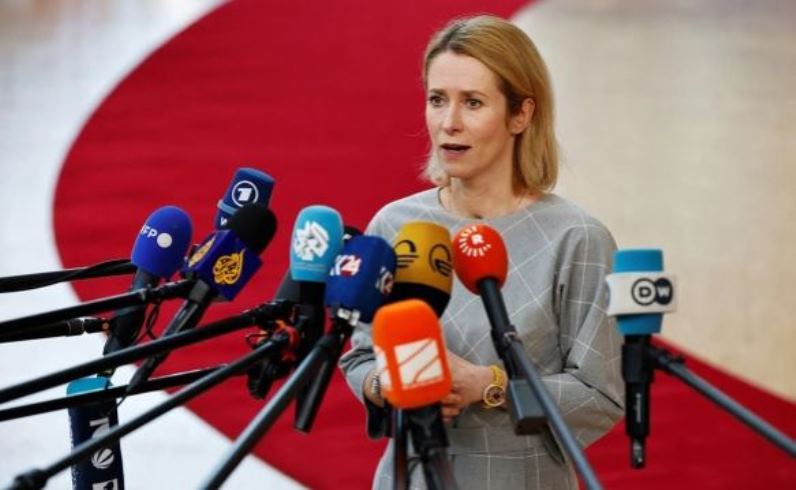
RBC reported on March 27 that EU High Representative for Foreign Affairs and Security Policy/Vice-President of the European Commission, Kaja Kallas, told reporters in Ashgabat during the 20th EU-Central Asia Ministerial meeting that European Union sanctions against Russia are damaging the economies of Central Asian countries, but the EU does not allow them to be bypassed through this region.
“The European Union has implemented 16 sanction packages to undermine the Russian military machine, and we are working on the 17th package. I understand that these sanctions are harming your economy, but it is clear that we all want an end to this war. We cannot allow Russian companies to turn to Central Asia to bypass the sanctions,” the EU HR/VP was cited as saying (quote from TASS).
Meanwhile, the European Union and the five Central Asian countries reaffirmed their strong political commitment to strengthening engagement and deepening cooperation during the 20th EU-Central Asia Ministerial meeting, chaired by the EU HR/VP, Kaja Kallas, on 27 March in Ashgabat, Turkmenistan.
The Foreign Ministers of Tajikistan, Turkmenistan and Uzbekistan as well as the Deputy Foreign Ministers of Kazakhstan and Kyrgyzstan participated in the meeting.
The Ministerial meeting was an opportunity to assess the implementation of the five key areas of the EU-Central Asia Roadmap for Deepening Ties, endorsed in October 2023.
The EU and Central Asian Ministers reportedly discussed openly issues of mutual strategic interest, including cooperation under the EU’s Global Gateway Flagship Initiatives in Central Asia in areas such as trade, transport, water resource management, energy, climate change, digitalization and critical raw materials. Both sides committed to advancing cooperation on people-to-people contacts, including on education, vocational training, research and skills development.
The importance of deeper cooperation in addressing common security challenges, including the fight against organized crime, violent extremism, radicalization, and regional security concerns such as developments in Afghanistan were also discussed.
Preparations for the first ever EU-Central Asia Summit, to be held on 4 April 2025 in Samarkand, Uzbekistan, were also addressed. The Summit will confirm the political resolve for closer strategic cooperation between the two regions at the highest political level.