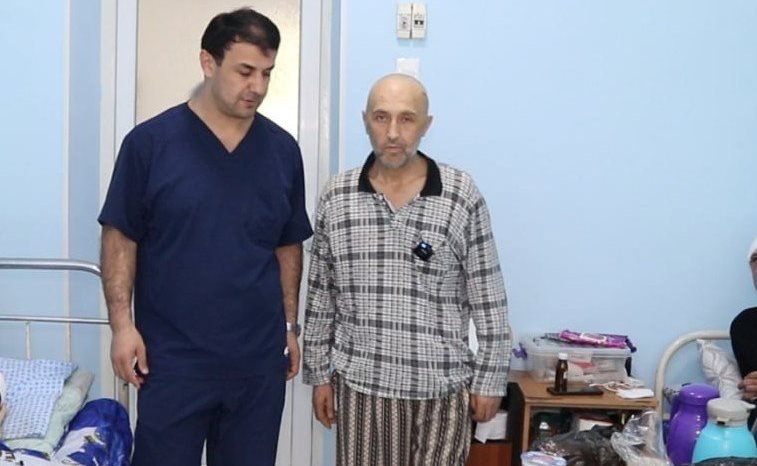
Tajikistan has successfully performed its first-ever brain vessel surgery using modern medical equipment and technology. The procedure was conducted by specialists at the adult neurosurgery department of the Tajik National Medical Center Shifobakhsh, as reported by the Ministry of Health and Social Protection of the Population (MoHSPP) of Tajikistan.
The surgery was performed on 56-year-old Mirvali Nuraliyev from the Rasht district, who was hospitalized with signs of thrombosis and occlusion of the brain vessels. This led to a stroke, complete paralysis of the right side of his body, speech impairment, and changes in behavior and mental state.
The operation, a first in the country, involved vessel anastomosis at the neck level, connecting the neck vessels to the brain's blood vessels. This procedure successfully cleared the blockage and restored proper blood flow to the brain.
According to a MoHSPP, the patient’s condition significantly improved after the surgery: movement returned to his limbs, and his speech and memory improved.
Such surgeries had not been conducted in Tajikistan previously due to a lack of experience and modern equipment. Patients who suffered from strokes often faced long-term consequences like partial paralysis, speech and psychological disorders, with many passing away years after the condition developed.
Now, such treatments are possible in Tajikistan, allowing patients to regain normal life and improve their physical and mental health.
Dr. Nazrullo Rahimov and his colleagues received training at leading global medical institutions, mastering the latest treatment and surgical methods, as noted in the report.
Previously, Shifobakhsh doctors also performed the country's first-ever endovascular brain surgery. This procedure was done without incisions, causing minimal damage. The specialists repaired a brain vein that caused swelling and bleeding. The endovascular aneurysm embolization is a low-trauma procedure with minimal recovery time. After the surgery, the patient's condition stabilized, and all complaints disappeared.
This surgery is one of the most complex in neurosurgery, and prior to this, patients had to be sent abroad for such procedures.