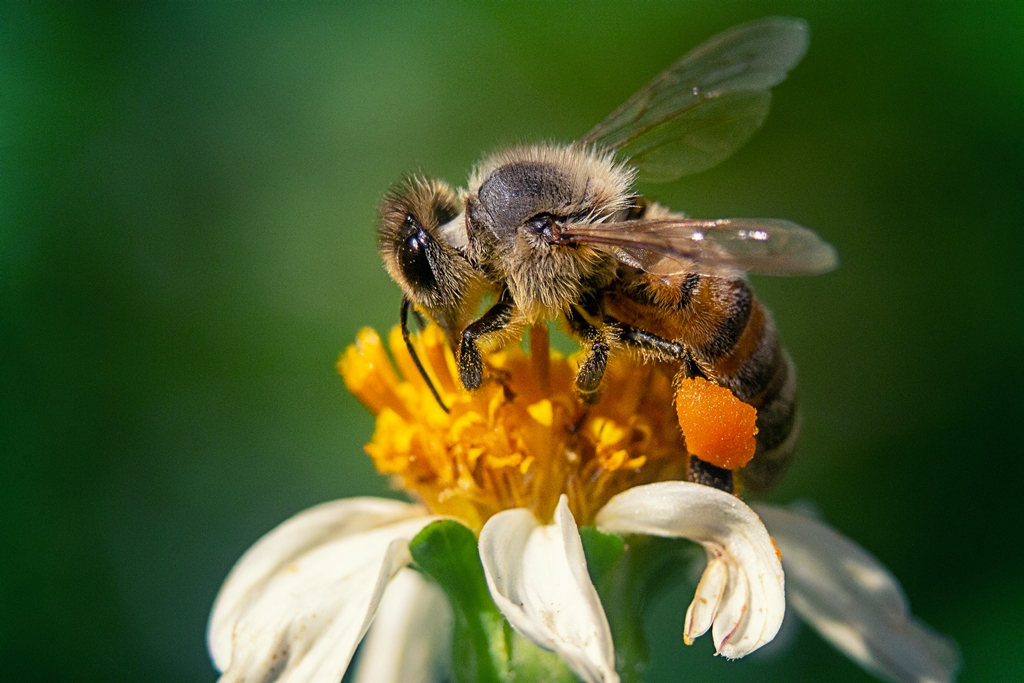
In 2024, Tajikistan produced 4,800 tons of honey—just 0.47 kg per capita—falling short of growing domestic demand. The country’s president has called for stronger measures to increase bee colonies and expand honey exports. Supporting this goal, the Food and Agriculture Organization (FAO) held a roundtable in Dushanbe focused on pollinator protection and sustainable agriculture development.
Speaking at the event held on World Bee Day under the motto, “Learn from the bees, learn from nature to feed everyone,” Mr. Aghasi Harutyunyan, Acting FAO Representative in Tajikistan, said, “Pollinators are not only vital for our diet and ecosystems—they are key to the future of sustainable agriculture.”
Mr. Harutyunyan emphasized that in Tajikistan, where beekeeping is both a traditional livelihood and a growing economic sector, protecting bees is more important than ever. “It means safeguarding food security, the environment, and farmers’ livelihoods,” he added.
The roundtable brought together officials from the Ministry of Agriculture, the Food Security Committee, beekeeping associations from Tajikistan and Russia, and local honey producers. Discussions focused on strengthening policies to support local beekeepers, adopting science-based approaches to protect pollinators, and improving honey marketing.
Participants stressed the urgency of collective action amid climate change, land degradation, and habitat loss to preserve bee populations and improve honey quality.
Pollination is a fundamental process for the survival of our ecosystems. Nearly 90% of the world’s wild flowering plant species depend, entirely, or at least in part, on animal pollination, along with more than 75% of the world’s food crops and 35% of global agricultural land. Not only do pollinators contribute directly to food security, but they are key to conserving biodiversity.
To raise awareness of the importance of pollinators, the threats they face and their contribution to sustainable development, the UN in December 2017 approved Slovenia’s proposal to proclaim May 20 as World Bee Day. On this day Anton Janša, the pioneer of beekeeping, was baptized in 1734.