Rising demand for sacrificial sheep ahead of Eid al-Adha in Tajikistan

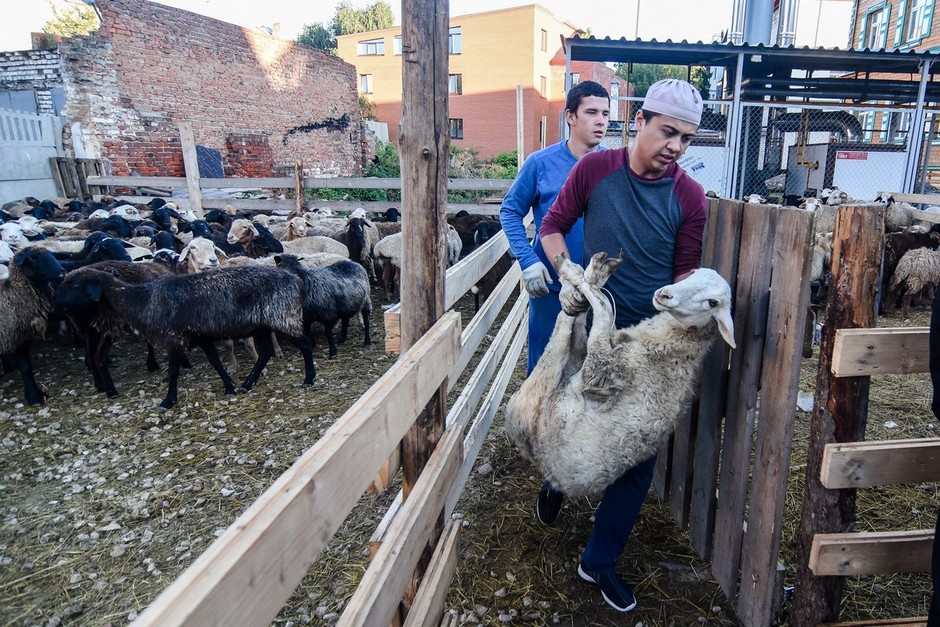
As Eid al-Adha approaches, there is a significant increase in demand for sacrificial animals such as sheep, cattle, and goats in Tajikistan.  Animals are sold either by weight or "by eye."  Prices per kilogram of live weight range from 45.00 to 60.00 somonis, up by 10%-15% compared to last year, with meat costs reaching 80 […]

As Eid al-Adha approaches, there is a significant increase in demand for sacrificial animals such as sheep, cattle, and goats in Tajikistan.  Animals are sold either by weight or "by eye."  Prices per kilogram of live weight range from 45.00 to 60.00 somonis, up by 10%-15% compared to last year, with meat costs reaching 80 to 110 somoni per kilogram.

For example, a sheep costs 50.00-60.00 somonis per kilogram, cattle 45.00-60.00 somonis, and goats 40.00-50.00 somonis.  A 595 kg bull in Farkhor was sold for 31,500 somonis, while a 440 kg bull in Hisor was priced at 50 somonis per kilogram.


Key factors in meat yield

The meat yield from slaughtered animals depends on factors such as breed, age, and condition. Meat breeds provide a higher yield, and younger animals typically produce more meat.  A 60 kg sheep yields about 35 kg of meat (58% yield), but leaner sheep can yield only 50%-40%.  Cattle yield between 50%-65%, with well-fed animals reaching up to 70%.


Cost of raising sheep

Raising sheep in Tajikistan is costly, especially due to feed expenses. In winter, feed costs rise to 300-450 somoni per month.  During summer, costs decrease to around 100 somoni per month as sheep graze on pastures. Proper barn conditions and equipment also increase costs.


Impact of feed costs and quality

Feed quality and quantity are crucial for the market price of sheep. A sheep yielding about 50 kg of meat is priced at no less than 4,000 somonis.  The cost of raising cattle is higher due to the longer fattening period and greater feed consumption.  Rising feed prices are lowering the profitability of sheep farming, with many producers relying on cheaper, lower-quality feed, which impacts meat quality.  As a result, it is rare to find sheep yielding 60-70 kg of meat in local markets.

 

Join us on social media!

Article translations:

Related Article

Оби зулол
Tenisi
Оби зулол

Most Read

Коммерсбонк Точикистон

Recent Articles

RZD announces the restoration of passenger services between Moscow and Dushanbe

Direct rail services between the capitals of Russia and Tajikistan were suspended in March 2020 due to the COVID-19 pandemic.

#AP30/Stories. “Selam! Heller nichek?” How Tatars live today in Sughd province

On the 30th anniversary of "Asia-Plus," we continue to publish reports that remain relevant even after years. This story was told in 2021, and since then, little has changed in the life of the Tatar community in Tajikistan.

15,000 cameras, drones, and robots: how technology monitors pilgrims in Mecca and Medina

During Hajj 2026, Mecca and Medina were under unprecedented digital control.

Another child in Dushanbe removed from family and sent to boarding school

The Ministry of Internal Affairs reports that the parents did not pay adequate attention to the child.

Emomali Rahmon instructs to address issues in seed production following criticism of the industry

Issues have been noted with certification, seed quality, and the material and technical base of the industry.

Water, climate, and a $130 billion deficit: seven key outcomes of the Water Conference in Dushanbe

At the forum, countries and international organizations discussed new mechanisms for cooperation, investments, and technologies that are essential for addressing the global water crisis.

Eskhata Bank introduces a new generation children’s wallet

"Eshkata Bank" has created a full-fledged digital platform that helps children aged 7 to 16 learn how to manage money.