The price of liquefied petroleum gas (LPG) in Tajikistan has dropped by nearly 1.00 somoni per liter over the past week. The Ministry of Energy and Water Resources (MoEWR)’s press center says the decline is linked to falling gas prices in major exporting countries.
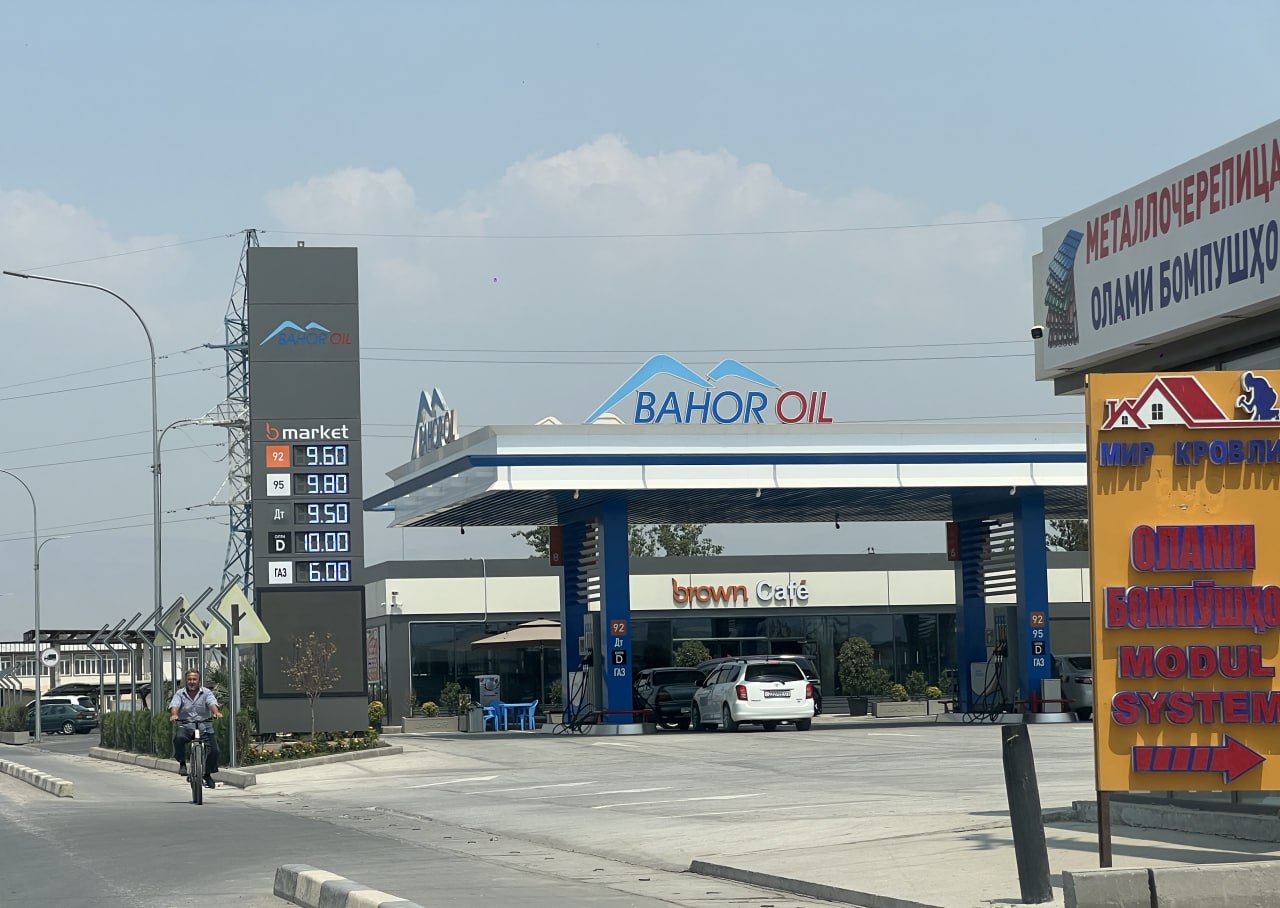
As of June 16, LPG is being sold at 6.00–6.10 somonis per liter at fueling stations across Dushanbe. Specifically, Gazprom Neft-Tajikistan and Oryo are offering LPG at 6.10 somonis, while other retailers are selling it for 6.00 somonis.
Just a week ago, LPG was priced at 6.80 somonis per liter in the capital.
Similar trends across the country
The same trend is observed in Khujand, the capital of the northern Sughd province, and Bokhtar, the capital of the southern Khatlon province. There, gas prices have similarly dropped to 6.10 somonis at major fueling stations like Gazprom Neft-Tajikistan and Seganj, and to 6.00 somoni at others.
Last week, LPG prices in Khujand and Bokhtar were 6.70 and 6.80 somoni per liter, respectively.
Government explains the drop
Mahmoud Bahrom, a spokesman for the MoEWR, told Asia-Plus that the decrease is primarily due to reduced prices in exporting countries like Russia and Kazakhstan.
“As LPG prices have fallen in these countries, we are seeing the effects here as well,” he said.
Bahrom also noted that the growing number of electric vehicles in Tajikistan may be contributing to the drop in demand for LPG, which in turn has influenced prices.
Heavy reliance on imported fuel
Unofficial estimates suggest that around 60% of vehicles in Tajikistan use LPG as their primary fuel source, largely because it remains cheaper than gasoline and diesel.
Tajikistan has imported petroleum products from Russia duty-free since 2013. Currently, more than 61% of the country’s LPG is sourced from Russia, with the remaining 39% coming from Kazakhstan. In the first quarter of this year alone, 92.4% of petroleum products and 61.1% of LPG imports originated from Russia.
Prices may fall, but fares stay the same
Although fluctuations in fuel prices are not uncommon in Tajikistan, fare rates for public transport and other services tend to rise when fuel prices go up — but rarely decrease when prices drop. As a result, the recent LPG price cut may not immediately ease the burden on consumers.