Tajikistan and Russia have signed a revised protocol to the agreement on cooperation in operating the Sangtuda-1 hydropower plant (HPP), significantly reducing electricity tariffs and annulling accumulated debt.
The updated protocol was approved at a session of the Majlisi Namoyandagon (Tajikistan’s lower chamber of parliament), according to the legislature’s press service.
Aims: financial stability and investment recovery
The primary objective of the new protocol is to improve the financial condition of the national energy company Barqi Tojik. The document reaffirms the total equity investment in the project at US$847 million and introduces major changes to tariffs and debt obligations.
Reduced tariffs and extended payback period
Under the revised terms:
- Starting 2025, preferential electricity tariffs will be introduced: 1.5 US cents per kilowatt-hour in the first year, rising to 2.2 cents by 2032
- The investment payback period for both sides is extended by 15 years, bringing the total to 35 years, now ending in 2048
Debt forgiveness and long-term pricing
One of the most significant outcomes of the revision is the gradual cancellation of all outstanding debts accumulated up to December 31, 2024, amounting to 3.257 billion somonis (approx. US$297 million), over the period from 2025 to 2034.
In addition:
- The current tariff of 3.168 cents will drop to 1.5 cents in 2025 — a 2.1-fold reduction
- By 2032, the tariff will increase slightly to 2.2 cents, still below current levels
- From 2033 to 2048, a fixed rate of 3.3 cents will apply
Long-term economic impact
According to parliamentary analysis, the expected financial efficiency of the updated terms is valued at US$588 million over the 2025–2049 period.
The revised agreement represents a strategic recalibration of Tajik-Russian energy cooperation, balancing long-term investment recovery with the immediate need to stabilize Tajikistan’s energy sector and reduce financial strain.
About the history of Sangtuda-1 HPP
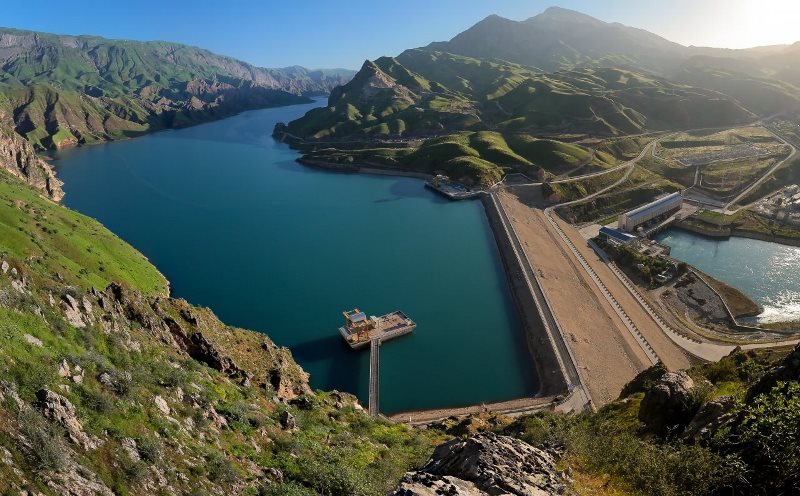
The construction of the Sangtuda-1 hydropower plant located some 110 kilometers southeast of Dushanbe began in the late 1980s. By the early 1990s, only 20% of the construction work had been completed, and further construction was suspended due to a civil war that broke out in Tajikistan in the early 1990s.
The talks between Russia and Tajikistan on completing the construction of the Sangtuda-1 HPP began in 2003 and in 2004 the parties signed an inter-governmental agreement.
The second and third units of the Sangtuda-1 hydropower plant entered service on July 1, 2008, and November 15, 2008, respectively.
Tajik and Russian presidents officially unveiled the fourth and last unit of the Sangtuda-1 HPP on July 31, 2009.
Russian-Tajik Open Joint-Stock Company (OJSC) Sangtudinskaya GES-1, which operates the Sangtuda-1 hydropower plant, was established to complete the construction of the Santuda-1 power plant. Russia’s Inter RAO YeES and the Ministry of Energy and Industries of Tajikistan signed an agreement on the establishment of the company in Dushanbe on February 16, 2005.
Russia owns 75% percent of the shares minus one share and Tajikistan assumes the 25% ownership interest plus one share in Sangtudinskaya GES-1.