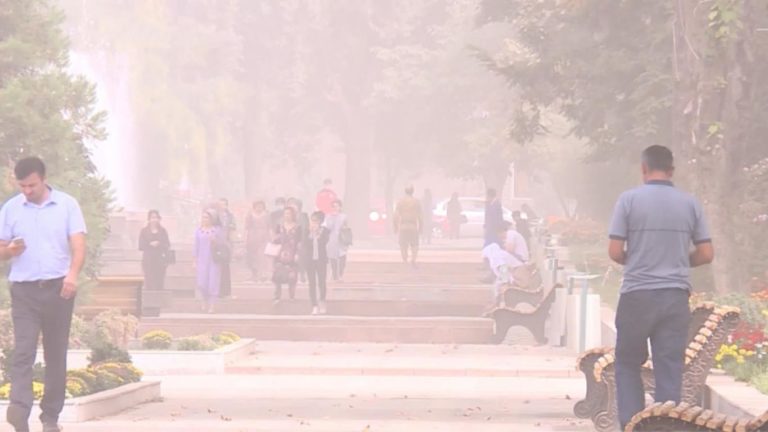
Residents of Tajikistan have been warned to brace for dust storms and poor air quality as meteorologists forecast turbulent weather in several regions between June 19 and 22.
According to the country’s Hydrometeorology Agency (Hydromet), dusty winds will sweep across the southern and central districts of Khatlon province, districts subordinate to the center (RRP), and the capital, Dushanbe, starting in the afternoon of June 19 and continuing through June 22.
Dust clouds rolling in from the south and west
Forecasters say the storms will arrive from the south, southwest, and west, bringing strong winds reaching speeds of 15–20 meters per second. The meteorological center warns this will significantly worsen air quality due to a sharp increase in airborne particulate matter — specifically PM10 and PM2.5 particles, which are known to pose health risks when inhaled.
Heat wave and unstable weather patterns
June 2025 has already brought intense heat to Tajikistan, with temperatures soaring above the seasonal norm by up to two degrees Celsius. While some areas may still experience localized rain and thunderstorms, the main concern now is the arrival of dry and dusty weather that could linger for days.
Health risks: Who’s most vulnerable?
Medical professionals warn that dusty conditions are particularly hazardous for individuals with allergies or respiratory conditions such as bronchial asthma. Children, the elderly, and people suffering from cardiovascular illnesses — including high blood pressure, heart disease, and autonomic dysfunction — are also at increased risk.
“Dust storms can lead to headaches, shortness of breath, breathing difficulties, and inflammation of the eyes, nose, and throat,” said Tojillo Olimov, an assistant at the Department of Otolaryngology at the Institute for Postgraduate Medical Training, in an interview with Asia-Plus.
Safety guidelines and recommendations
Health authorities recommend the following precautions during the dust storm period:
- Stay indoors as much as possible, especially for vulnerable groups.
- Keep windows closed and use humidifiers in both residential and workspaces.
- Avoid strenuous activity, including outdoor exercise.
- Drink plenty of fluids to stay hydrated.
- Use protective masks — preferably dampened gauze — when venturing outside.
- Rinse your nose and throat regularly with saline or salt water to reduce irritation.
Conclusion
With airborne dust levels expected to rise sharply, the coming days will be challenging for many in Tajikistan. Authorities urge the public to take precautions seriously to avoid adverse health effects as the nation navigates yet another extreme summer weather event.