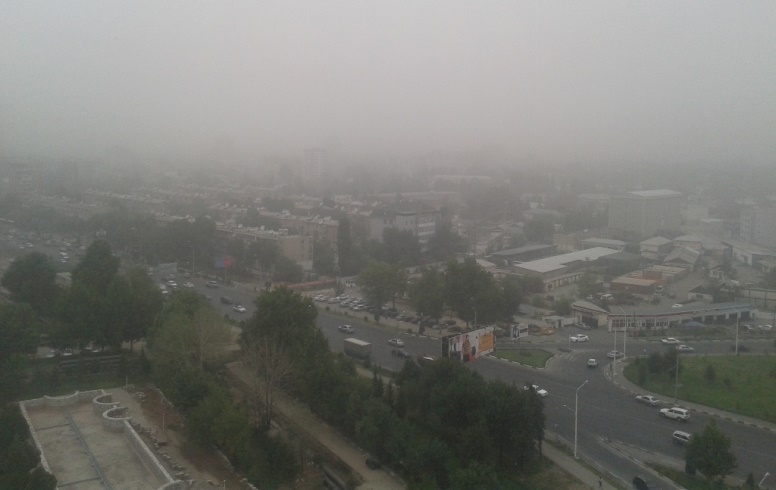
The World Bank’s report Air Quality Management in Central Asia outlines key priorities and proposing solutions to improve air quality through both local initiatives and regional collaboration. The report draws on a series of analytical papers on air quality and AQM systems in Central Asia, covering Kazakhstan, Kyrgyzstan; Tajikistan; and Uzbekistan.
The report, in particular, notes that the frequency of dust storms in Tajikistan has surged more than tenfold over the past three decades, according to the UN Convention to Combat Desertification (UNCCD), raising alarms about the worsening air quality in the region. Human-driven activities such as unsustainable farming, deforestation, and excessive water use are exacerbating the issue, leading to increasingly frequent and intense sand and dust storms (SDS).
A new World Bank analysis highlights Dushanbe as a major hotspot of air pollution, largely driven by solid fuel combustion in suburban households. In 2020, 42% of the city's PM2.5 exposure—tiny airborne particles harmful to human health—was linked to residential solid fuel use. Despite the fact that nearly half of Dushanbe’s households have access to district heating or cleaner energy sources, coal remains widely used in peripheral areas.
The report projects troubling trends if no new measures are taken. By 2040, Dushanbe’s population is expected to double to 3.3 million, while PM2.5 exposure could climb from 57 µg/m³ in 2020 to 77 µg/m³—more than double the World Health Organization’s (WHO) interim target of 35 µg/m³. Road transport emissions are forecast to become a bigger contributor, expected to make up 21% of total PM2.5 exposure by then.
Without intervention, emissions of sulfur dioxide (SO₂) and nitrogen oxides (NOₓ) are also set to rise by 33% and 70% respectively, further degrading air quality.
However, there is a path forward. The World Bank outlines a "Global Clean Air Scenario" for Dushanbe, involving a suite of cost-effective measures that could reduce PM2.5 exposure to 27 µg/m³ by 2040. Key actions include expanding the district heating network, phasing out coal stoves, tightening vehicle emissions standards, and improving municipal waste management.
According to the analysis, 76% of the potential improvements could be achieved through local measures within the city. Residential heating accounts for the largest share of these gains, with further reductions possible through transportation and waste reforms.
The report also notes the climate co-benefits of air quality improvements. If fully implemented, these measures could reduce black carbon emissions—a potent climate pollutant—by 75% compared to 2020 levels.
In contrast to cities like Bishkek, where transport plays a dominant role in pollution, Dushanbe’s clean air strategy will hinge primarily on cleaner household heating solutions. Experts stress that swift action is crucial to protect public health and ensure sustainable urban development as the city continues to grow.