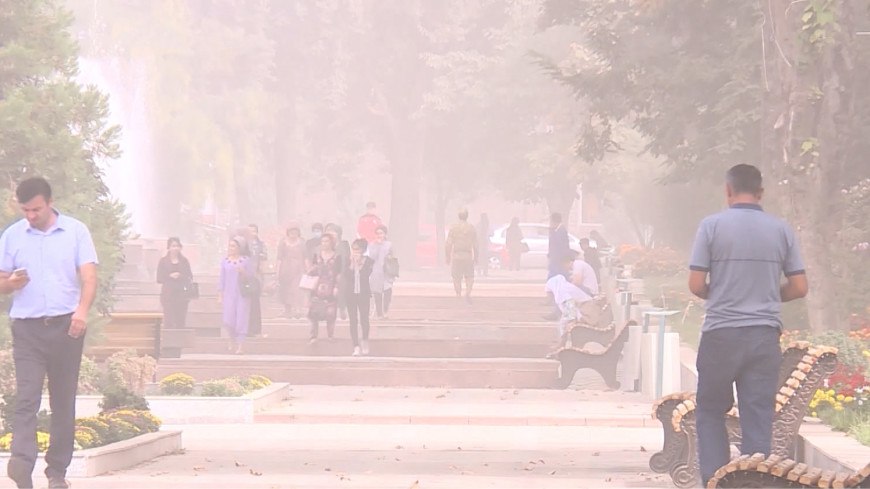
Over the past three decades, the number of dust and sandstorms in Tajikistan has increased tenfold, posing a growing threat to public health, agriculture, and infrastructure. With stronger winds, prolonged droughts, and widespread land degradation, the frequency and intensity of these storms are on the rise.
Rising dust, rising concerns
Once rare, dust storms are now a common occurrence in Tajikistan, often originating locally or sweeping in from as far as Afghanistan, the Aral Sea region, the Middle East, and North Africa. Though not always immediately destructive, their cumulative impact is significant—eroding fertile soil, polluting air and water, disrupting transportation, and damaging solar energy systems.
The fine particulate matter carried by these storms, particularly PM10 and PM2.5 particles, is especially hazardous to human health, contributing to respiratory and cardiovascular diseases. According to global studies, such pollution is linked to hundreds of thousands of premature deaths annually.
What can be done?
1. Prevention — Efforts to combat dust storms start with restoring natural ecosystems and adopting sustainable land use practices. Planting shelterbelts, managing pastures, and controlling industrial emissions are key. Regional examples include China’s extensive “green belt” projects and Central Asia’s saxaul planting campaigns on the dried Aral Sea bed.
2. Preparedness — Communities living in high-risk areas benefit from early warning systems and emergency response plans. Public awareness campaigns and urban air quality improvements—such as green zones, eco-friendly transport, and cleaner technologies—help reduce health risks during storms.
3. Forecasting — Accurate forecasting relies on satellite monitoring, ground stations, and meteorological modeling. International cooperation, particularly with organizations like the World Meteorological Organization, is crucial. In Tajikistan, however, limited scientific capacity and technical infrastructure remain major challenges.
A call for action
Experts stress that Tajikistan needs to strengthen its research capabilities, expand its meteorological network, and deepen regional and international collaboration to effectively mitigate the impact of dust storms.
Investing in environmental protection and public education could be the key to a safer, healthier future in the face of this growing climate threat.