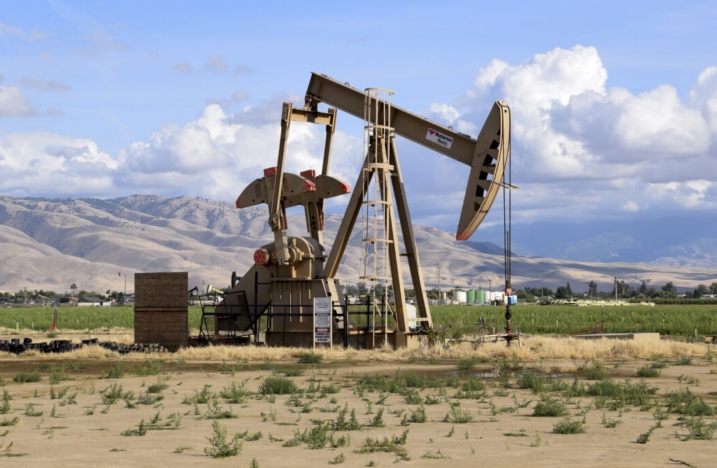
Oil production in Tajikistan has reached approximately 9,200 tons over the first half of 2025, marking a 22% increase—about 1,700 tons more—compared to the same period last year, according to the Ministry of Energy and Water Resources (MoEWR).
Over the reporting period, the country has reportedly processed around 6,600 tons of crude oil, up by 13.3% from the same period last year. Refineries currently hold around 140 tons of oil in reserve.
According to data of the Agency for Statistics under the President of Tajikistan, Tajikistan has produced over 4,500 tons of gasoline, 1,300 tons of diesel fuel, 1,700 tons of fuel oil, and 1,500 tons of bitumen over the same six-month period of this year.
At the same time, Tajikistan imported about 808,600 tons of petroleum products and liquefied gas in January-June this year—an increase of 3.1% or 24,800 tons compared to the same period last year.
While oil output saw a notable rise, natural gas production in Tajikistan declined sharply. The country has reportedly produced just 130,000 cubic meters of natural gas over the first half of the year—a 16% drop, or 24,700 cubic meters less than the same period in 2024.
Natural gas imports from Uzbekistan also decreased significantly over the reporting period, totaling 119 million cubic meters—24% less than last year’s figure for the same period.
Meanwhile, hydrocarbon exploration continues in southern Tajikistan, where the Chinese energy company CNPC Central Asia B.V. is conducting seismic surveys across a 1,017 square kilometer area, a MoEWR confirmed.
These operations are part of the larger Bokhtar project, which began in 2008 under the Canadian firm Tethys Petroleum. In 2011, Tethys announced significant oil and gas discoveries, attracting major players such as Total and CNPC.
However, by 2013, financial and operational difficulties forced Tethys to exit the project. Since 2015, CNPC and Total were the primary stakeholders, but in 2017 an international arbitration court ruled against Tethys, which officially left the project in 2018.
Following Total’s departure, CNPC became the sole operator of the Bokhtar project. In March 2024, the Tajik parliament ratified the transfer of Total’s share to the Chinese corporation, solidifying CNPC’s position in one of the country's most ambitious energy ventures.