Statistics released by the Committee for Women and Family Affairs show a disturbing increase in suicides among girls, cases of violence, and legal violations committed within both vulnerable and seemingly stable families.
Suicides and crimes among women and girls
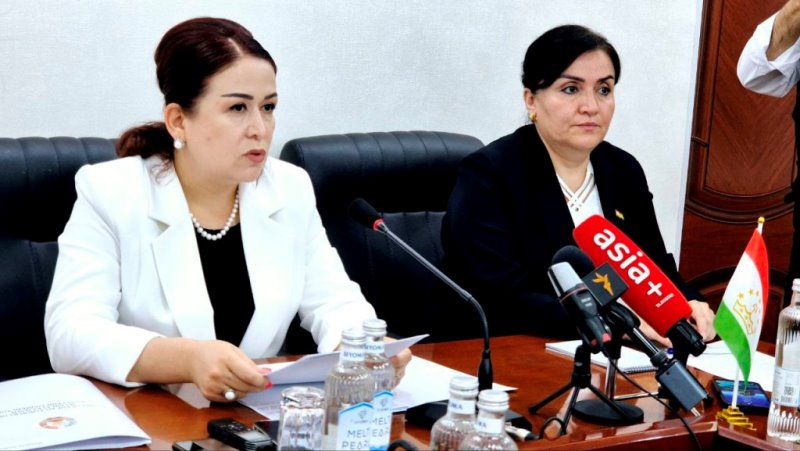
Between January and June 2025, 102 women and 30 underage girls took their own lives in Tajikistan, Committee Chairwoman Bunafsha Faiziddinzoda announced during a press conference in Dushanbe on August 1. While overall suicides among women dropped by 8 cases compared to the same period in 2024, the number of girls who committed suicide rose by 6.
Committee representative Mahbouba Azimova stated that the most common suicide methods among women included drowning, hanging, and overdose.
Over the same six-month period, women were responsible for 792 criminal offenses, and girls for 10, marking slight increases from last year. Meanwhile, 1,810 crimes were committed against women, and 154 against girls.
To counter these trends, the Committee initiated a wide-reaching campaign, conducting door-to-door outreach to over 430,000 families, as well as holding thousands of community meetings in neighborhoods, villages, and schools.
Gender-based violence: a widening problem
The first half of 2025 saw 2,121 cases of domestic violence recorded—277 more than during the same period last year. Of those, 1,763 were against women, an increase of 256, while 251 were against men, which actually reflects a decline of 86 cases.
Faiziddinzoda attributed the violence to common factors such as misunderstanding between spouses, unwarranted jealousy, third-party interference, and illness of one partner. The reported incidents included sexual, physical, and economic abuse.
She noted that male victims were often abused by their wives’ relatives—particularly brothers, fathers, and uncles.
The statistics were provided by the Ministry of Internal Affairs, and the Committee launched a hotline (1313) in July. In its first month, the hotline received 58 complaints, 9 of which came from men, typically involving abuse by wives, sisters-in-law, or even their own mothers.
Not just vulnerable families
Contrary to public perception, the Committee stressed that violence and crime are not limited to “at-risk” households. Mahbouba Azimova pointed out that even respected families—some led by religious pilgrims (hajis)—have been implicated in abuse and mistreatment.
“People considered model citizens in society can, behind closed doors, act unacceptably toward their wives and children,” Azimova said, in response to criticism that the Committee doesn’t adequately monitor vulnerable populations.
Education barriers and legal consequences
In a separate but related concern, the Committee recorded 271 cases of families obstructing children—primarily girls—from receiving mandatory education, up from 212 cases in early 2024. Parents or guardians in these cases were held criminally liable.
Under Article 164 of Tajikistan’s Criminal Code, such obstruction is punishable by fines ranging from 75,000 to 90,000 somonis, 180–240 hours of community service, or up to two years in prison.
Following legal reforms in 2024, completing grades 10 and 11 became mandatory. Previously, only basic education through grade 9 was required, leading to early marriages for girls in rural areas—practices that drew sharp criticism from human rights advocates.
Now, parents face legal consequences for preventing education beyond grade 9.