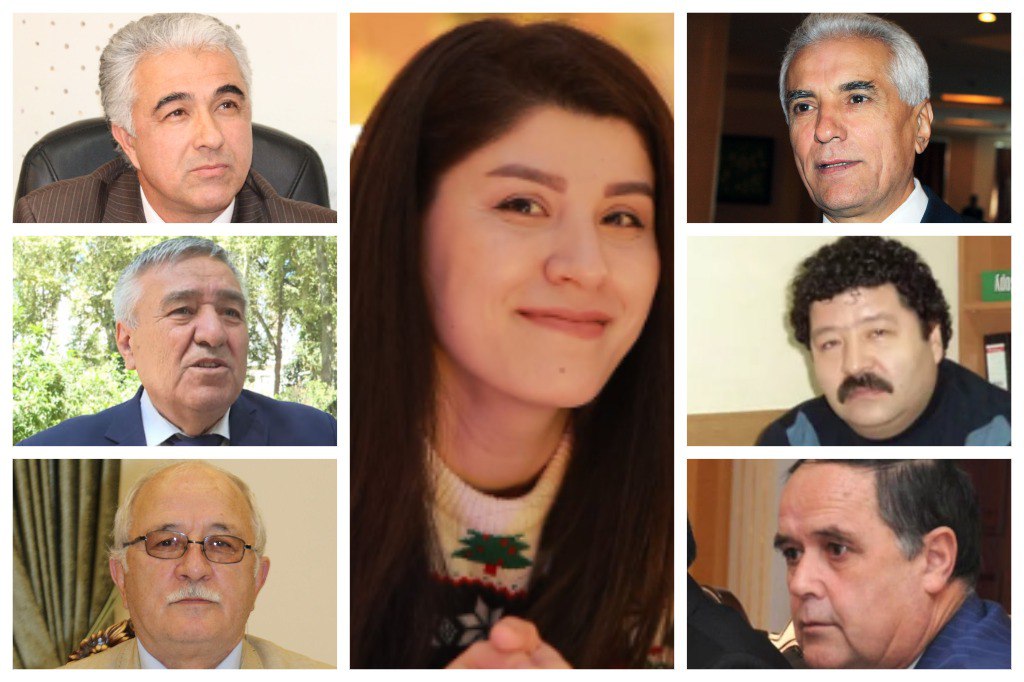
Tajikistan’s Human Rights Ombudsman has stated that his office has not received any complaints from the nine individuals convicted in the high-profile "coup attempt" case, nor from their families or legal representatives. As a result, his office has not visited them in prison, Ombudsman Umed Bobozoda confirmed during a press conference in Dushanbe.
The individuals — including prominent political figures, former officials, and one journalist — were sentenced on February 5, 2025, to prison terms ranging from 8 to 27 years on charges of treason and attempting to overthrow the government.
“If relatives or defense attorneys had submitted complaints about the court verdicts, we would have considered their applications and possibly appealed to the courts,” said Bobozoda. He added that future visits to the prisons would include inquiries into the conditions of detention for these individuals, though the Ombudsman has no mandate to challenge the court's rulings.
Among those sentenced are:
- Hamrokhon Zarifi, former Foreign Minister – 27 years;
- Saidjaffar Usmonzoda, ex-MP and former leader of the Democratic Party – 27 years;
- Jamshed Boboyev, retired colonel of the State Committee for National Security (SCNS) – 21 years;
- Akbarsho Iskandarov, former head of the Supreme Council (former Tajikistan’s parliament)– 18 years;
- Ahmadshoh Komilzoda, former deputy head of the Democratic Party and journalist – 19 years;
- Shokirjon Hakimov, lawyer and deputy head of the Social-Democratic Party – 18 years;
- Abdulfayz Atoi, former head of strategic planning department at the Foreign Ministry – 17 years;
- Nurahmad Ghanizoda, retired colonel of the SCNS – 18 years;
- Rukhshona Hakimova, journalist – 8 years.
According to relatives and lawyers, both Shokirjon Hakimov and his niece Rukhshona Hakimov denied any wrongdoing, while others have called the charges unfounded.
Outcry over journalist’s sentence, but no official complaints filed
Among the nine convicted, journalist Rukhshona Hakimova’s sentence has drawn the most public and international attention. Numerous civil society groups, human rights organizations, journalists, and activists have urged Tajik authorities to reconsider or reduce her sentence, noting that she is the mother of two young children — one of whom was an infant at the time of sentencing.
Despite widespread calls for clemency, the Ombudsman’s office confirmed that neither Hakimova’s relatives nor her legal representatives had submitted a formal complaint.
Social media users and activists have pointed to Article 78 of Tajikistan’s Criminal Code, which allows for the postponement of sentences for pregnant women or mothers of children under the age of eight. However, Rustam Mirzozoda, head of the Supreme Court, clarified on February 13 that this provision does not apply to convictions for particularly serious crimes.
Hakimova’s lawyer announced plans to appeal the Supreme Court’s ruling under Article 71 of the Criminal Code, which allows for conditional non-application of punishment under certain circumstances. Nevertheless, subsequent cassation appeals by her and other defendants were rejected, and the sentences were upheld without modification.
Families say appeals are futile, avoid reaching out to Ombudsman
Speaking anonymously to Asia-Plus on August 4, two relatives of the convicted individuals confirmed they had not contacted the Ombudsman, citing skepticism over its effectiveness.
“We filed cassation appeals and nothing changed. The Ombudsman can’t overturn a court ruling or influence it in any meaningful way — that’s why we didn’t go to them,” one family member explained.
Another relative echoed this view, saying that while prison staff were treating his father well, and all parcels — including food, clothing, and medicine — were being delivered, any complaint related to sentencing or pretrial detention would be pointless. “If the conditions in prison change for the worse, we’ll consider reaching out,” he said.
According to reporters, it remains difficult to get comments from all the families and legal teams involved, as most are unwilling to speak publicly.
Background: what led to the case?
The arrests began in June 2024 with the detention of Saidjaffar Usmonzoda. On June 14, then-Prosecutor General Yusuf Rahmon told parliament that Usmonzoda was being investigated for “violent seizure of power” under Article 306 of the Criminal Code.
Following his arrest, several other prominent political and public figures were detained, including Akbarsho Iskandarov, Ahmadshoh Komilzoda, Hamrokhon Zarifi, Shokirjon Hakimov, Abdulfayz Atoi, Nurahmad Ghanizoda, and Jamshed Boboyev.
Journalist Rukhshona Hakimova was initially questioned in the same case but remained free due to having a breastfeeding infant. She was later arrested following the sentencing.
The first court hearing took place on November 14, 2024, and the trial was held behind closed doors at a temporary detention center in Dushanbe. The final verdict was delivered on February 5, 2025, after more than six months of proceedings.