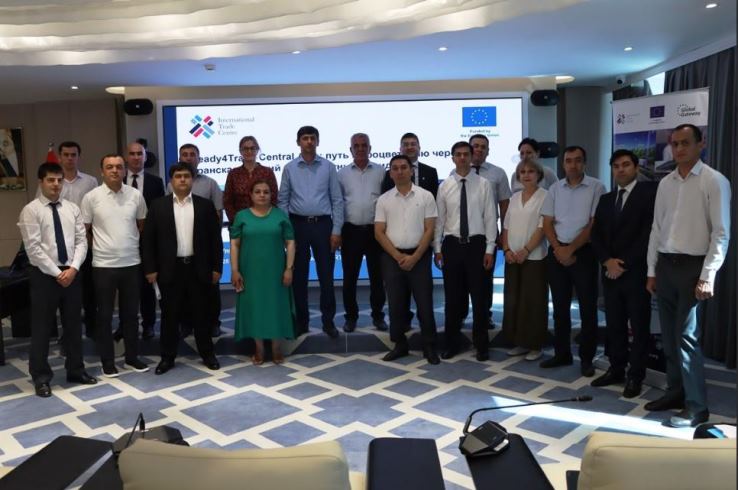
Tajikistan has taken a significant step toward modernizing its trade processes with the unveiling of key findings from the CART.IS analysis in Dushanbe yesterday. The analysis, conducted by the International Trade Center (ITC) as part of the European Union-funded “Ready4Trade Central Asia” program, sheds light on the country's progress and challenges in trade digitalization, according to press release issued by ITC Tajikistan.
CART.IS — which stands for “Mapping of IT Systems Supporting Trade Operations” — is an innovative methodology developed by ITC. It evaluates the digital maturity of trade-related systems, identifies bottlenecks, and outlines priority reforms for streamlining cross-border procedures. The initiative was carried out in close collaboration with the Agency for Innovation and Digital Technologies under the President of Tajikistan.
According to the report, while Tajikistan has made strides in digitizing some government services, gaps remain in how institutions integrate their digital platforms and share data across borders. The CART.IS tool offers a roadmap to accelerate the country’s digital transformation and improve the efficiency and transparency of its trade processes.
“This initiative comes at a pivotal time,” said Hakim Ismoilzoda, First Deputy Director of the Agency for Innovation and Digital Technologies. “CART.IS helps us understand where we stand in terms of digitalization and where we need to go. It also opens the door for expanding digital transformation to other sectors like healthcare and transport.”
The project is part of the broader EU strategy to enhance regional trade connectivity through the Trans-Caspian Transport Corridor. “By supporting CART.IS, the EU reinforces its commitment to building smarter and more connected trade systems in Central Asia,” said Karine Olislagers, Attachée and Program Manager for Cooperation at the EU Delegation to Tajikistan. “Tajikistan’s progress in digital transformation is a promising sign for regional integration and economic resilience.”
Alijon Aliyev, Ready4Trade Project Manager in Tajikistan, emphasized the strategic nature of the tool: “CART.IS allows us to measure the digital readiness of trade agencies and to design evidence-based reforms that align systems across borders.”
The methodology is intended for continued use by national agencies and can be applied across the region to foster interoperability and collaboration among Central Asian countries.
Ready4Trade: Fostering Prosperity Through the Trans-Caspian Transport Corridor is funded by the European Union (EU) aims to advance the EU-Central Asia connectivity agenda by increasing the operational efficiency of the Trans-Caspian Transport Corridor and supporting the internationalization of Central Asian businesses. This will be achieved through simplifying cross-border formalities to attract trade and sustainable investment; improving regional coordination to foster trade and transport connectivity, and enhancing the competitiveness of micro, small and medium-sized enterprises to facilitate their access to regional and EU markets, including through leveraging the Trans-Caspian Transport Corridor.
ITC is the joint agency of the World Trade Organization and the United Nations. ITC assists small and medium-sized enterprises in developing and transition economies to become more competitive in global markets, thereby contributing to sustainable economic development within the frameworks of the Aid-for-Trade agenda and the United Nations’ Sustainable Development Goals.
The European Union is an economic and political union of 27 European countries. It is founded on the values of respect for human dignity, freedom, democracy, equality, the rule of law and respect for human rights, including the rights of persons belonging to minorities. It acts globally to promote sustainable development of societies, environment and economies, so that everyone can benefit. To this end the EU is active in Tajikistan since 1992 and provides approximately EUR 35 million annually in development assistance.