The Russian authorities have proposed to limit the hiring of migrants in construction and catering

In 2026, the Russian Ministry of Labor proposes to additionally restrict companies in nine sectors of the Russian economy from hiring foreign workers. We are talking, in particular, about such areas as construction, catering, retail sale of alcohol and tobacco, in which the current allowable share of migrants can be reduced to zero, Kommersant reports. […]

Asia-Plus

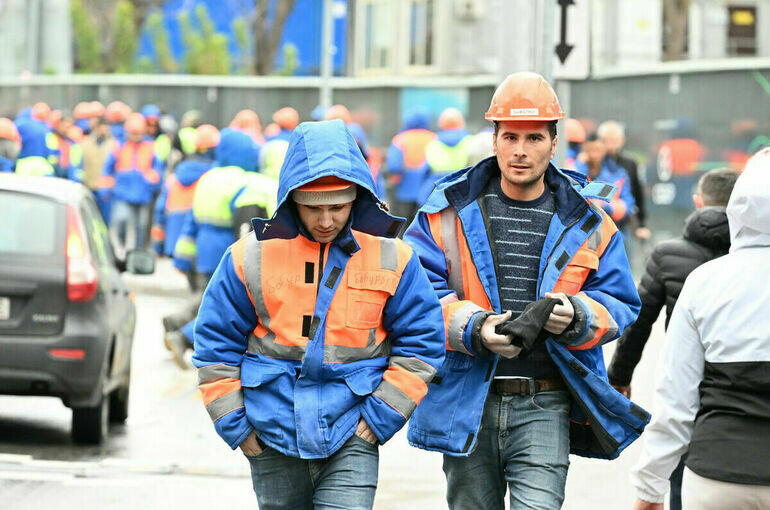
In 2026, the Russian Ministry of Labor proposes to additionally restrict companies in nine sectors of the Russian economy from hiring foreign workers. We are talking, in particular, about such areas as construction, catering, retail sale of alcohol and tobacco, in which the current allowable share of migrants can be reduced to zero, Kommersant reports.

The agency has developed a draft resolution (published on the portal regulation.gov.ru ), which introduced adjustments to the annual allowable share of migrant workers in the total number of employees of organizations established by the Government.

The main changes will affect the catering sector: if there were no restrictions in it before, now foreigners will be able to occupy no more than 50% of jobs. The acceptable share of migrants in construction is also decreasing, from the current 80% to 50%.

A complete ban on the employment of foreigners is proposed in the specialized retail trade of alcohol and tobacco products: the quota is reduced from 15% to 0%. In agriculture and woodworking, the share of foreign workers will decrease from 50% to 40%.

In addition, the Ministry of Labor proposes to establish regional specifics of hiring. In 29 regions of the Russian Federation, quotas will differ from federal ones, and in 14 of them they will be even lower than federal values.

So, in the Amur region in 2026, foreigners will be banned from working in the production of food and beverages, repair of machinery and equipment, as well as in veterinary medicine for farm animals.

"Most likely, we are seeing an attempt to curb migration from Central Asia and at the same time increase the influx of workers from abroad," said Yulia Florinskaya, a leading researcher at the RANEPA Institute for Social Analysis and Forecasting.

In her opinion, the decree of the Ministry of Labor essentially fixes the actual state of affairs, since almost half of the Russian regions have already introduced similar restrictions.

According to experts, if there is no shortage of workers in the catering sector, then the consequences of the new decree may be negative for the construction industry.

"On the one hand, it is unlikely that there are companies in it that work with maximum workload and cannot find employees in the Russian Federation. On the other hand, it is not easy to form a team for a project now, and there is no need to talk about an excess of professional workers," says Ilya Ponomarev, head of the Public Control Commission at the Public Chamber of the Ministry of Construction. In addition, foreign specialists are not always employed in low-skilled work at the construction site. Many are engaged in highly demanded specialized jobs."
Join us on social media!

Article translations:

Related Article

Tenisi
Оби зулол
Оби зулол

Most Read

Коммерсбонк Точикистон

Recent Articles

Major global investment companies show interest in Tajikistan’s economy

Among them are J.P. Morgan, Loomis Sayles & Company, Morgan Stanley Investment Management, and Global Evolution.

President Rahmon awarded UN University for Peace Certificate of Recognition

He is awarded for "significant contribution to establishing peace, developing regional cooperation, and strengthening mutual understanding between peoples."

Starlink satellite internet becomes available in Kyrgyzstan

And in Tajikistan, it was launched in February of this year.

In Dushanbe, 30 more new electric buses start operating

Each is designed to carry 100 passengers and can travel up to 300 kilometers without recharging.

Who is the man who “increased the Aryan race” and told the President of Tajikistan about it?

Kozie Koziyev, a folk craftsman, built dozens of houses, participated in the construction of a mosque and a kindergarten in Matcha, raised 11 children, and created a true dynasty of builders.

Tajik leader discusses water, climate, and global security issues with UN Deputy Secretaries-General

The parties paid special attention to the "Dushanbe Water Process," parliamentary diplomacy, and the peaceful resolution of conflicts.

Tajikistan completes the spring military draft target ahead of schedule

There is still a week left until the end of the conscription campaign.

Custodian of non-written languages and builder of academic bridges; philologist Khusrav Shambezoda turns 70

He could have devoted himself exclusively to the study of classical heritage, but he chose the challenging path of preserving the living word — and Tajik-Russian science gained in him a brilliant sociolinguist whose name became synonymous with dedication.

Tajikistan ranks among the top three leading trade reformers in Europe and Central Asia

The country has shown progress in the digitalization of trade procedures, the reduction of paper barriers, and the enhancement of transparency for exporters.

China to send workers to Tajikistan for modernization of the Kulma BCP

This is the only land border crossing point between Tajikistan and China.