Tajikistan will require approximately 15.2 billion somonis (US$1.4 billion) in investments to meet its national nutrition goals by 2030, according to the World Bank. Experts estimate that every somonis invested could generate up to 6.9 somonis in returns, while inaction could result in losses exceeding 4.6 billion somonis.
These findings were presented at the conference “Improving Nutrition through Investment in Sustainable Food Systems and Climate in Tajikistan”, held as part of the Dushanbe International Investment Forum. The event was a joint initiative of the FAO, WHO, UNICEF, WFP, and the World Bank, supported by the Government of Tajikistan and coordinated with the UN Resident Coordinator’s Office.
Investing in sustainable food systems and climate adaptation
A key focus of the conference was climate-smart agriculture (CSA). According to Abdujabbor Hakimov of FAO, CSA combines three strategic goals: increasing productivity, adapting to climate change, and reducing greenhouse gas emissions.
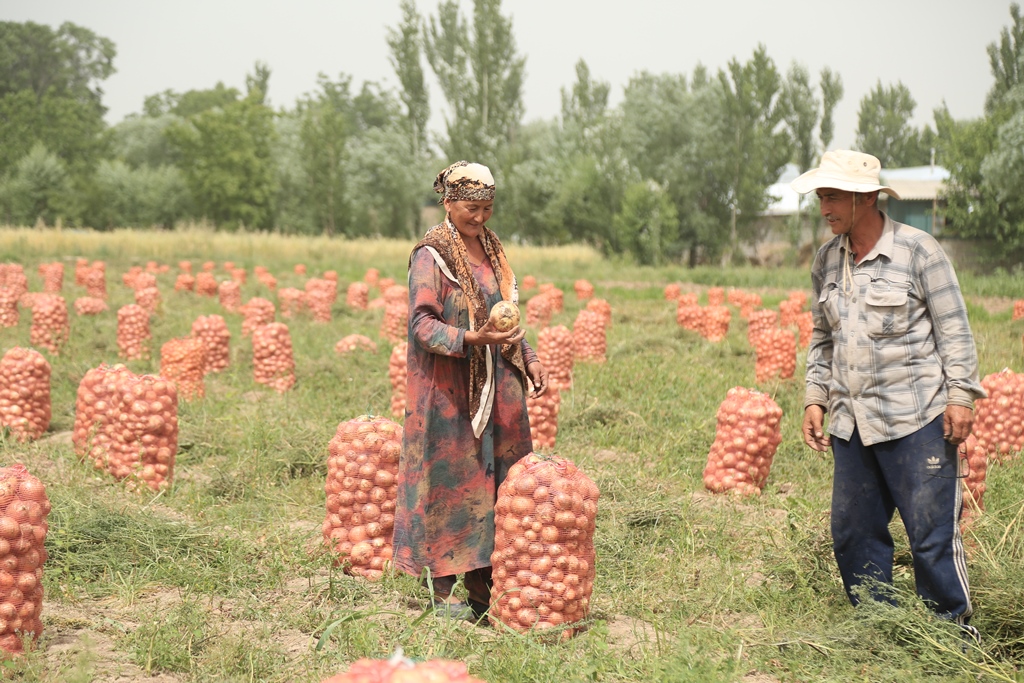
FAO is already implementing solutions in Tajikistan, including agroforestry, contour farming, drip irrigation, solar dryers, and biomass utilization. These measures improve yields, reduce carbon footprints, and help preserve natural resources.
Technology is becoming central to food systems, with ICT tools, artificial intelligence, and remote monitoring enhancing agricultural efficiency. FAO showcased digital solutions such as the IRRIGOPTIMAL app for irrigation forecasting and SMAPP LAB Mini, which uses AI to detect pests and protect crops. Urban farming and hydroponic systems are also being promoted to grow food in limited spaces, particularly in cities.
Nutrition trends and obesity
WHO’s STEPS survey (2016–2023) indicates a rising trend in overweight and obesity in Tajikistan, with overweight prevalence increasing from 46.7% to 50.8%, and obesity from 13.5% to 16.9%. On the positive side, the proportion of people consuming insufficient fruits and vegetables fell from 62.7% to 52.2%, and the frequency of adding salt to meals decreased by nearly 10 percentage points.
“Most citizens are aware of the harms of excessive salt, but behavior change requires continuous education,” said Ms. Adolat Narzulloyeva, representative of Tajikistan’s Ministry of Health. WHO recommends programs to reduce salt and sugar intake, promote physical activity, and monitor blood pressure and sugar levels.
STEPS survey: health and nutrition
The survey of over 2,500 participants revealed that 74% of deaths in Tajikistan are linked to cardiovascular diseases, 17.1% of adults have elevated blood sugar, and 30.5% suffer from hypertension. “Three-quarters of all deaths are related to heart and vascular diseases. This requires systemic preventive measures and changes in dietary behavior,” Narzulloyeva emphasized.
Tajikistan’s achievements in combating malnutrition
The World Food Programme (WFP) reports that in 2023–2024, around 670,000 people received support, including 555,000 schoolchildren provided with hot meals. A total of 390 greenhouses and irrigation systems were established, and 60,000 people received cash or food-for-work support.
Under the Home-Grown School Feeding program, 90 small farmers supply fresh produce for 2,700 children, while 26 tons of greenhouse-grown vegetables improved both school meals and family diets.
Tajikistan’s National Nutrition Action Plan (2021–2025) includes 95 initiatives across health, education, agriculture, and social protection. In 2024, with UNICEF support, the country imported 1.3 million doses of SPRINKLS powder and 353,000 doses of iron and folic acid for children and pregnant women. A National Revolving Fund is being established for flour fortification and salt iodization, with support from GAIN International and the World Bank, aiming for 100% enriched flour by 2030.
“Sustainable nutrition is impossible without institutional support. The government and private sector must work together,” noted Mrs. Kavilmadam Ramaswami Parvathy, UN Resident Coordinator in Tajikistan.
The conference concluded with calls to increase investment in nutrition, scale up school feeding programs, adopt green technologies and digital solutions, and recognize the important role of women and youth in advancing sustainable food systems.