

The Eurasian Development Bank (EDB) has aligned its regional warehouse infrastructure agenda with Tajikistan's national priorities, emphasizing the establishment of logistics and wholesale distribution centers, including cold storage facilities. This move has been identified as a key focus of the country’s strategy and will be an integral part of the future Eurasian supply chain network.
At the Central Asia Warehouse Summit in Almaty, Kazakhstan on October 16, EDB presented its strategic vision for the development of warehouse infrastructure in Central Asia. The bank also initiated the creation of the Central Asia Warehouse Real Estate Association, a platform aimed at standardizing the industry, facilitating access to long-term financing, and consolidating key stakeholders.
According to EDB, the region is facing a significant shortage of quality warehouse space, with an unmet demand of nearly 2 million square meters. The estimated return on investment for warehouse projects in Central Asia is between 17% and 20% annually, with a payback period of 5 to 8 years. The region’s warehouse stock is expected to grow from approximately 58 million square meters to 101 million square meters by 2040.
The report emphasizes that modern warehouses are crucial for logistics, third-party logistics (3PL), and e-commerce. For Tajikistan, this is especially relevant as the country is already preparing the necessary financing sources. By 2026, the EDB aims to prioritize the creation of wholesale logistics centers and cold storage facilities, including those in free economic zones.
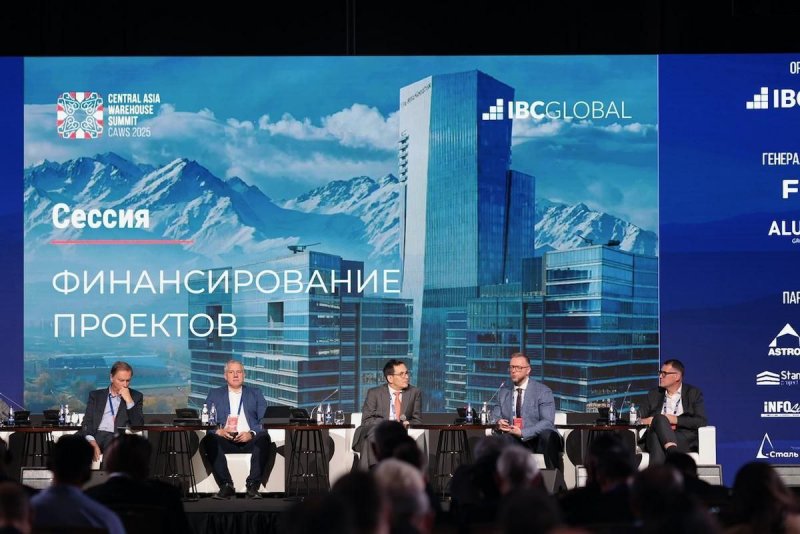
In parallel, a unified Eurasian supply chain system with standardized corridors is being established. Tajikistan’s immediate participation is essential to integrate into these flows. This aligns with the goals of Tajikistan’s 2030 Strategy, which seeks to break the country’s communication isolation and develop transit routes through modern transport and logistics hubs.
The direct impact on agriculture will be profound. Cold chains and warehouses will reduce crop losses, preserve product quality, and enhance export opportunities while replacing imports.
EDB's investment plans
To drive regional integration, the EDB, in collaboration with the Technical Assistance Fund, plans to structure and launch at least three key investment mega-projects totaling around $1.2 billion. The focus will be on developing transport corridors, including the Europe-West China and North-South routes, along with pipeline infrastructure, creating an integrated supply chain with transport and logistics centers, and strengthening the water and energy sectors.
By 2023, Tajikistan aims to transform itself into a transit hub, with measures that include:
- Modernizing key transport infrastructure to form transit corridors;
- Strengthening transportation support for industrial zones, particularly within major investment projects;
- Ensuring affordable and reliable access to internet and telecom services;
- Enhancing the competitiveness of the domestic telecom market and expanding regional connectivity;
- Reducing the digital divide between regions, especially in rural and remote areas.
Impact on business and government
In agriculture, modern warehouses and cold storage for fruits, vegetables, dairy, and meat products will help reduce losses, smooth out seasonal price fluctuations, and open up new export opportunities to the Eurasian Economic Union (EEU) countries. The development plans also foresee an increase in transit traffic across borders, directly indicating the effectiveness of future wholesale distribution centers.
In e-commerce and logistics, large, modern warehouses with high standards will accelerate order processing and reduce costs. This will lay the groundwork for strong private logistics operators and marketplaces. The EDB stresses that such synergies will attract private investment into the region.
To ensure fair play and transparency, the Central Asia Warehouse Real Estate Association will be established to standardize requirements for facilities, launch independent audits and project certifications, and simplify access to long-term, lower-cost financing. This is particularly crucial for projects in Tajikistan, where such barriers currently exist.



