Fish farming production in Tajikistan reached 96.7 million somonis from January to September 2025, marking an 8.9% increase compared to the same period last year, according to the Agency for Statistics under the President of Tajikistan.
Key contributions from regions
The largest contribution came from the Khatlon province, which produced fish worth 53.6 million somonis, showing a modest growth of 0.8%. The Sughd province contributed 13.6 million somonis (up by 5.9%), while the districts subordinate to the center (RRP) accounted for 29.5 million somonis, representing a significant growth of 29.6%. The Gorno-Badakhshan Autonomous Region (GBAO) generated 0.05 million somonis, growing by 26.4%.
Catch volume and fish types
The total fish catch for the first nine months of 2025 amounted to 3,094 tons, a 6.4% increase from the previous year. Of this, approximately 62% (1,912.8 tons) came from Khatlon, with more than 20% coming from Sughd.
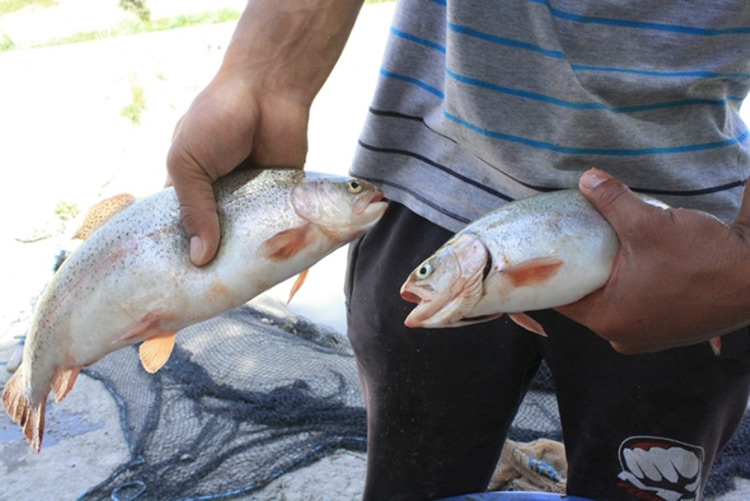
The dominant species in the catch include silver carp (1,057.2 tons), trout (529.4 tons), carp (308.9 tons), white amur (289.8 tons), and pike perch (10.3 tons). Other fish species made up 898.5 tons.
Fish Imports
According to the Customs Service, Tajikistan imported fish, crustaceans, mollusks, and other aquatic invertebrates worth 19.4 million somonis (around $6.97 million) from January to September 2025. The majority of imports consisted of frozen fish, shrimp, and squid, primarily from Russia, Kazakhstan, China, and Iran.
Future outlook and government plans
The Tajik government has forecast stable growth for the fish farming sector between 2026 and 2028. In 2026, the planned catch is 6,600 tons, rising to 7,200 tons in 2027, and reaching 7,800 tons by 2028.
The Comprehensive Program for the Development of Animal Husbandry, Poultry Farming, Fish Farming, and Beekeeping in Tajikistan for 2023-2027 recognizes the fish farming sector as a key part of the country's agricultural strategy, vital for food security. Since 2019, the sector has been exempt from six types of taxes and customs duties on the import of equipment and technologies, which has significantly expanded production.
Challenges and solutions
The program also highlights issues such as the low productivity of fish farming basins (15-16 quintals per hectare compared to 30-35 quintals in the 1990s), outdated infrastructure, and damage from natural disasters, which have resulted in the loss of some basins.
The Tajikistan Agricultural and Food System Development Program, aimed at sustainable agriculture by 2030, identifies fish farming as a priority for food security. While the sector has high potential due to abundant water resources, it faces challenges including a weak production base, lack of feed, technology, and skilled labor.
2030 Goals
By 2030, the government aims to produce enough fish to cover 50-60% of the country’s domestic demand, increase the share of local products in the market, and create new jobs in the sector.