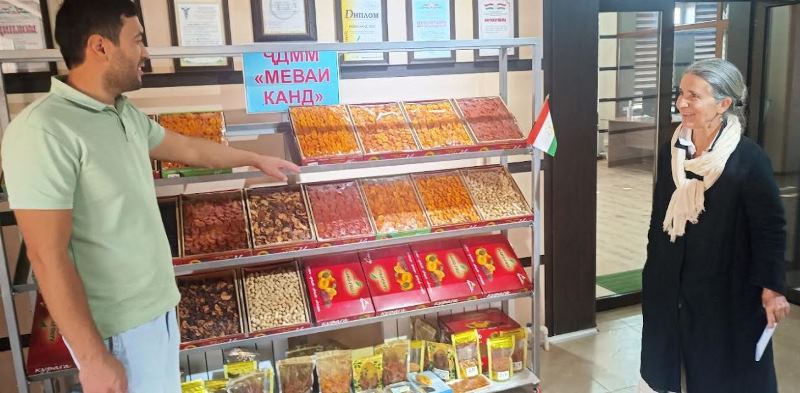
A significant milestone for Tajikistan's agribusiness sector has been reached as three leading dried fruit producers—Mevai Kand, Kand K, and Zardolui Isfara—have obtained the internationally recognized FSSC 22000 Food Safety System Certification. This achievement signals a major advancement for the country’s food industry and its ambitions on the global export stage.
According to a press release from the International Trade Centre (ITC)’s Office in Tajikistan, the certifications were made possible through the ITC’s Trade Promotion East (TPE) project, funded by the Government of Switzerland. The project aims to enhance the competitiveness of local enterprises, ensure adherence to global standards, and expand access to high-value international markets.
The FSSC 22000 certification, audited by IMS INTERNATIONAL GmbH and issued by TÜV CYPRUS (part of TÜV NORD GROUP), is one of the most widely accepted food safety management systems, accredited by the Global Food Safety Initiative (GFSI). It guarantees compliance with rigorous standards in hygiene, traceability, and risk management—critical for building trust among international buyers.
“Achieving FSSC 22000 certification is a remarkable milestone for Tajikistan’s entire agri-food sector,” said Saidmumin Kamolov, ITC National Program Manager. “It shows that our producers can meet world-class standards and deliver products that are safe, high-quality, and competitive on the international stage. This is a proud moment for the country’s growing reputation as a trusted source of dried fruits.”
Ghulomjon Ismoilov, Director of Mevai Kand LLC, echoed the sentiment: “Securing this certification is a turning point for our company. It validates the hard work of our team and strengthens our confidence to reach international markets. We are excited to continue improving our processes and look forward to new opportunities ahead.”
Located in the fertile Sughd province, the cities of Isfara and Konibodom are considered the heart of Tajikistan’s apricot industry. Nearly 10% of the world’s apricot production originates from this region, where local farmers and processors have honed their craft over generations.
With FSSC 22000 certification now in hand, these Tajik companies are better positioned to strengthen international partnerships and raise the global profile of “Made in Tajikistan” dried fruits.
The TPE project, funded by the Swiss State Secretariat for Economic Affairs (SECO), supports small and medium-sized enterprises (SMEs) in four countries—Tajikistan, Uzbekistan, Albania, and Serbia. Its goal is to foster sustainable export growth in the dried fruits sector and improve the ability of business support organizations to deliver quality services to SMEs.
As part of its 2022–2025 Cooperation Program for Central Asia, Switzerland is also working to promote economic development, regional integration, and good governance, while addressing complex transboundary water management challenges.