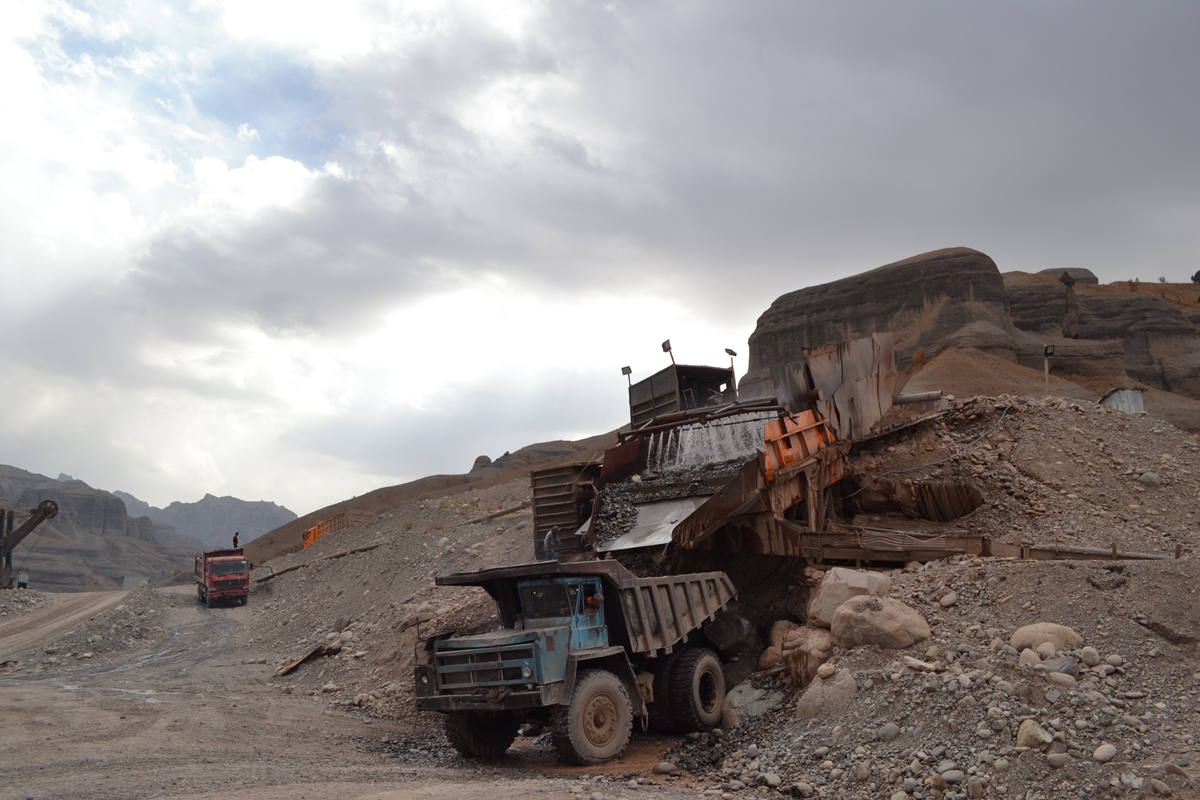
In his address to the Tajik parliament, President Emomali Rahmon yesterday announced that the country’s mineral production sector has seen significant growth in recent years. He highlighted that production in the mining industry has increased from 7.7 billion somonis in 2020 to 26 billion somonis in 2025, showing a 3.4-fold growth.
Rahmon pointed out that in 1991, Tajikistan produced only three types of products: gold, silver, and lead powder. By 2025, this number will grow to 17 types of products. Gold production has increased sevenfold, silver production sixfold, and lead powder production ninefold compared to 1991.
The president also noted that the total output of the mining sector has increased 2.5 times over the last seven years, reaching 66 billion somonis. In 2025 alone, growth is projected to be 22%, which, according to Rahmon, reflects substantial modernization and validates the effectiveness of the country’s industrialization program.
Future of the mining industry
Emomali Rahmon stated that Tajikistan plans to double its mineral extraction and production in the coming years. To further develop the mining and processing industries, including the full cycle of processing local raw materials, the president proposed continuing to attract both domestic and foreign investments.
“An important aspect is the processing of local minerals, such as metals, as well as the development of agricultural product and medicinal plant processing,” Rahmon said.
He also mentioned the need to develop a new strategy for the mining industry for 2026-2030. This strategy will include strengthening government control over the extraction and processing of minerals, improving environmental conditions in mining regions, and enhancing legislation in the mining and processing sectors.
Development of light industry
In addition, the president emphasized the need to develop light industry, which plays a key role in job creation and sustainable growth. Tajikistan plans to develop sectors such as textiles, footwear, and furniture manufacturing. This will help increase the volume of production both for the domestic market and for export, as well as enhance productivity and efficiency in these industries.
Rahmon emphasized that from 2026 to 2030, industrial production must continue to grow, with an annual growth rate of at least 25%. He also noted that attracting additional investments and ensuring high productivity in various sectors will be crucial for maintaining Tajikistan's economic stability.