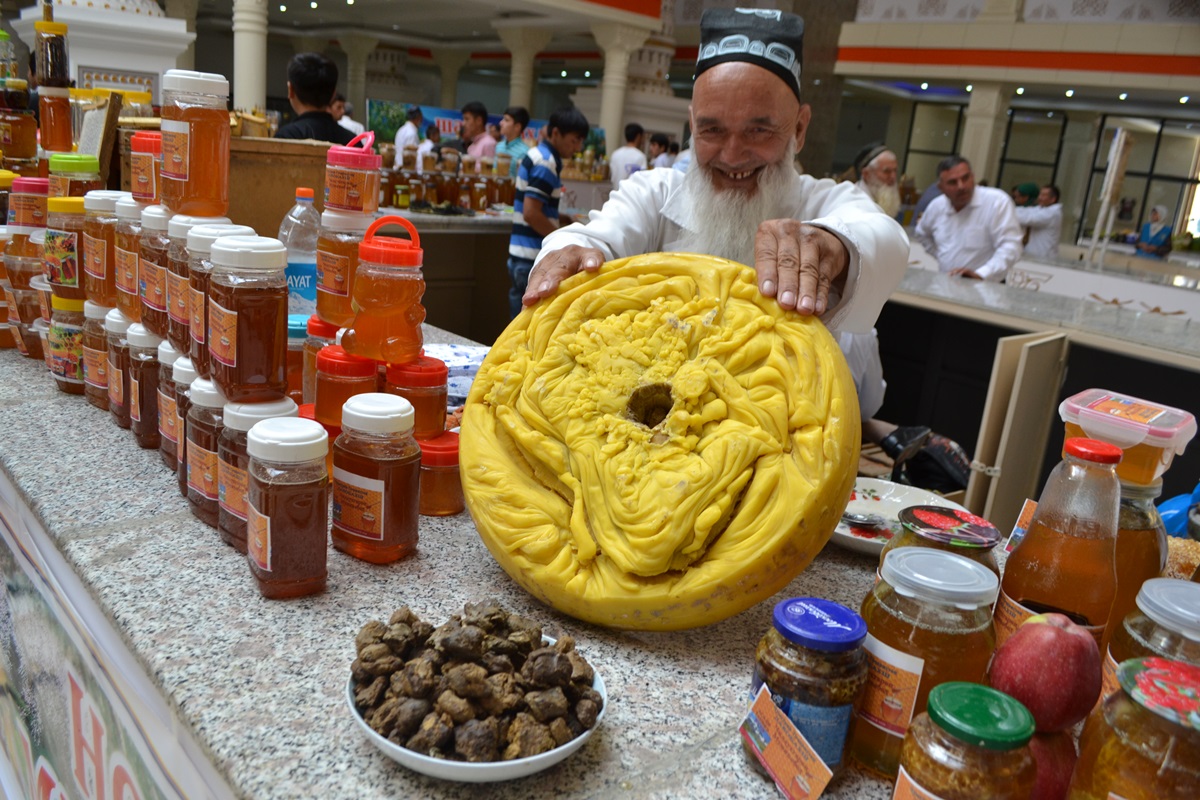
Tajikistan produces significant volumes of honey that regularly receive high praise at international exhibitions for their taste and environmental purity. However, Tajik honey remains absent from European store shelves. Despite its recognized quality, exports to the European Union remain out of reach.
Production is growing, exports are not
Honey production in Tajikistan has increased substantially over recent decades. While the country had around 60,000 bee colonies in the early 1990s, the number now exceeds 260,000–280,000. Annual production has grown from several hundred tons to 4,000–4,800 tons, equivalent to 0.4–0.5 kilograms per capita.
Despite this growth, exports remain minimal. According to customs data, Tajikistan exported only about 2.3 tons of honey in 2024, while imports totaled 4.2 tons, highlighting serious challenges in accessing foreign markets.
The price gap
The average retail price of honey in the EU is about €15 per kilogram, while wholesale prices range from $2 to $4. This gap reflects costs related to processing, packaging, branding, logistics, and marketing.
Tajik honey is mainly sold as raw material without processing or branding, significantly reducing its market value and appeal to international buyers.
Regulatory barriers block access to the EU
High product quality alone is insufficient for entry into the EU market. European regulations impose strict safety and control requirements.
President Emomali Rahmon has previously noted that despite favorable conditions for beekeeping, Tajikistan’s honey production and exports fall short of their potential, stressing the need to improve quality control and certification systems.
To export honey to the EU, a country must be included in the EU’s official list of approved third countries. It must also implement a national monitoring program for pesticide and antibiotic residues and operate accredited laboratories meeting EU standards.
Tajikistan has not yet completed this process. Although a monitoring program has been developed, it has not been approved by the European Commission, remaining the main obstacle to exports.
Quality control challenges
Laboratory tests have not always yielded satisfactory results. In one recent study conducted in Germany, no pesticides were found, but antibiotic residues were detected in about half of the samples, in some cases exceeding permitted levels.
“Chemicals lead to the death of bees. Farmers must inform us in advance about the use of chemicals on their fields,” says beekeeping expert Abdughani Toshmatov from Khujand.
Structural issues in the sector
Beyond regulatory hurdles, the sector faces structural challenges. Most apiaries in Tajikistan are small-scale, making it difficult to ensure consistent export volumes. Experts emphasize the need for cooperatives to collect, standardize, process, and package honey for export.
A lack of modern storage and processing facilities further limits the industry’s export potential.
The path to the European market
Experts agree that Tajik honey is environmentally clean and of high quality. However, access to the EU market requires proof of safety, traceability, and compliance at every stage — from production to transportation.
To achieve this, Tajikistan needs to:
· finalize approval of the national residue monitoring program;
· establish internationally accredited laboratories;
· train beekeepers and farmers in controlled chemical use;
· develop cooperation and processing capacities;
· implement traceability and quality control systems;
· improve packaging, branding, and marketing.
These steps represent only part of the extensive requirements. Meeting them would allow Tajikistan to compete with major honey producers and bring its honey to European consumers.