


Two weeks of U.S.-Israeli air strikes on Iran have displaced millions of people inside the country, raising concerns among neighboring states about a potential refugee spillover that could develop into a humanitarian crisis, Radio Free Europe/Radio Liberty (RFE/RL) reported on March 15.
RFE/RL says that according to the UN High Commissioner for Refugees (UNHCR), up to 3.2 million people have been temporarily displaced within Iran, most of them fleeing the capital, Tehran. The city experienced one of the heaviest bombardments of the conflict on March 13.
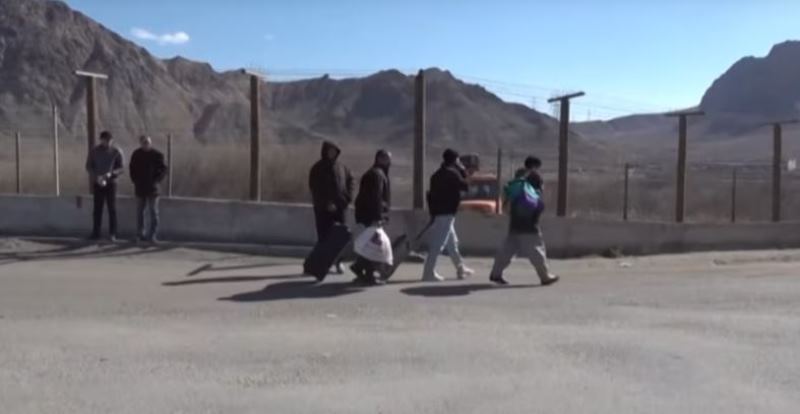
Several neighboring countries reportedly closed their borders when the air strikes began on February 28, allowing only limited crossings—mainly for citizens of third countries transiting home.
With many of Iran’s 90 million residents weighing whether to flee the country, Mahir Safarli, UNHCR’s representative for Central Asia, said the agency is preparing for a possible escalation of the humanitarian situation.
“Across Central Asia, we are coordinating closely with governments to monitor the situation and respond effectively if humanitarian needs expand,” Safarli said.
For now, the UNHCR says the refugee flow remains manageable.
Humanitarian preparations in Central Asia
Safarli said a key element of the UNHCR’s preparedness is a logistics hub in Termez, southern Uzbekistan, near the Afghan border.
Established in October 2021 during the Afghanistan humanitarian crisis and integrated into UNHCR’s global stockpile network in 2025, the hub stores emergency supplies such as tents, blankets, sleeping mats, kitchen sets, buckets, jerry cans, and solar lamps for potential refugee operations in the region.
Turkmenistan tightens border controls
Although UNHCR has not reported major changes along the Iran–Turkmenistan border, Turkmen officials told RFE/RL that attempts by Iranian Turkmens to cross into Turkmenistan have increased.
Iran shares a 1,148-kilometer border with Turkmenistan. The four main crossings—Sarakhs, Artyk, Howdan, and Altyn Asyr—remain operational but are currently open only for evacuating third-country nationals.
Turkmen officials say people approaching the border mainly come from northern Iranian districts with large Turkmen populations.
However, authorities in Ashgabat have ordered that Iranian citizens not be allowed to enter.
“Our patrols have been reinforced, and drones are monitoring the border,” the official said, adding that Turkmenistan lacks the economic capacity to host refugees.
Internal displacement in Iran
The United Nations says most displaced Iranians are moving northward, away from areas experiencing heavy bombardment. Many families are staying with relatives or in temporary community shelters.
The influx of displaced people has increased demand for food in northern regions, where residents report sharp price rises for staples such as flour, rice, and cooking oil, with some items costing up to ten times more than before the conflict.
For now, most displaced people remain inside Iran. However, Safarli emphasized that neighboring states have obligations if refugees begin arriving.
“In Central Asia, Kazakhstan, the Kyrgyz Republic, Tajikistan, and Turkmenistan all have refugee legislation and asylum systems,” he said. “UNHCR calls on states to allow access to territory for people seeking international protection and to ensure their rights and safety.”