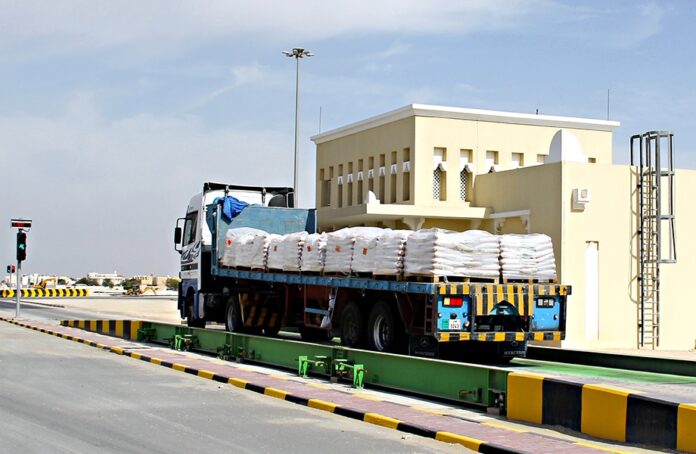
Two entry points into the capital of Tajikistan — from Tursunzade and Bokhtar — will have Weigh-in-Motion (WIM) control pointsfor trucks and oversized vehicles. After the installation of these points, vehicles weighing over 40 tons will be required to pay a certain amount.
This was reported to “Asia-Plus” by the Ministry of Transport of Tajikistan, noting that this decision was made to prevent the rapid deterioration of the roads from Dushanbe to Tursunzoda and Dushanbe to Bokhtar.
According to the source, the agreement to install these points was signed on July 21, 2025, between the Ministry of Transport of Tajikistan and the company Kvadrat System LLC from the United Arab Emirates. According to the document, the company is to complete the construction work within 8 months.
The ministry reports that the installation and connection of the weight control system for trucks and oversized vehicles at the two entry points to Dushanbe began in December 2025, and it is expected that the work in this direction will be completed in August.
The agency stated that only oversized and cargo vehicles will be checked at the weight control points, and if the weight exceeds 40 tons, a certain amount will be paid. Currently, the amount is unknown.
The source reported that after the completion of the installation of the vehicle weight control system on these two highways and its acceptance by the state commission, these facilities will be transferred to the management of the State Unitary Enterprise “Center for Certification of Work and Services in the Field of Transport” of the State Transport Supervision and Regulation Service.
The agency added that the installation of the vehicle weight control system while traveling on these roads is being carried out as part of the “Improvement of Transport Connections in Central Asia, BRAMOM-4” project, funded by the World Bank.
Currently, the only toll road in Tajikistan is the Dushanbe — Chanak highway. On this road, several toll collection points for the use of the road by passenger and cargo vehicles have been established.
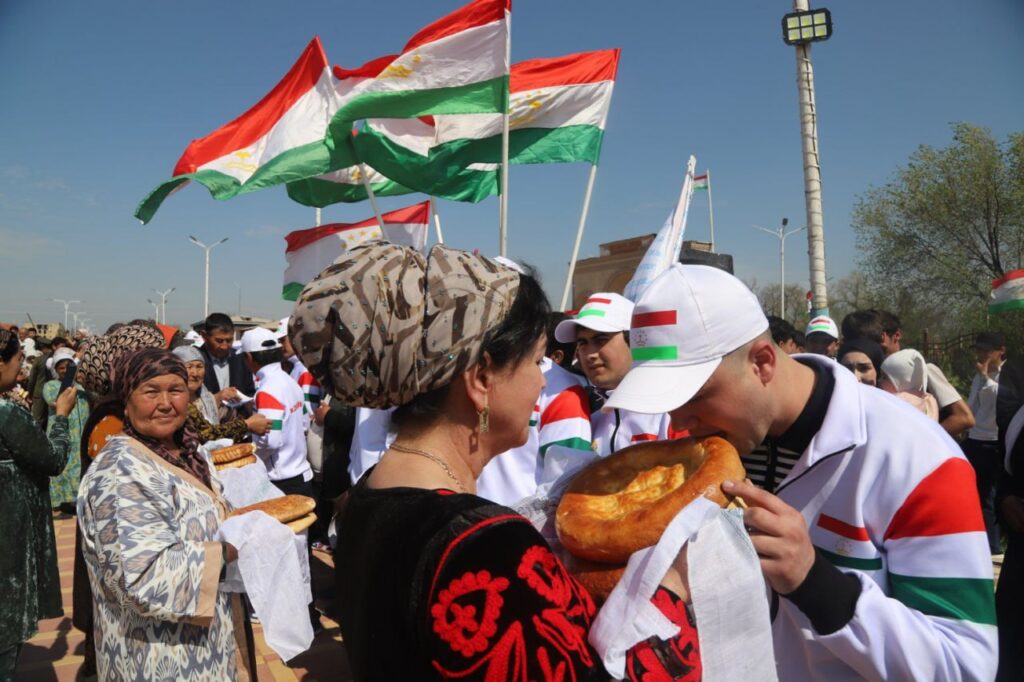
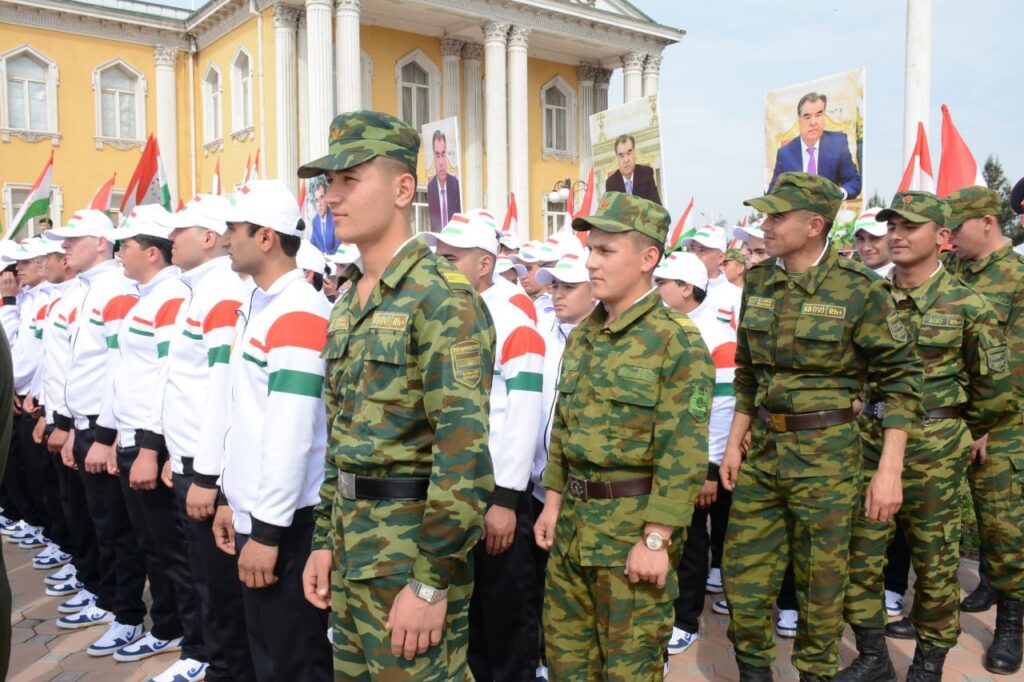
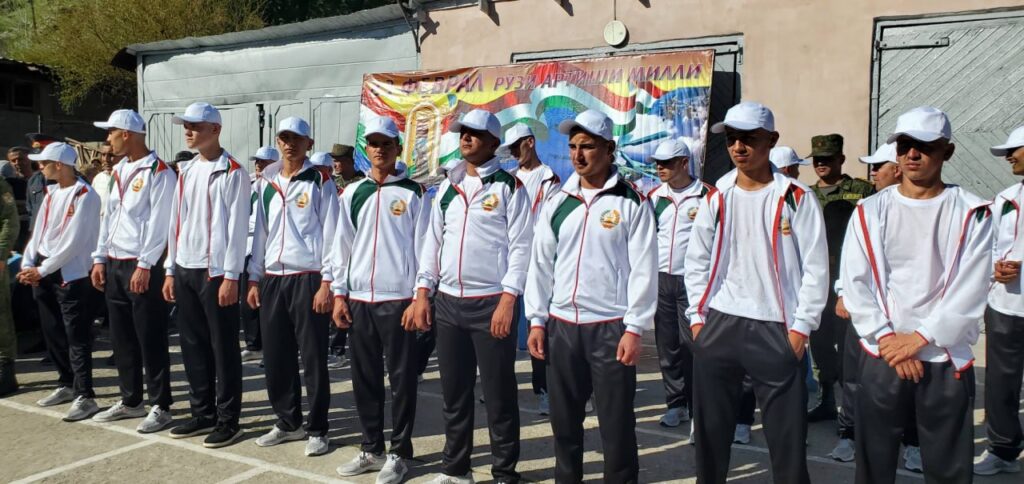
The Ministry of Defense of Tajikistan announced that on the first day of the spring conscription campaign, the recruitment plan was fulfilled by 54.3% across the country. According to the agency, the Gorno-Badakhshan Autonomous Region, several cities and districts of the Khatlon region, and districts under republican subordination fully met the conscription plan on the very first day of the new recruitment season.
Today, April 2, the Ministry noted in a published statement that for several consecutive years, the Gorno-Badakhshan Autonomous Region (GBAO) has been the first to report on fulfilling the conscription plan.
Also, on the first day of conscription, the cities of Bokhtar, Kulyab, Nurek, and the districts of Dusti, Javan, and Vakhsh in the Khatlon region reported complete fulfillment of the plan.
In addition, at this time, some cities and districts under republican subordination, including the districts of Rasht, Sangvor, Tajikobod, Lakhsh, and Nurabad, have fulfilled the conscription plan for military service by 100%.
The news agency “Khovar” reported full fulfillment of the conscription plan in the districts of Muminobod and Farhor in the Khatlon region.
“Responsible officials in other cities and districts of the republic are also actively working in this direction and striving to fulfill the plan within the established timeframe,” the Ministry of Defense noted.
In the government of the Sughd region, asia+ reported that on April 3, a ceremony will be held to send off the recruits, and on that day more cities and districts that fulfilled the conscription plan will be announced.
At the same time, the National Information Agency “Khovar,” citing the government of the city of Isfara, reported that the rural communities of Vorukh and Chorkuh fully fulfilled the military service conscription plan on the first day.
Authorities explain the fulfillment of the plan on the first day of the conscription campaign and the day before it by “increasing the number of volunteers, benefits for conscripts, and proper organization of explanatory work.” However, experts assert that according to the new law on military duty, authorities have the right to recruit youth into the army throughout the year, and this is the reason for the fulfillment of the plan in the early days of the conscription campaign.
Every year, with the start of the conscription campaign in Tajikistan, the issue of attracting youth to the army becomes relevant. Unfavorable conditions, poor treatment of soldiers, hazing, and the death of youth in military units are considered the main reasons for youth avoiding service in the ranks of the Armed Forces of Tajikistan.
Additionally, every year, with the start of the military service conscription season, videos of soldiers being beaten and reports of the forced detention of young people by unknown individuals circulate on social media, causing public outcry.
Authorities always deny the existence of so-called raids. However, they state that in the case of young people not appearing at the military enlistment office after receiving a summons, the police have the right to forcibly deliver them.
Also, in Tajikistan, youth can undergo a month-long military service for money.
According to a presidential decree, this season, which will last until May 31, young people aged 18 to 27 (born between 1999 and 2008) are being conscripted into the army.
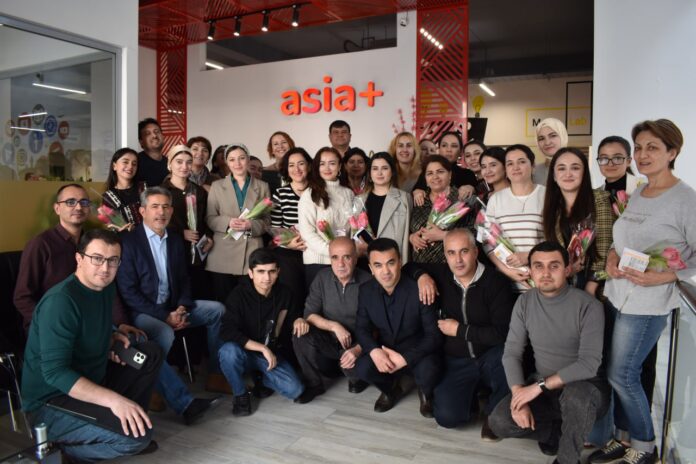
In the media industry of Tajikistan, there has been an informal concept for 30 years — “Asian.” This term is used to refer to both former and current employees of the media group “Asia-Plus.” Typically, these are specialists who are valued in the market and are distinguished by a unique professional culture and style of work. Many such “Asians,” having established themselves, left the media group to open their own media outlets and businesses, headed departments in multinational companies, or appeared on broadcasts of global radio stations.
The “Asians” who remained in place performed their feats: they wrote about things that could not be spoken of and honestly admitted to the audience when they could not do so.
Of course, not all employees of “Asia-Plus” became “Asians,” but for those who can call themselves that, their experience in this structure has become part of their identity. Perhaps, the most significant part.
Who are the “Asians” and why is “Asia-Plus” one of the most important institutions in contemporary Tajikistan? This is explained by journalist, media expert, former senior correspondent of “AP,” and “Asian” Lilia Gaysina.
“There was only one journalist among us”
Thirty years ago, when a civil war was still ongoing in Tajikistan and people were leaving the country because they saw no future here, a company began operating in a small office of what was then the “Avtotranstechnika” building (now a branch of Moscow State University), which would soon become a major springboard in the lives of hundreds of young people.
When the “Asia-Plus” bulletin began to be published, many of those who would later make up the backbone of the media group were wandering around the republic in search of themselves, their calling, and often simply a piece of bread. Almost none of them were journalists. For example, historian Marat Mamadshoev came to “Asia-Plus” because he realized that his specialty was of little interest to anyone.
“I just saw an announcement that they were looking for authors and came for an interview. I was invited, and I wrote a piece about Sarez. At that time, “Asia-Plus” was a team of young people who were passionate about creating modern media but did not know how to do it. Among us, there was only one journalist — Umid (Babakhanov, the founder of the media group. — Ed.), everyone else had a very vague idea of what journalism was and acted randomly,” he recalls.
The average age of the team that was about to change the world was 20–25 years. Sometimes the authors were even younger. The oldest was Umid Babakhanov himself (34 years), but he was the one who believed in his venture the most.
“Umid was never satisfied with the result — he always wanted more. Later, when “Asia-Plus” became a large and popular media outlet, this saved him. Usually, successful people become inert, but Umid always needed something else, and he did not stop,” says Marat.
The desire to achieve more drove the entire team to come up with new projects. They were constantly appearing and continue to appear among the “Asians.” The first information bulletin was released on April 2, 1996, the website launched in 1999, the newspaper came out in 2000, radio started in 2002, the music award “Surudi Sol” was established in 2003, a glossy magazine in 2008, and another music award, Tarona, in 2021. And between them were dozens of newspaper supplements, an advertising agency, a journalism school, and many other ideas. Some of these turned out to be unsuccessful and closed after a couple of months, while others overshadowed the previous ones and became the locomotives of the entire group.
The “Asia-Plus” newspaper became one of the brightest yet most challenging projects.
“The excitement was incredible, every day was adrenaline”
For many years, the newspaper’s editorial team and the information agency worked in different offices. The newspaper staff sat in the Newspaper and Magazine Complex, which is now called “Sharki Ozod,” but at that time everyone knew it simply as GZhK. The information staff continued to work with the editor-in-chief in the “Avtotranstechnika” building. It wasn’t that the colleagues disliked each other, but each side was absolutely certain that their team was the best in the media group. However, the newspaper developed a reputation for being the tougher team — not least because Olga Tutubalina worked there.
“Before ‘Asia-Plus,’ I worked at GZhK — but at a different newspaper on another floor. My introduction to ‘AP’ happened unexpectedly: that day they were giving away bicycles in the GZhK lobby — there was some kind of contest for readers. I was surprised by two things. First, these were completely young guys creating a media outlet that everyone was already talking about. Second, they were very positive and charged with their energy. This was completely different from other editorial offices, where texts were still typed on typewriters, the editor only received department heads in his long office, and journalism as a process was hardly discussed,” says Olga.
She came to the editorial office as a secretary but then asked to join the editorial team and quickly became a media star.
“I approached the editor — at that time it was Zafar Abdullaev, who, by the way, was only 24 years old. The first editor of the newspaper and its main inspirer. He easily agreed: write. He didn’t provide me with any topics or explanations — just ‘write.’ I chose the topic myself and still remember both the doctor I interviewed and even the headline. I wrote it. At the editor’s request, I rewrote it. Then the text was published. And, of course, it was happiness,” shares Olga.
She recalls that for many years, the editorial office was characterized by a special atmosphere of complete freedom of action. The editor-in-chief — Umid Babakhanov — appeared at the newspaper only once a week, on Wednesdays, for a few hours before the issue was released, to review it before publication. Even when he criticized the materials, the staff had the opportunity to defend their position — sometimes quite firmly.
“It was an incredibly cool feeling. Imagine: you are a non-professional, you are 20–25 years old, and around you are the same — and at the same time, you are making one of the best newspapers in the country! The excitement was incredible: every day was adrenaline, arguments, ideas, plans for the future. Even during lunch (which was always together) or in the smoking area, we talked only about work and could drop an unfinished cigarette if an idea came to mind about how to start or finish an article. Such a period probably happens in any media — a time of creative upsurge, high ambitions, a sense of permissiveness (in a good sense), and complete happiness from what you do — and you succeed,” she describes.
“I was absolutely devoted to my work”
However, success did not come immediately. Journalist Parvina Hamidova, who worked at the newspaper both as a senior correspondent and editor, recalls reading it even before she came to the editorial office — although in the early years the format of the publication was quite vague.
“When I graduated from university with a degree in finance and credit, I suddenly saw an advertisement in the newspaper. I read it, I liked it — even though it was not entirely clear what it was about, it still caught my attention. For some reason, I decided to respond to this advertisement. I sent my materials for a competition on how to properly take exams. They called me, asked if I had written it myself, and invited me to work. I started working on the youth section. We searched for the format for a long time, tried and made mistakes. We would stay in the editorial office until night. I was absolutely devoted to my work,” recalls Hamidova.
Despite the fact that she has long been out of journalism and even out of Tajikistan, Parvina cannot imagine her life without “Asia-Plus.” There has always been an atmosphere of freedom and support here: employees became not just colleagues, but friends. Among the “Asians,” there are many people who have maintained these connections for decades.
“Now, of course, journalism is much more complicated everywhere. I do not envy young journalists with such a choice of profession,” she clarifies.
In the 2000s, no one in the editorial office had such thoughts. All the cataclysms with freedom of speech occurred much later, and “Asia-Plus” managed to become a truly important publication that the authorities listened to and that ordinary people relied on. By that time, the civil war had already ended, the country was in ruins, but journalists proudly spoke of freedom of speech as one of the main achievements of independent Tajikistan.
And no one could dispute that. For example, in 2008, in the annual press freedom ranking compiled by the organization “Reporters Without Borders,” Tajikistan ranked 106th out of 173 countries — these were leading positions in Central Asia. Among the countries of the former USSR, it only lagged behind Estonia (4th place), Latvia (7th), Lithuania (16th), and Ukraine (87th).
“These were the coolest colleagues”
Until the 2010s, all Tajik journalism lived in conditions of relative freedom. Journalists of independent Tajikistan built their profession essentially from scratch and enjoyed the results. In addition to projects of the media group itself, new television companies, radio stations appeared in the country, and media learned to earn money. Working in the editorial office — especially in “Asia-Plus” — was considered a great success, and people held on to it.
For example, journalist Amrita Kargizova memorized all the phone numbers of official speakers from the editorial directory. At that time, there were no mobile phones, and contacts of sources could be needed at any moment, and the editor of the information agency, Lidia Isamova, simply advised journalists to memorize them.
“And I memorized them,” says Amrita. “You could wake me up in the middle of the night and ask for the number of, for example, the deputy minister of justice, and I would answer without hesitation.”
Amrita also came to the editorial office through an advertisement. By that time, she already had a whole collection of newspaper issues at home, which she had read cover to cover. When she saw that “Asia-Plus” was looking for journalists, she immediately went to the specified address.
“I came to the office with this announcement — and suddenly I had the feeling that this was my place. But along with that, there was a strong nervousness: I felt that I wouldn’t manage. I was a good student, did an internship, but here I suddenly got scared. It seemed that everyone around was so cool, knew everything and could do everything, and I could not. This feeling lingered for a while,” Amrita admits.
It was then that she learned that “Asia-Plus” was not just a newspaper, but also an information agency. It was the information staff who provided the newspaper staff with news fuel, and Amrita decided to join this team. As with many other “Asians,” she had to stay in the editorial office until late at night. Her parents did not understand how one could work until midnight and not earn much money for it. However, staying late in the office was not only due to work but also because of the frequent parties that the media group was always known for.
“AP was another world, completely unlike the reality around. There, you could express yourself, even shout. It was an island of freedom where we created. I was on cloud nine from the happiness of belonging to this world. And the main thing — it has remained the same. The same open people who care about what is happening,” explains Amrita.
There have always been many idealists among the “Asians.” Since 1996, they have been chronicling the country, and in today’s information world, this is a super important task. Independent online media is the cover of any country, but it cannot be glossy — only real. Quality journalism is constructive criticism, analysis, and working with open data. And if all of this exists, it is a sign that everything is good inside.
“Everyone wanted to do everything: eyes were shining, hands were working, legs were running”
Another successful project of the media group — without a doubt — is the radio. It appeared in 2002 and quickly became a super popular place that many young Dushanbe residents dreamed of joining. They were attracted by the hosts, the format, and the overall vibe of the new radio station.
This is where Zebo Tajibaeva began her career, who now has her own media.
“The trendiest radio station at that time looked like this: one computer for two people, worn carpet, a smoky foyer — and at the same time, an incredible atmosphere of lively, young people who wanted to change the world around them and actually did,” recalls Zebo.
She shares that for a long time, working on air was a great stress for her — the fear of the microphone seemed insurmountable. But over time, she managed to open up.
“Of course, they used me as the most inexperienced: I obtained most of the news, so to speak, ‘on foot’ — running around, recording. And once I was offered to write news for the information agency as well. It turned out that I was even better at writing them than reading them on air. I didn’t stop reading the news, but I started taking on everything.
They gave us the opportunity to try ourselves in different formats: if you want an author program on the radio — please, if you want to write an article for the newspaper — please. The main thing was that everyone wanted to do everything: eyes were shining, hands were working, legs were running. Unfortunately, such an atmosphere no longer exists anywhere else. We didn’t just work — we lived journalism,” she says.
At the same time, the atmosphere in the editorial office was not solely related to the youth of the team. All “Asians” fondly remember their colleague Bakhram Manonov, who was significantly older than the rest.
“He was always ready to help and was the most productive. He never sat in the office — he gathered all the news himself and then quickly transcribed the recordings. Anyone who worked at AP could count on his help. It seemed to me that he never got tired. But unfortunately, he did get tired — his death was the most unexpected and significant loss for all of us,” Zebo shares.
“I left my child with a neighbor and ran to ‘Asia-Plus’
The executive director of the media group — Manizha Akhmedova — also built her career on the radio. In 2002, she was busy with household chores — sweeping the yard. She couldn’t find a dustpan and took an old, already read “Asia-Plus” newspaper.
“I flattened it — and suddenly saw an announcement: recruitment for the first FM radio station in Dushanbe is underway, and… today is the last day! I didn’t think long. I immediately started calling. Back then, there were no mobile phones, and getting through from a landline was quite a challenge. But I got through. They told me that if I could arrive within an hour — the commission would wait for me. I just took off. I left my three-year-old child with a neighbor and ran. I arrived, spoke… and stayed there for many years. More than two decades,” she recalls.
Like all “Asians,” Manizha shares that from the very first days, she felt that radio was her place.
“It was true happiness — to work in such a young, lively, mischievous, and incredibly energetic team. Every day, new ideas were born, and we immediately took on their implementation. The atmosphere was amazing — light, open, without unnecessary barriers. We all communicated as equals, supported each other. The management understood that creative people cannot be confined to strict frameworks. We were trusted — and this trust was something we wanted to justify. Therefore, we could work late into the night, stay for days — not because ‘it was necessary,’ but because we wanted to. Because we were passionate about our work. Because it was a shared endeavor, one big idea in which we all believed,” she recounts.
In 2018, Manizha was offered to head the radio. Within the media group, any employee with abilities and talents could claim high positions. However, a big position also meant big responsibility.
“I was afraid I wouldn’t manage, that I would let down the people who trusted me. I understood how serious it was. But I had a team. My team. People who became like family to me. Professionals in whom I never doubted for a second,” Manizha shares.
Four years later, in 2022, Manizha had to take on an even greater responsibility: she became the executive director of the entire media group.
“Since then, I think not only about the development of the radio but also about the future of the entire company. It is a different scale, different tasks, a different level of decisions. But the most valuable thing I have is the people. Our team. Friendly, strong, understanding. A team where everyone is a professional in their field, where there is support, respect, and a true sense of camaraderie,” she says.
“If you go through Tutubalina’s school, nothing will scare you anymore”
When it was decided to place a branch of Moscow State University in the building where the information agency “Asia-Plus” was located on one of the floors, the “Asians” had to move.
They moved to the GZhK building, into a new office that they renovated themselves. There were old showers for employees of the printing shop at this location. The information staff and administration moved into this office, while the newspaper remained on its second floor in the same building, and the radio was located on the 13th. Thus, the entire media group found itself under one roof.
However, in 2020, the entire “Asia-Plus” team suddenly had to unite. About 50 people worked in two editorial offices. The recording studio and “on-air” were equipped right in the corridor, and employees of the advertising department were seated next to journalists. It was difficult for two employees to pass between the furniture that had been brought into the office. But no one quit. The team worked in such conditions for more than a year.
In 2022, the editorial office moved to a new office in the city center, which can today be called one of the most comfortable in Dushanbe. It was here that new youth began to come, of whom there were already few left in “AP.”
“When I graduated from journalism school and returned from Rostov, I was not sure that I would connect my life with journalism. Everything around made me doubt: does that journalism I dreamed of even exist? But still, I decided to give it a try. “Asia-Plus” was then the only large media outlet I knew and was interested in, although I had no idea how everything was arranged there. However, I had heard the phrase: if you go through Tutubalina’s school, nothing will scare you anymore,” shares journalist Milana Yena.
She came to the new office, around were new times, but she still felt that same atmosphere.
“My first day. I walk in — and literally from the threshold, I feel this rhythm: someone is running with a camera, hurrying to the shoot, others are typing texts without looking up. At some point, I caught myself thinking: this is real life. Initially, I imagined that there would be tired, overloaded journalists, but I saw a cheerful team that I wanted to join,” she recalls.
At first, Milana was interviewed by Amonullo Khayrulloyev, who then led the SMM service, and then by Olga.
“Here, I certainly felt like I was taking the most difficult exam. But did I get scared? No. On the contrary. At that moment, I finally realized: I came to the right place and to the right people. To professionals from whom I could learn. And maybe one day become like them — if I really wanted to. Honestly, when people ask me what I like most about AP, I always say the same thing: the people,” Milana says.
She admits that from the very first days, she felt like an “Asian” — largely due to the fact that the editorial office still supports, helps, and reacts calmly to mistakes.
“You come into the team — and you are immediately accepted as one of your own. Perhaps this is the peculiarity of the editorial office. For me, it has long ceased to be just a job; it feels like you are part of a big family,” she shares.
“We have the best relationships with the audience”
Of course, over these 30 years, “Asia-Plus” has gone through a lot: financial and political crises, pressure from outside, lawsuits. At some point, “Asia-Plus,” like all editorial offices in the world, faced an existential crisis — with the advent of social networks, everyone became media, and journalists lost their previous monopoly and advertising revenue, which went to other platforms. The editorial office plunged into new formats.
“Now we have about two million followers on social media. We managed to create an atmosphere of trust: people share their stories with us, come to us with their problems — in comments, in private messages, even personally to the editorial office. Many topics arise precisely from these appeals. I am very proud of this. Especially that people are not afraid to come to us. In a situation where many are afraid to talk about their problems, they come to us — without fear. And this is the most valuable thing for me,” says Mehrangiz Sultonzoda, head of the media group’s SMM service.
Mehrangiz is also a representative of the new generation of “Asians”: she joined the editorial office three years ago, still a student, but already with experience working at other publications.
“I rewrote my first report for AP three or four times. I already had experience with publications, but here everything turned out to be different. I was taught, guided, pointed out mistakes — and they did it very kindly. The strongest impression is the attitude of colleagues. I heard a lot about professional jealousy, but there was none here. On the contrary: more experienced colleagues could simply share their data that they had collected themselves — just because I took on this topic. From the very beginning, I felt like an ‘Asian.’ Perhaps this is what kept me in the profession,” she says.
Umid Babakhanov himself explains what “Asian” means in his understanding:
“If a person shares our values, is passionate about the work, cares about the team, he is our person, an ‘Asian.’ At the same time, he can be completely green and have no experience. That’s not scary — experience comes with time. If, however, a person has no principles, if he only loves himself and comes to work only for the salary, he is an ordinary employee who will likely not stay with us for long.”
Umid Mansurovich knows about his characteristic of “being constantly dissatisfied,” but continues to try to use it for good:
“Every victory, every new height, of course, delights and inspires all employees — including me. But I often repeat to young colleagues one simple thought: as soon as we give ourselves a rating of ‘five’ and are completely satisfied with our work, we stop developing. And that is dangerous. Therefore, already the day after any success, it is important to sit down and think: how can we improve what we have done, how to take another step forward? I am sure that this approach has allowed the media group to remain a leader for all these 30 years.
Today, considering the speed of changes in technology and business, this principle is becoming even more important. I really hope that the new generation of “Asians,” who are succeeding us, will continue to remain, in a good sense, dissatisfied with themselves and will take a step forward every day. Otherwise, any organism ages and dies.”
The expanded lineup of participants, high competition density, and new ambitious teams make the upcoming championship special. For Tajikistan, this is not just participation – it is a chance to confirm that the success of 2023 was not an accident, but the beginning of a new football era for the country.
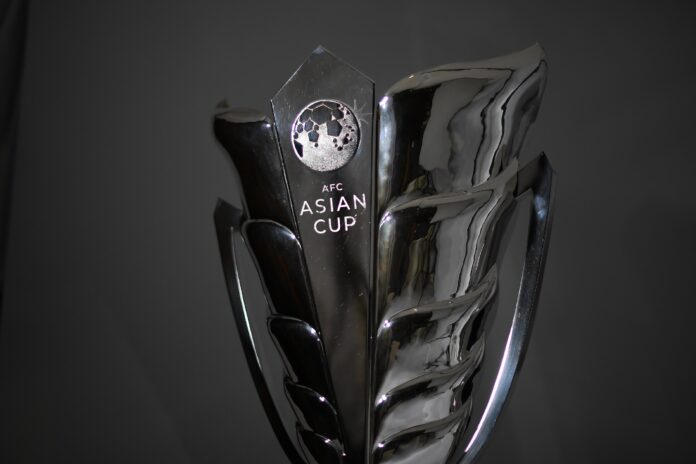
The 19th championship of the continent will take place from January 7 to February 5 in Saudi Arabia and will gather the 24 strongest national teams in Asia. For many teams, including Tajikistan, this is an opportunity not just to participate but to declare themselves at a new level.
Saudi Arabia will host the tournament for the first time in history. Matches will be held at eight modern stadiums in three cities – Riyadh, Jeddah, and Al Khobar. Among the venues are major sites like King Fahd Stadium (over 70,000 spectators) and King Abdullah Sports City in Jeddah.
The organizers are betting on a high level of infrastructure and spectacle – the tournament is expected to showcase a new stage in the development of football in the region.
The format of the competition will remain the same: 24 teams will be divided into 6 groups of 4 teams each. The top two teams from each group will advance to the playoffs, as well as the four best teams that finish in third place. Then, the classic knockout stage will follow: Round of 16, quarter-finals, semi-finals, and the final. This format makes the tournament exceptionally tight and unpredictable – even a single mistake can cost a team its advancement.
The lineup of participants is already almost finalized. Traditionally, the favorites include Japan, South Korea, Iran, and Australia – teams that consistently rank among the strongest in Asia. Particular attention is paid to Qatar – the reigning two-time champion, who will defend its title. Iraq, Uzbekistan, the UAE, and Saudi Arabia, which will play at home, also have serious ambitions.
At the same time, the 2027 tournament reflects a new trend – the leveling of the level among Asian teams. Teams such as Tajikistan, Kyrgyzstan, Palestine, Indonesia, and Singapore will participate in the final part. This confirms that the geography of competitive national teams is expanding, and the gap between the leaders and the mid-tier teams is gradually narrowing.
For Tajikistan, this tournament will be the second in history after a successful debut at the 2023 Asian Cup, where the team reached the quarter-finals. Now expectations are higher: the team is no longer a newcomer but is perceived as a strong and organized opponent.
A separate intrigue will be the draw, which will determine the groups. Initially, it was supposed to take place in April 2026 in Riyadh, but it has been postponed. The distribution into pots will be based on the FIFA ranking, and Tajikistan will likely end up in the third pot, which means facing giants already in the group stage.
The 2027 Asian Cup will not just be another tournament, but a symbol of a new stage in Asian football – with increasing competition, expanding geography, and improving organization. For fans, it is a chance to see the rivalry between traditional leaders and new ambitious teams, and for the teams themselves, it is an opportunity to write their names in the history of the continent.
Participants of the 2027 Asian Cup: Saudi Arabia (hosts), Japan, Iran, South Korea, Australia, Uzbekistan, Qatar, Iraq, Jordan, UAE, Oman, Syria, Bahrain, Thailand, China, Palestine, Vietnam, Tajikistan, Kyrgyzstan, North Korea, Indonesia, Kuwait, Singapore, winner of Group B (Lebanon or Yemen – to be determined later).
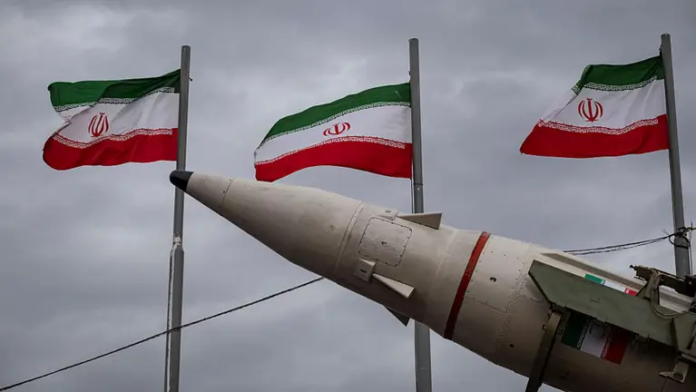
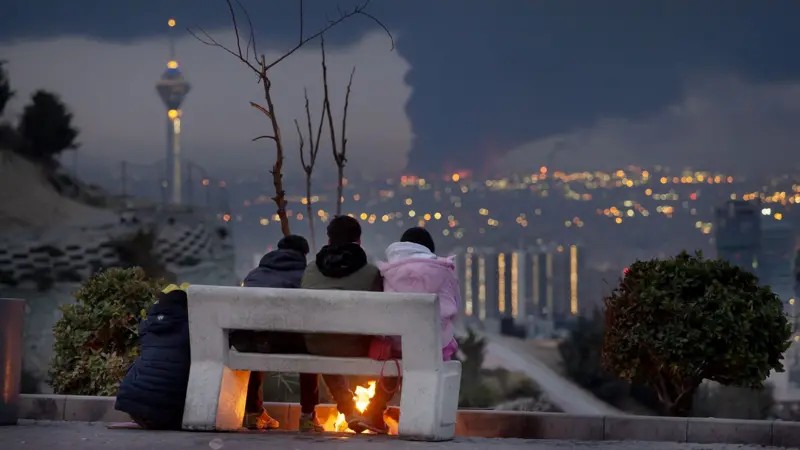
Four weeks after the beginning of the war between the USA and Israel against Iran, the strategic picture of the conflict is becoming increasingly complex. Contrary to the expectations of Western powers, Iran is demonstrating determination and readiness for a protracted war, holding back attacks and adapting its military strategy. What are the real objectives of both sides, and are the USA and Israel prepared for a long war in Iran?
Saadi Khamid, a Tajik analyst residing in the USA, shared his opinion with “Asia-Plus.”
According to the official version from Washington and Tel Aviv, their goal is to destroy Iran’s nuclear program, its naval forces, eliminate the leadership of the Islamic Republic, and ultimately change the political regime in the country.
The USA and Israel have already achieved one of their important objectives – the assassination of several high-ranking Iranian leaders, including Ali Khamenei and Ali Larijani, the Secretary of the Supreme National Security Council of Iran. Although the Islamic Republic has been seriously shaken by such strikes, its military strategy is not destroyed, and the country is preparing for a prolonged war.
Furthermore, the assassination of the Secretary of the Supreme National Security Council of Iran and Minister of Intelligence Ismail Khatib does not necessarily lead to the defeat of the state. In case of the death of key leaders, a mechanism for transferring powers and making more independent decisions by military units has been pre-established.
Most understand that the so-called “regime change” and “bringing freedom” to Iran practically mean the destruction of the country’s infrastructure, a deterioration in the quality of life for the population, the destruction of historical heritage, human casualties, and undermining Iran’s territorial integrity.
Even now, the Central Intelligence Agency (CIA) is making efforts to arm the Kurdish opposition, which may become the beginning of a process to weaken the unity of the country.
In the early days, Donald Trump and Benjamin Netanyahu believed that following a military strike and the weakening of the Islamic Republic, the opposition would be able to overthrow the government. However, the opportunities for this have already been missed.
The decision to attack Iran seems to have been based not so much on precise calculations and intelligence, but rather on the assumption that the Iranian state would quickly be defeated.
Such assumptions are far from reality, as there is currently no organized and armed opposition force within Iran.
Events in Venezuela – the military operation by the USA in Caracas and the kidnapping of President Nicolás Maduro – may have convinced Trump that a similar operation could be quickly carried out against Iran as well. However, the key point is that Trump’s plan anticipated a short and limited military campaign, without a clear strategy in case of a prolonged and large-scale war, especially from a political standpoint.
Compared to the USA, Israel is more prepared for a prolonged war with Iran. According to a survey conducted by one of the Israeli research centers, 82% of the Israeli population supports a war with Iran.
In the USA, the situation is different. Anti-war pressure on Trump’s administration is expected to increase. A prolonged and large-scale war with Iran is unpopular among Americans. One of Trump’s main electoral promises was to end US intervention abroad; however, his military policy contradicts these statements and has already led to a decline in his popularity domestically. According to the latest data, about 60% of Americans oppose war with Iran.
Vulnerability of Oil Infrastructure
Iran, facing serious pressure from the USA and Israel, is acting contrary to Trump’s expectations and seeks to expand the scale of the war and, if necessary, make it protracted.
Trump expected the war to be short and limited, and that serious consequences for the region and the global economy could be avoided. However, damage to regional stability and the global economy has already been done.
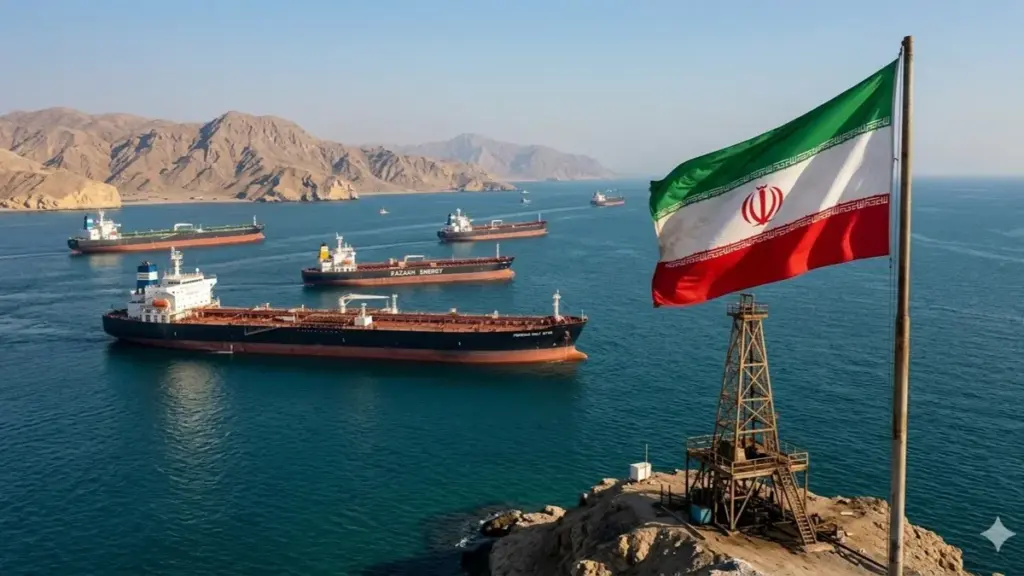
Iran has managed to almost completely halt the flow of oil trade through the Strait of Hormuz, through which about 20% of global oil supplies previously passed. Currently, shipping traffic has sharply decreased, which has already led to an increase in global oil prices.
Despite bombings and the elimination of several high-ranking Iranian leaders, Iran’s opponents have so far failed to establish control over the Strait of Hormuz. However, US and Israeli attacks on the oil infrastructure in southern Iran, as well as a potential strike on Qeshm Island in the Persian Gulf – a key point through which about 90% of Iranian oil is exported – could significantly escalate the scale of the war.
In such a case, Iran’s response could be attacks on the oil infrastructure of the Persian Gulf countries.
The expansion of the conflict to Arab countries in the region is not accidental. The escalation of the conflict could undermine the stability of these states and compel them to put pressure on Trump to end the war.
Iran’s Strategy and the Influence of US Domestic Politics
Iran’s preparation for a prolonged war could lead to increased political and psychological costs for Trump’s administration. The American public has a negative perception of senseless wars unless the president can present them as victories.
Moreover, the internal political situation in the USA is also changing. The likelihood of Democrats winning the midterm elections in Congress may increase precisely because of the war initiated by Trump. In this case, pressure on the administration to conclude the conflict may intensify.
Iran is effectively resorting to asymmetric warfare, trying to compensate for its military lag behind stronger opponents.
Asymmetric warfare implies the use of unconventional methods and means to neutralize the military superiority of the enemy.
Such methods include:
– decentralized decision-making in military matters after the death of leaders,
– the use of cheap drones,
– the activation of allied forces: “Hezbollah” in Lebanon, Houthis in Yemen, Shiite groups in Iraq.
Nevertheless, the Islamic Republic will not be able to defeat the USA and Israel solely on the battlefield, although its drone warfare strategy is already forcing opponents to incur significant defensive expenditures.
Therefore, Iran’s counter-strategy includes not only military but also political and psychological methods of pressure, primarily on the leadership of the USA.
Conclusion
One hasty and ill-considered decision by Trump was enough to initiate a process of revising the entire security architecture based on American influence, both in the region and globally.
The rise in prices for essential goods, especially fuel in the USA, has already become one of the consequences of the war against Iran. This may weaken Trump’s position domestically and ultimately lead to the failure of his military policy.
The strategy of the Islamic Republic is based on a rational assessment of the weaknesses of its opponent. Despite significant losses and pressure, this strategy may prove effective in the long run.
However, the world is currently witnessing only the initial phase of the conflict, and the likelihood of its expansion and prolongation remains high. As events unfold, new unexpected factors may arise, making it extremely difficult to predict the course of the war.
After the deaths of several top leaders, Iran transitioned to a decentralized decision-making system so that armed forces could quickly make key military decisions without direct instructions from the top leadership.
However, the consecutive assassinations of high-ranking Iranian leaders in a crisis also pose serious dangers, as such strikes could disrupt the coordination and integrity of the military system.
Therefore, the success of Iran’s strategy will largely depend on its ability to withstand pressure and respond flexibly to the actions of the USA and Israel.
The American spacecraft “Orion” with four astronauts on board successfully launched from Cape Canaveral in Florida, heading to the Moon as part of the “Artemis-2” mission. The launch was streamed live on NASA’s YouTube channel. This is the first crewed flight to the Moon since 1972.
The launch of the heavy-lift SLS rocket took place at 6:35 PM Eastern Time on April 1 (1:35 AM on April 2 Moscow Time).
On board the spacecraft are four astronauts: Commander Reid Wiseman, Pilot Victor Glover, and Mission Specialists Christina Koch and Jeremy Hansen.
As part of the “Artemis-2” mission, “Orion” will make one orbit around the Moon, flying at a distance of about 7,500 kilometers from its surface.
The duration of the flight will be 10 days, with no landing on the Moon planned.
The main goal of the crew is to test the systems of “Orion” and ensure their reliable operation in the conditions of deep space.
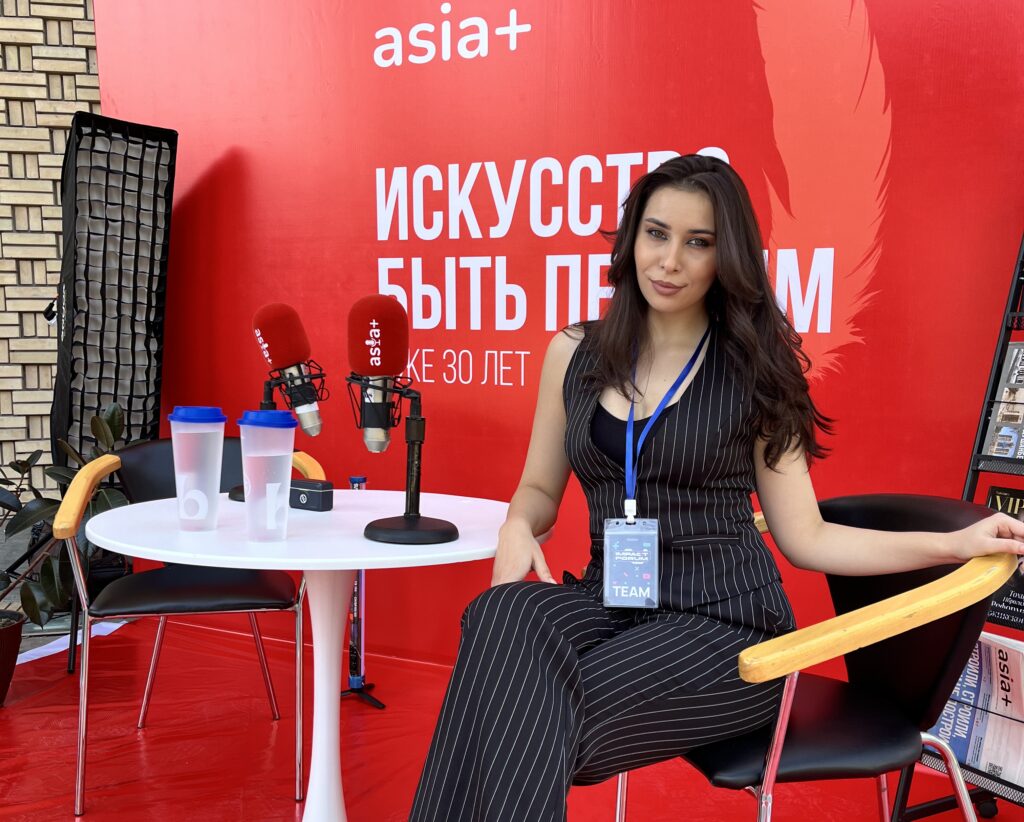
Today, the media holding Asia-Plus celebrates the 30th anniversary of its founding. On April 2, 1996, the first issue of the information and analytical bulletin of our news agency was published — this date is considered the birthday of Asia-Plus.
We are congratulated by the chairman of the Union of Journalists of Tajikistan, Zinatullo Ismoilzoda:
“We congratulate the team of ‘Asia-Plus’ on its thirtieth anniversary – one of the first independent creative teams of the era of independence.
Initially in the form of a leaflet, then as a printed publication and now as a media group, ‘Asia-Plus’ is a testament to the development of mass media during the period of the country’s independence. Moreover, throughout its entire existence, the publication has served as a transparent mirror reflecting the life of citizens of the independent republic.
For three decades, the creative team of ‘Asia-Plus’ has been at the forefront of the establishment and formation of a professional school of independent journalism, the development of an advanced media culture in society, as well as the effort to ensure access for the audience to reliable information.
Thanks to the principles of impartiality, accuracy, and transparency in covering public life, the publication has earned popularity and trust among readers.
Today, in the context of fierce competition and the rapid development of new technologies for accessing information, ‘Asia-Plus’ continues to lead the information market in digital, print, radio, and television formats.
The management, staff, partners, readers, and listeners of the media group ‘Asia-Plus’, born in the era of independence, all sincerely congratulate on the 30th anniversary of our activities in the information space and wish further success and prosperity!
The State Duma at its plenary session on March 18 adopted two draft laws in the field of labor migration in the first reading. For example, migrants in Russia will need to prove not only the presence of an officially confirmed income but also that this income is not below the subsistence minimum.
We explain what these draft laws are and how the new rules will work.
In one paragraph: what exactly do they want to tighten?
They can. The main changes are as follows:
1) Previously, the children of migrants could remain in Russia after reaching adulthood, even if they did not study, work, or have any other legal grounds to stay in Russia. Now, adult children of migrants must either obtain their own legal status or leave the country within 30 days after turning 18;
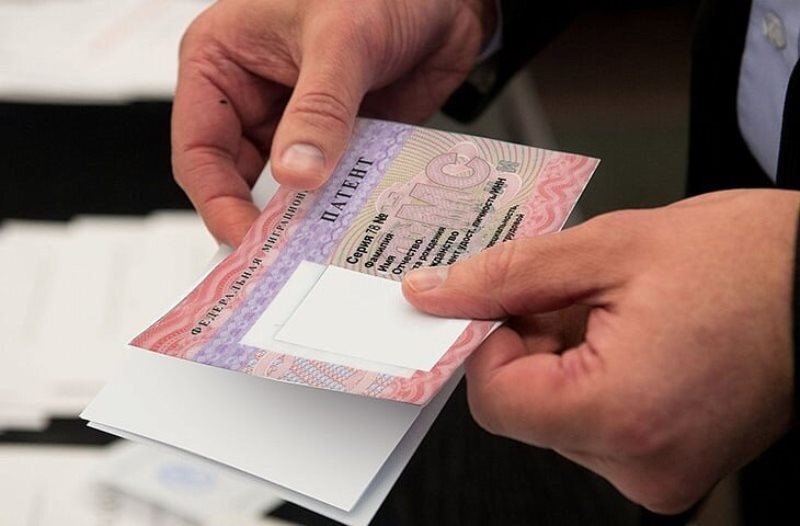
2) Patent holders will have to pay an advance payment not only for themselves but also for dependent family members (who do not work and are supported by them);
3) If a migrant does not have confirmed income or if it is too low (below the regional subsistence minimum), the patent may be revoked;
4) Temporary residence permits (RVP) and residence permits (VNZh) will not be issued or may even be revoked if a person has worked less than 10 months in a year.
Are these laws already adopted or not yet?
Not yet. The State Duma is actively considering the draft laws – they can still be changed or supplemented. They have not yet come into force but may do so in the near future.
New rules for children of migrants
What will happen to migrant children turning 18?
Currently, the most discussed point of the draft law is as follows: if a labor migrant’s child turns 18, he or she will no longer be able to automatically remain in Russia simply as a “child of a parent.” They will have to either obtain their own patent or leave the country within 30 days.
So will a person be immediately deported on their 18th birthday?
No. The draft law does not provide for “immediate deportation” on the day of reaching adulthood. However, after turning 18, a person will have 30 days to prove their own legal grounds for staying in Russia, such as work, study, or other status unrelated to their parents’ documents.
If there are no such grounds, then within this period they must leave Russia.
But if nothing is done during these 30 days and there are no other legal grounds for residence (such as work or study), then staying in the country will become illegal, which may lead to problems with migration status, including departure from Russia and a possible ban on entry in the future.
New payment rules for patents
What changes for patent holders?
Currently, the logic is as follows: a person pays a fixed advance payment for themselves. The new draft law proposes a different model: the labor migrant will have to pay this fee not only for themselves but also for each family member who is dependent on them and resides in Russia.
This means that the family’s stay is essentially being made financially dependent on the working foreigner and their ability to regularly confirm income and pay more.
What happens if a migrant has a low income or no confirmed income at all?
The draft law proposes that the patent or work permit may be revoked if:
– there is no information about the amount of income (i.e., salary is paid “off the books,” unofficially), or
– the income is below the established threshold. This threshold is calculated as the amount of the subsistence minimum with a regional coefficient for the migrant and each family member.
In plain language, this translates to: the state wants to see that the migrant is not just formally employed but earns enough to support themselves and their dependents according to the established calculation standard.
How much income will be sufficient?
Whether the income is sufficient will be checked according to the regional coefficient of the subsistence minimum. This means that the threshold will not be a single figure “for all of Russia,” but will depend on the region and the number of dependents. At the same time, the income must be enough not only for oneself but also for each family member who does not work and is dependent.
New rules for holders of temporary residence permits and residence permits
What changes?
The new regulations will also affect foreigners who want to obtain or maintain a temporary residence permit (RVP) or residence permit (VNZh). According to the project, these documents will not be issued or may be revoked if the labor activity was conducted for less than ten months during the year.
This means that seasonal employment, long breaks, informal work without confirmation, or dropping out of the official labor market become much riskier for migration status.
The Ministry of Internal Affairs of Kyrgyzstan has assessed the damage caused to the state by the alleged corrupt actions of former parliament deputy Shairbek Tashiev — the brother of the former chairman of the State National Security Committee Kamchybek Tashiev. According to the agency, the amount of losses exceeds 4.1 billion soms (about $47 million), reports the publication 24.kg.
The investigation believes that Tashiev used corrupt schemes in oil operations related to OJSC “Kyrgyzneftegaz.” Despite the presence of the state processing enterprise “Kyrgyz Petroleum Company,” the raw materials, according to law enforcement, were supplied not directly, but through a chain of intermediaries. Nevertheless, the final buyer of the oil remained the state processing enterprise.
As a result, the Ministry of Internal Affairs claims that a network of intermediary companies was created through which financial flows passed. According to preliminary data, up to a third of the volumes of raw materials were sold through firms associated with Tashiev. The total damage to the state is estimated at more than 4.1 billion soms — this amount includes both lost profits and unpaid taxes, writes Fergana.
Thus, the tax debt of OJSC “Kyrgyzneftegaz” for 2023 amounts to about 60.5 million soms ($692 thousand), while “Kyrgyz Petroleum Company” owes approximately 54.4 million soms ($622 thousand).
The Ministry of Internal Affairs stated that Shairbek Tashiev is obliged to fully compensate for the damage caused to the state.
Earlier, on April 1, it became known about his arrest. The former deputy of the Jogorku Kenesh has been placed in the temporary detention center of the Main Internal Affairs Directorate of Bishkek. A criminal case has been opened regarding the facts of corruption in OJSC “Kyrgyzneftegaz,” revealed during an audit and based on materials from the State Tax Service.
Recall that on March 14, Tashiev voluntarily renounced his deputy mandate. He stated that he made this decision guided by the interests of the state and the trust of citizens. The politician also noted that recently false information and slander against him and his family have been actively spread on social media, which has seriously affected the peace of his loved ones.
U.S. President Donald Trump delivered a televised address to the nation, stating that the war with Iran is nearing completion, but he did not specify exact timelines for the end of the conflict. At the same time, he warned that new powerful strikes against Tehran could occur in the coming weeks, BBC reports.
According to Trump, American military forces have almost completed the tasks set before them.
“We are going to finish the job and we will do it very quickly. We are very close to our goal,” he stated during his 19-minute speech.
The President reiterated that the U.S. has destroyed Iran’s naval and air forces and significantly weakened its ballistic missile and nuclear weapon programs. He mentioned that strikes could continue for another two to three weeks.
The American leader also addressed the situation surrounding the Hormuz Strait, which, according to him, has been effectively blocked by Tehran for about a month.
Trump stated that the strait is primarily needed by other countries and that after the conflict ends, shipping will naturally resume there.
He also warned that the U.S. is ready to “deliver an extremely strong blow” to Iran.
The conflict between the United States, Israel, and Iran began on February 28. In the early days of the war, the Supreme Leader of Iran and several high-ranking officials of the Iranian leadership were killed as a result of strikes.
Later, Washington sent additional forces to the region, and officials in the American administration did not rule out the possibility of a ground operation.
According to U.S. Central Command, over 12,300 strikes have been carried out against Iranian targets during the month of hostilities.
Trump has repeatedly stated that the war could end within two to three weeks. In an interview with Reuters, he said that the U.S. could soon halt operations but is ready to return to “targeted strikes” if necessary.
On Wednesday, Trump claimed that Iran had allegedly approached the U.S. with a request for a ceasefire. According to him, Washington would consider this issue only if the Hormuz Strait is opened. However, this information was rejected by Iran. Iranian Foreign Ministry spokesman Esmail Baghaei called Trump’s statements “false and unfounded.”
According to Axios, discussions about a possible ceasefire in exchange for the reopening of the strait did indeed take place, but sources from the publication could not assess the likelihood of such an agreement. On Tuesday, China and Pakistan also presented a peace initiative aimed at resolving the situation.
Journalists speculated that Trump might have been referring to comments made by Iranian President Masoud Pezeshkian, who during a phone call with European Council President Antonio Costa expressed Tehran’s readiness to end the war if the U.S. halts its attacks and provides guarantees that hostilities will not resume.
Former senior advisor to U.S. Secretary of State Antony Blinken, Melissa Tufanian, told the BBC that after Trump’s speech, the American audience probably “became even more confused” about the war with Iran.
Trump’s remarks suggesting that the U.S. could “send Iran back to the Stone Age” drew particular criticism. Arizona Democrat Yassamin Ansari called such statements unacceptable, emphasizing that it concerns a country with a population of about 90 million people.
After Trump’s speech, U.S. Secretary of Defense Pete Hegset also commented on his words on social media X, writing: “Back to the Stone Age.”