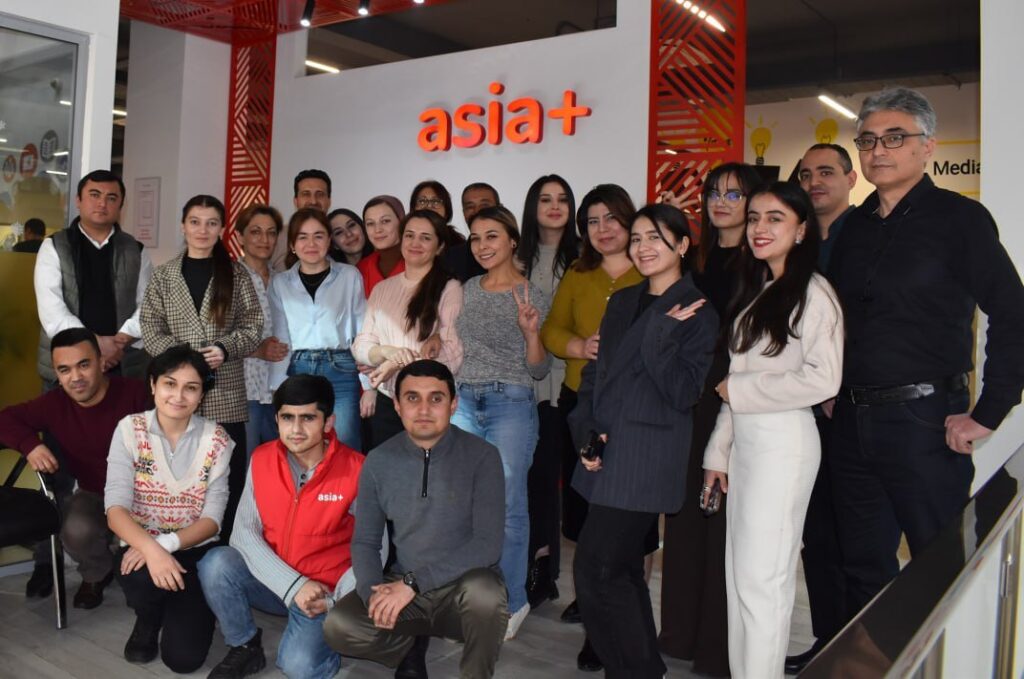
Today, the media holding Asia-Plus celebrates the 30th anniversary of its founding. On April 2, 1996, the first issue of the information and analytical bulletin of our news agency was published — this date is considered the birthday of Asia-Plus.
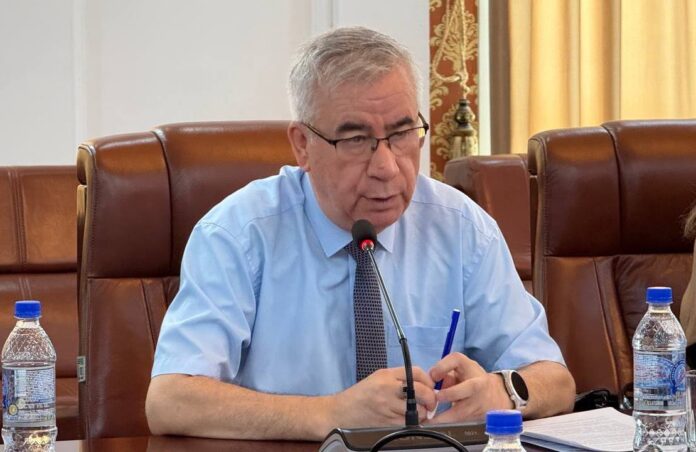
We are already receiving congratulations from colleagues, friends, and partners. One of them is from the head of the National Association of Independent Media of Tajikistan (NANSMIT), Nuriddin Karshibaev:
“Dear Umed Mansurovich, esteemed colleagues, dear friends! I sincerely congratulate you on this significant date — the 30th anniversary of the founding of Asia-Plus!
Three decades ago, your story began with the release of the first information bulletins, which laid the foundation for quality and independent journalism in the region. During this period, you have gone through an impressive path of development, demonstrating an example of successful transformation and unwavering professional growth.
Today, Asia-Plus is not just a medium, but a powerful, diversified media group. By uniting under a single brand an information agency, a popular radio station, an analytical print publication, and a modern production studio, you have created a unique ecosystem that sets high standards in the media space of Tajikistan.
Your contribution to shaping an objective information agenda, developing civil society, and promoting the country’s image on the international stage deserves the deepest respect.
The professionalism of your team, adherence to the principles of journalistic ethics, and ability to keep pace with the times allow you to remain the undisputed leader in the industry for many years. We are proud that Asia-Plus is an active member organization of the National Association of Independent Media of Tajikistan (NANSMIT).
On this anniversary day, I wish the entire team of the media group creative longevity, new ambitious projects, and inexhaustible energy. May each of your reports, broadcasts, and publications resonate with the hearts of the audience, and may the trust of your readers and listeners remain your main and unchanging reward.
Wishing you prosperity, flourishing, and new professional heights!”
Thirty years ago, a small information agency with one computer and a few desks began its work in Dushanbe, where gunfire could still be heard and people stood in line for bread. Today, “Asia-Plus” is the largest media group in Tajikistan with millions of readers, dozens of platforms, and the same main mission — to honestly and clearly report on the life of the country.
In November 1995, we registered a small information agency. The war was still ongoing, and there were queues for bread in Dushanbe. We had one office, one computer, and a couple of employees who took turns working at it. I brought the first desk from home. A few more discarded desks and chairs were purchased from the Firdausi Library. This is how the story of “Asia-Plus” began.
Exactly 30 years ago, on April 2, 1996, our first information bulletin was published. Couriers delivered it by bicycle to embassies and international organizations. In the preface to the first issue, we wrote why we considered it important to publish it:
“…Our country is still far from stability. However, Tajikistan is not only about terrorist attacks or the struggle between the government and the opposition. In the economic, social, and cultural life of the country, complex and often contradictory processes are taking place that require close attention and expert analysis.
“Asia-Plus” intends to cover these processes. In our opinion, this is especially important now when the leadership of Tajikistan declares its intention to accelerate the process of economic reforms. Because the availability of information accessible to society is the first necessary prerequisite for success in any endeavor. Our motto: objective information, free from any political and group biases.”
This was not just a beautiful slogan — it was our promise to the people. And we have tried to uphold it all these years.
We also painted a city trolleybus in bright colors and wrote on it: “Дунё ба умед!” — “Tomorrow will be better!”. It ran through Dushanbe for almost five years. This was our message to a city that desperately needed hope at that time.
Since then, thirty years have passed. A small agency has transformed into a media group. A newspaper, magazine, radio, website, video studio, social networks, special projects, and events have emerged. Today, our audience consists of millions of people in Tajikistan and beyond. We speak three languages. We work on dozens of platforms. But the essence remains the same: to inform people about what is happening in our country and in the world — as honestly and clearly as possible.
The thirtieth anniversary of “Asia-Plus” coincides with the 35th anniversary of the state independence of the Republic of Tajikistan. This is not a coincidence. Our history is inseparable from the history of the country. Without Tajikistan’s independence, there would be no independent Tajik media. We have grown alongside the country, shared in difficult times, and moved forward together.
Therefore, today I want to say thank you once again.
Thank you to our audience — readers, listeners, subscribers. You are the reason we work every day. Your trust is the most valuable thing we have. It cannot be bought. It can only be earned — with every article, every broadcast, every issue. For thirty years, you have been with us — and this is the main result of our work.
Thank you to the state. In the history of “Asia-Plus,” special mention goes to the support from the President of Tajikistan, Emomali Rahmon. It was the decision of the head of state in 2002 that allowed us to launch “Asia-Plus” radio — the first independent radio station in Dushanbe. The President also supported our initiative to organize the “Song of the Year” ceremony and participated in the first ceremony. This support has been for us not only practical assistance but also a sign that a strong national media is in the interest of the country.
Thank you to our partners and advertisers. You believed in us — some of you even back when we were a small bulletin. You entrusted us with your brands, your ideas, your projects. The special projects we are proud of today: TajTech, Made in Tajikistan, “Open Tajikistan!”, “Hello, Neighbors!”, “Audiobook,” and many others — are the result of our joint efforts. We do not just place advertisements. We build bridges between business and society. And we intend to elevate this collaboration to a new level.
Thanks to the “Asia-Plus” team — those who work today and those who were with us before. Over thirty years, hundreds of people — journalists, editors, producers, designers, managers, accountants — have passed through the editorial office. Each left their mark and a piece of their soul. The main reason that made “Asia-Plus” what it is today has always been the people.
Thirty years is not a finish line. It is a point from which to look back in order to move forward. The world is changing. Technology is changing. Journalism is changing. But the need for honest, verified, understandable information does not change. And as long as this need exists, so does our work.
Tomorrow will definitely come. It simply cannot be otherwise.
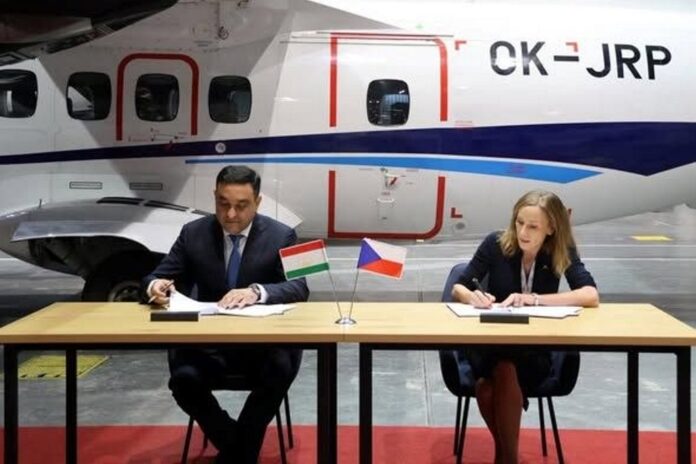
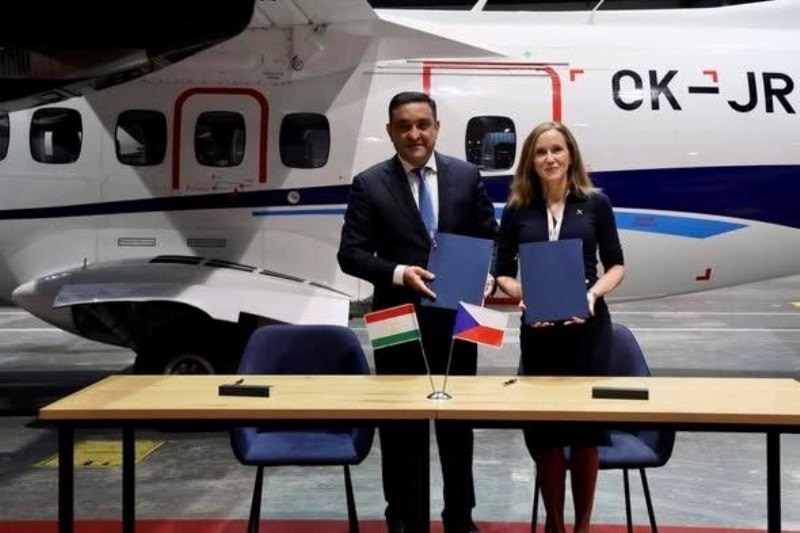
The airline “Shokhin Airlines” has signed an agreement to acquire a new regional turboprop aircraft L410 NG in the Czech Republic.
As the company reports, the new aircraft will enable “Shokhin Airlines” to effectively service domestic and regional routes.
The CEO of “Shokhin Airlines,” Zafar Akhmadzoda, emphasized that the acquisition of the new aircraft aligns with the company’s strategy for fleet development and improving passenger service quality.
The company noted that the L410 NG is a modern modification of the well-established L410 family of aircraft.
It features high fuel efficiency, increased flight range, and improved operational characteristics, making it an optimal solution for regional transport.
Currently, it is based at Dushanbe International Airport, where the company’s headquarters and office are located.
It is worth noting that there are two airlines registered in Tajikistan with their own fleet: Somon Air — the largest private carrier in the country, founded in 2008, and Tajik Air — the historical national carrier, which has about 4 aircraft of various models in its fleet.
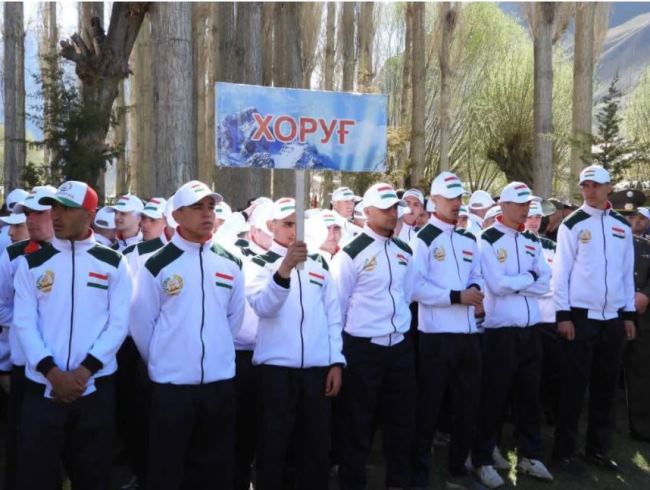
Both the Gorno-Badakhshan Autonomous Region (GBAO) and Khatlon Province have completed their spring military draft quotas on the very first day of the campaign. This was reported by the administrations of both regions.
Khatlon Province announced the completion of its draft plan on April 1, the first day of the campaign, while GBAO had already met its target by the beginning of the recruitment period.
Davlatali Said, the Governor of Khatlon, expressed gratitude at a ceremony for sending recruits to military service. He thanked the parents and educators of the draftees for their contributions in raising responsible and resilient young people.
The city of Bokhtar, the capital of the Khatlon province, reported fulfilling its draft target on March 31. During a meeting with recruits and their parents, Bokhtar Mayor, Abdulmajid Muminzoda, thanked the families for their readiness to support their sons in serving the country.
Furthermore, the Tojikobod district (district subordinate to the center – RRP) in the Rasht Valley also completed its military draft quota on the first day of recruitment.
Local authorities attribute the early success in meeting the draft targets to an increase in the number of volunteers, offering various benefits to the recruits, and the well-organized information campaigns.
The spring conscription campaign begins on April and lasts through May. The draft affects able-bodied male citizens in the age bracket of 18 years old to 27 years old, who are not members of the armed forces reserve. The same decree provides for the retirement from active duty of soldiers and sergeants whose service under conscription is over.
Some sources say the usual annual conscription target in Tajikistan is some 15,000-16,000.
The two-month-long effort seeking to enlist young men aged 18-27 for the two-year compulsory military service takes place twice a year, in the spring and in the autumn.
Experts note that under the new military obligations law, authorities now have the right to recruit youth throughout the year, which helps meet the draft targets early in the campaign.
Young Tajiks can avoid or postpone military service if they are ill, studying at university, an only son, or if they have two children.
Recall, amendments were made to the country’s law on military service in early 2021. The amendments came into effect on February 4, 2021 and young men in Tajikistan who wish to forgo the military service may now do so by paying a fee to the government. A one-month basic reserve service is organized for those who did not perform conscript service for a fee. At the end of basic reserve service they receive military cards.
Besides, under the law on the universal military duty in new edition, graduates of universities having military department will also be drafted into the army for one year.
Only people who have done military service will be permitted to obtain employment with the government or join the army in a professional capacity.
Tajikistan’s armed forces consist of Ground Forces, Mobile Forces (paratroopers of the armed forces of Tajikistan), Air Force and Air Defense Force.
Each year, concerns are raised regarding the conditions of military service, including reports of ill-treatment of soldiers, their living conditions, and even cases of deaths within military units. Therefore, many young men in Tajikistan try to avoid conscription. One reason is that, as in many former Soviet countries, the Tajik Army is known for the brutal hazing of new recruits. There are also overwhelming claims that the rich and powerful use their clout to get their sons out of military service — leading to beliefs that conscription is only for the poor. To avoid the army, many conscript-aged men move to Russia during the twice-a-year drafts in the spring and fall. Some bribe doctors and enlistment officials secure an exemption on medical grounds.
Now in sports, it is a time when teams gradually approach a stage where every mistake becomes more evident and the value of victory increases. Already, colorful starts and individual successful performances are not enough — the key role is played by the ability to maintain the level over a long distance.
Teams that relied on momentum just a short time ago are being forced to make changes and look for more stable game models. Recently, it has become particularly evident that sports are shifting towards deeper strategies.
And fans and the best bookmakers still appreciate the spectacle of sports, talking more about tactical decisions, flexibility of schemes, and the ability to adapt to opponents. This overall environment surrounding competitions is becoming much more analytical and profound.
A new type of player is emerging on the scene
One of the notable trends is the rise of versatile athletes. Players who can perform multiple roles gain more playing time and the trust of coaches. They react more quickly to changes during the game and allow teams to alter their style without substitutions and changes.
Against this backdrop, there is an increasing interest in individual preparation: the audience pays more attention to physical indicators, endurance, and game metrics.
Many young athletes not only fill the roster but become an integral part of the sports system, demonstrating consistency over several games in a row.
The work program tests the depth of the roster
A demanding calendar impacts the results. Continuous play not only requires a high level of athletes’ skills but also the proper distribution of energy. Rotation becomes a necessity, not a choice, and this is where the true depth of the roster is revealed.
It is precisely recovery, the work of the medical team, and injury prevention that take on special significance. Even minor issues with physical condition can threaten the outcomes of key matches.
Therefore, teams are increasingly relying on discipline and accounting to reduce their dependence on emotional behaviors and characteristics.
Interest in competitions remains steady
Despite the high pace and pressure, audience interest does not diminish. Sports fans focus on discussing tournament competitions, analyzing team forms, and debating the latest predictions of the sports season.
In the near future, competitions will become even more intense. For some teams, this is an opportunity to solidify their results, while for others, it will be a chance to alter the course of the season.
And it is especially clear now: the outcome in modern sports is determined not only by a moment of brilliance but also by systematic work and the ability to maintain a level in varying conditions.
A film shot in the mountains of Pamir in Tajikistan was released in Russia on March 26. The thriller “Pastures of the Gods” by Anar Abbasov is confidently gaining traction among viewers in Russia and other post-Soviet countries. Both Russian and Tajik actors participated in the project.
The film was shot in 2023-2024. The ideological inspirer and executive producer of “Pastures of the Gods” was Alek Shakhbazyan, and the project was implemented by the Russian film company “Cinema Concept Production” with the support of the Ministry of Culture of the Russian Federation.
What is the film about?
The plot follows a group of friends from Moscow who travel to the Pamir mountains for a hunting trip—supposedly to support a friend who is struggling with the loss of his wife. But soon, they become the prey themselves. In mortal danger, they realize that the real threat does not come from the surrounding mountains, but from those who are close by…
The creators note that all scenes with animals were filmed without harm to them—the team used modern special effects and stunt doubles to convey the beauty of nature as ethically as possible.
“For me, this project is unique in its story and the space where it unfolds. It is in the Pamir that ancient, unique animals—the nakhchiri—live, which our heroes will hunt. This is a story about human greed and how good always triumphs over evil. I believe that humans must learn to live in harmony with nature. We will introduce the audience to the world of Pamir and its ancient traditions, which can teach us all about love,” said Anar Abbasov during a presentation in 2023.
“Inspiring youth to remember their roots”
Those who have seen “Pastures of the Gods” are already sharing their impressions on social media. The film has received very positive reviews among them. The authors’ spelling and punctuation are preserved.
“The film is wonderful! We went yesterday! The impressions and spirit are mesmerizing! I never thought about the language, the protection and revenge of fauna, the mountains of our people! It was very interesting and shot very high quality!! THANK YOU SO MUCH — to the whole team!! You did it,” writes one of the viewers.
“This film emphasizes the contrast between the fascination with foreign values and the interest of foreign guests in the traditions of Pamir, inspiring youth to remember their roots,” wrote blogger Dilya Mirsaidova.
“I am so happy for my compatriots; the Pamir people are a great people. May you reach even greater heights, may Allah grant you health, greetings from the city of Khujand,” writes user leninabadskiyyy.
Who is in the cast?
The main roles are played by Russian actors Anton Filipenko, Danila Yakushev, Anna Viller, Vlad Kanopka, Nadezhda Ivanova, and Sukhrab Khaylobekov. The script was written by Oleg Denisov. The composers are Alexey Razumov, Vladimir Takhinov, and Elman Ragimov.
Additionally, the film company notes that Tajik actors from theater and cinema contributed to the creation of “Pastures of the Gods”: Shokhnazari Nekkadam, Azam Andambekov, Mavlona Najmidinova, Umed Khisravov, and Mutrib Shoiskandarov.
More about the production process can be found in this article by “Asia-Plus” here.
The Tajikistan national football team drew with the Philippines in the final match of the qualifying round for the 2027 AFC Asian Cup, securing a place in the main stage of the tournament.
The match took place last night, March 31, at the central stadium in Hisor and ended with a score of 1:1. The only goal for our team was scored by Sheriddin Boboev. The Tajik players faced difficulties in securing the draw in this encounter.
The Tajikistan national team was in Group A of the Asian Cup qualifying round alongside the Philippines, Timor-Leste, and the Maldives. After six qualifying matches, Tajikistan and the Philippines both earned 14 points, but due to a better goal difference, Tajikistan finished in first place and qualified for the Asian Cup.
The teams from the Maldives and Timor-Leste finished third with 3 points each and had previously lost the chance to qualify for the Asian Cup.
The 2027 Asian Cup will be held from January 15 to February 8 next year in Saudi Arabia.
In the qualifying round for the 2027 Asian Cup, 24 teams were divided into 6 groups of four teams each. Only the group winners advanced to the final stage of the Asian Cup.
Previously, 18 other teams qualified directly for the Asian Cup from the qualifying round of the 2026 World Cup. In total, 24 teams will participate in the 2027 Asian Cup.
It should be noted that this is the second time in history that the Tajikistan national football team has qualified for the Asian Cup. Our team first participated in the 2023 Asian Cup, held in early 2024, reaching the quarterfinals. However, at this stage, they were defeated by the Jordan national team with a score of 0:1, eliminating them from the competition.
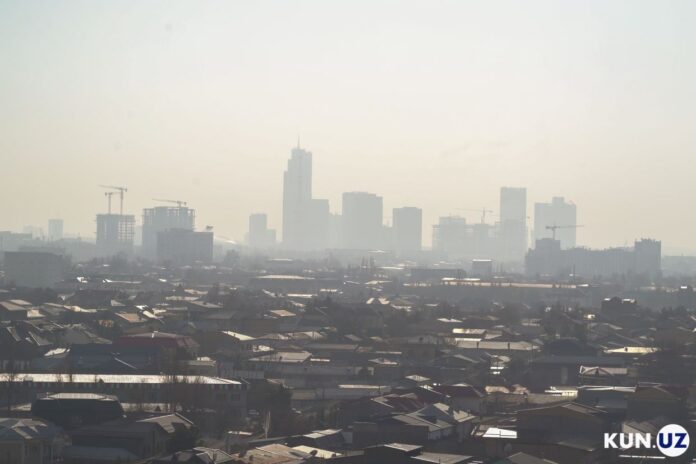
In Uzbekistan, unsatisfactory air quality will be the basis for a decision to transfer civil servants to remote work. In case of severe air pollution, government institutions will change their work schedules or switch to remote work to reduce the burden on cities and protect the health of staff, reports Podrobno.uz citing the presidential decree “On measures for the implementation of the National Project ‘Clean Air’, aimed at improving the quality of atmospheric air”.
Additionally, an emergency alert system for citizens will be introduced in the country. Within a month, a mechanism for sending alerts via SMS, media, and digital channels will be developed to inform the population about declining air quality and ecological risks.
Restrictions will also affect educational institutions. In adverse situations, outdoor classes in schools and kindergartens will be canceled, offering alternatives indoors. Recommendations will also be given to limit outdoor activities, especially for children, the elderly, and those with chronic illnesses.
Medical institutions will prepare special recommendations for the most vulnerable groups of the population, which will include advice on self-isolation until the ecological situation normalizes.
Moreover, during periods of severe pollution, industry and energy sectors will switch to a softer mode of operation. This may include reducing the burning of fuel oil or even halting emissions at large enterprises. Construction will be restricted, and road services will intensify efforts to combat dust using watering systems and other technologies.
All these measures, from remote work to restrictions on industrial facilities, will be consolidated into a single regulatory act. It is expected that the document, linking air quality with mandatory actions for all government bodies, will be submitted for consideration by December 30, 2026.
Furthermore, according to the decree of the head of state, starting April 1, 2026, a permanent moratorium on the creation of new industrial zones will be introduced in Tashkent, except for areas designated for service and financial activities. By May 1, 2026, enterprises involved in the production of thermal and electrical energy in the capital and surrounding areas must install automatic stations for monitoring emissions into the atmosphere, and integrate the data with the Unified Geoinformation Database of the Committee for Ecology, writes Ferghana.
From July 1, owners of greenhouses will be prohibited from using boilers without compliance certificates and combustion process control.
By the end of 2026, as part of the “Ecological Transport” program, Tashkent will be divided into “red”, “yellow”, and “green” zones. Drivers will begin to receive stickers to confirm the ecological category of their vehicles. From May 1, Tashkent will start initiatives “Car-Free Day” and “Car-Free Week,” during which officials will be prohibited from using official vehicles on certain days. Starting August 1, a program will be introduced to reimburse part of the interest on car loans for citizens and companies that have traded in old cars through the trade-in program.
There are also plans to create dendrological parks near the Institute of Nuclear Physics and Green University, as well as a green park on the site of the former oncology hospital in Chilanzar. Fountains and four artificial lakes will be constructed in the city and universities.
By October 1, 2027, phased implementation of technologies for artificial rain and wind generation based on foreign experience will begin.
Requirements for developers are also being tightened, including the mandatory consideration of the “wind rose” during environmental expertise.
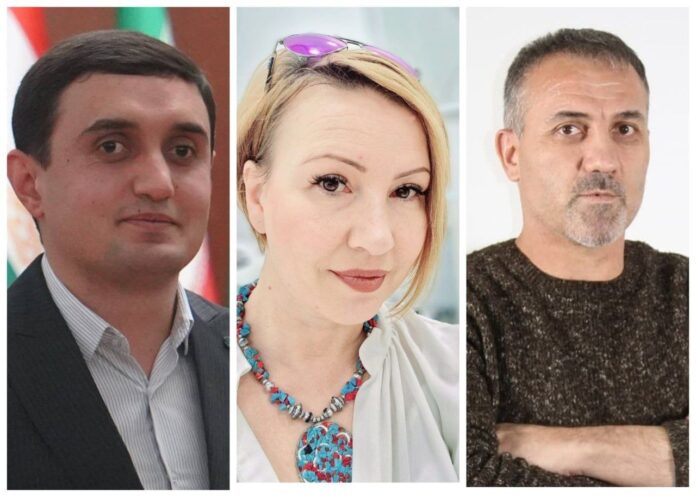
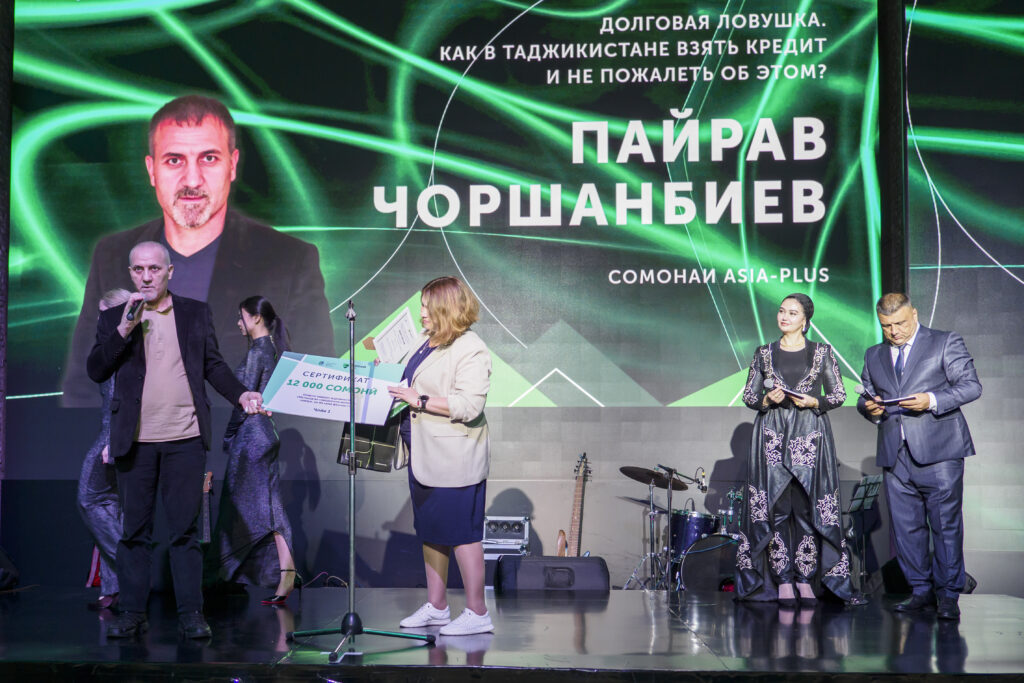
Two journalists from “Asia-Plus” – Mehrfarin Najibi and Payrav Chorshanbiev won the top places in the contest “Economics and Financial Literacy: A Language Everyone Understands,” while Olga Tutubalina, the editor-in-chief of the media outlet, received the Burinisso Berdieva Award for courage in journalism.
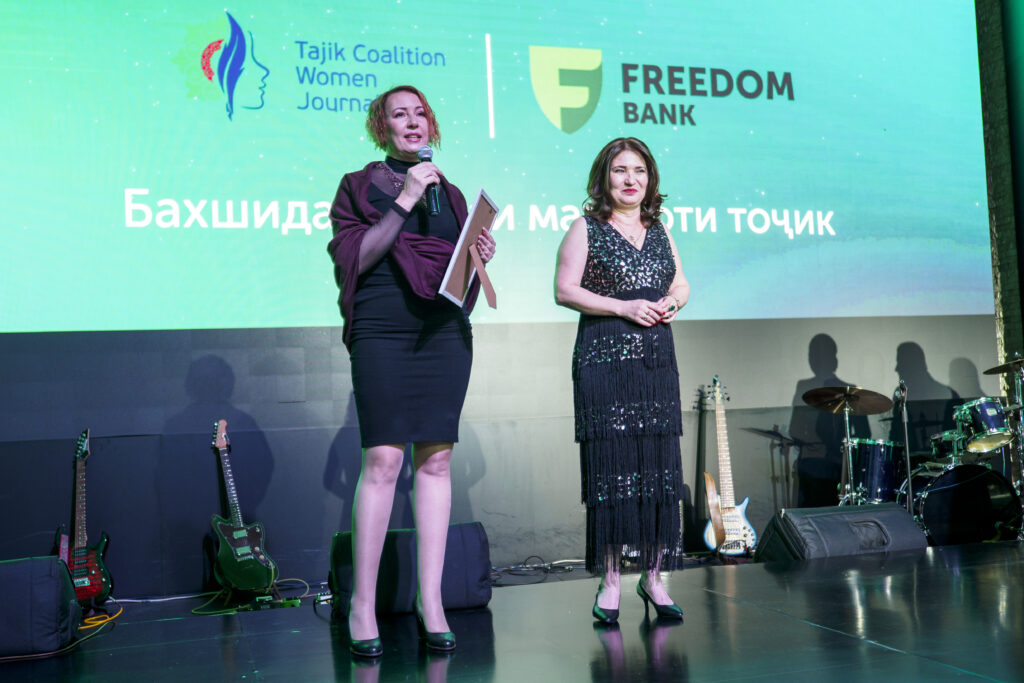
This contest was held by the National Alliance of Women Journalists of Tajikistan in honor of Tajik Press Day, sponsored by “Freedom Bank” of Tajikistan, and concluded yesterday, March 31.
Mehrfarin Najibi, a 25-year-old journalist from “Asia-Plus,” has been working as a reporter at the media outlet for over 3 years. She has been in journalism since 2019 and is primarily known for conducting interviews.
Payrav Chorshanbiev is a journalist and economic analyst for the “Asia-Plus” media group, aged 56, with nearly 20 years of experience at “Asia-Plus.” He primarily covers news related to the economy and prepares analytical articles in this field.
Olga Tutubalina is one of the well-known Russian-speaking journalists in Tajikistan, having worked in this field for over twenty-five years. She has a talent for writing analytical materials and conducting interviews with prominent figures.
The “Asia-Plus” media group has been active in the country for 30 years. Today, it unites a newspaper, radio, and news agency, providing high-quality and reliable content in three languages – Tajik, Russian, and English – for millions of its audience.
Exactly 16 years ago, on April 1, 2010, the first sections of the highway Dushanbe – Khujand – Chanak became toll roads after complete rehabilitation. We decided to find out how the cost of travel on this road has changed since then, and in which countries of Central Asia and Russia such practices exist.
The management of toll road infrastructure in Tajikistan is carried out by the “Branch of the International Company Innovative Road Solutions in the Republic of Tajikistan” based on a concession agreement with the government. According to official data, the company was registered in 2009 in the British Virgin Islands.
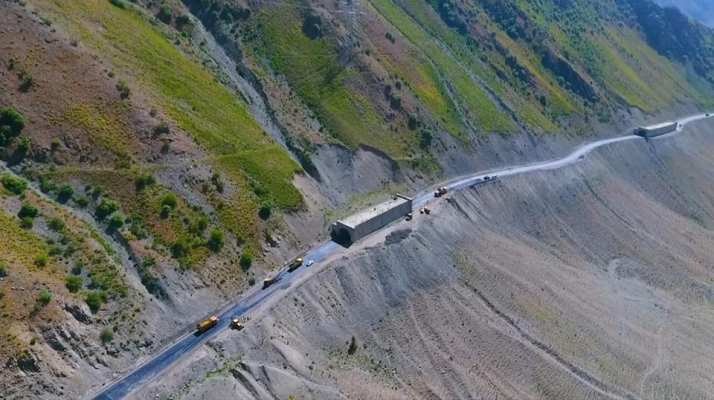
To rehabilitate the Dushanbe – Khujand – Chanak highway, the government of Tajikistan attracted a loan from the Chinese Exim Bank amounting to about $300 million.
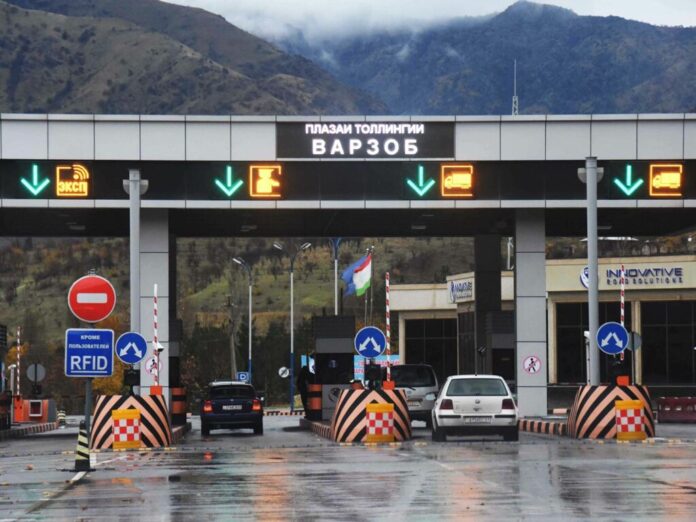
The first sections of the road, located in the Varzob district, became toll roads on April 1, 2010. Subsequently, the payment system was expanded, and six toll collection points appeared along the highway:
– “Varzob” — 63.3 km – “Gushary” — 41.27 km – “Shakhristan” — 41.44 km – “Istaravshan” — 66.27 km – “Dehmoy” — 65.6 km – “Chorukh” — 60 km
The total length of the toll section is about 338 km.
Road users are divided into four categories. The first category includes passenger cars, minibuses, and trucks with a carrying capacity of up to 2 tons.
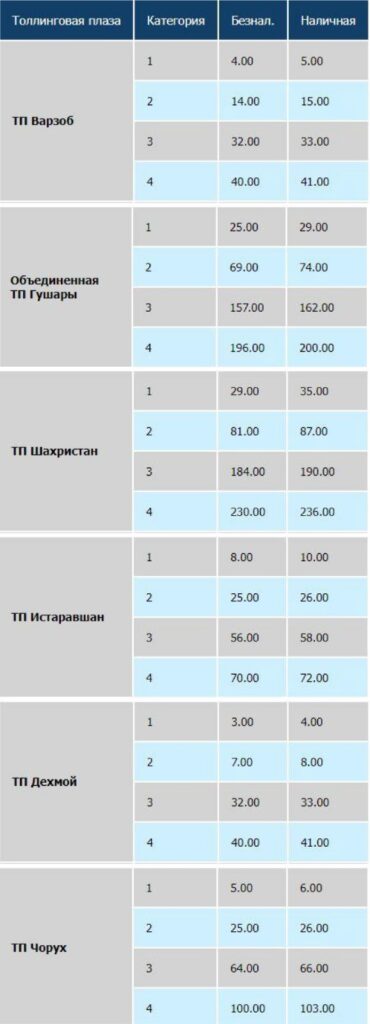
The standard toll rates for traveling on sections of this road are set as follows:
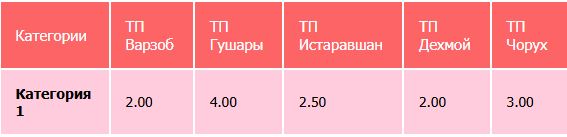
A system of discounted fares is provided for residents of settlements located along the highway.
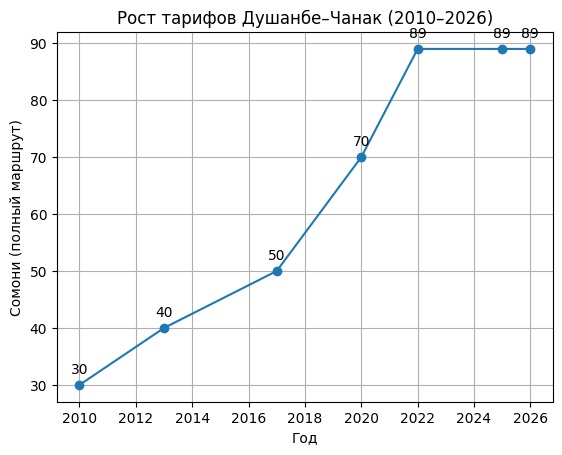
The rates for users in this category have increased almost threefold: from 30 somoni on April 1, 2010, to 89 somoni on January 1, 2022. Over the past three years, the cost of travel has remained unchanged.
What about the neighbors?
Tajikistan remains the first country in Central Asia to implement a toll road system.
Kazakhstan began developing toll roads later – the section Astana – Shchuchinsk opened in 2013. However, over the years, the country has significantly outpaced the region in scale: today there are 12 highways with a total length of about 4,900 km.
The average toll cost for passenger cars in Kazakhstan is significantly lower than in Tajikistan – around $0.2–0.3 per 100 km. The cost of traveling on the Dushanbe-Chanak road for this category of users is approximately 26.3 somoni ($2.7).
In Uzbekistan, toll roads are planned and partially implemented, but the system is still in development. In recent years, authorities have begun projects for the construction of the first toll highways (e.g., Tashkent – Samarkand). However, a full-fledged network does not yet exist.
Kyrgyzstan is also considering the possibility of introducing toll roads, but the system has not yet been launched in practice. There are also no such roads in Turkmenistan.
In Russia, the first toll road appeared back in 1999. Today, the network of toll roads is actively developing and already exceeds 3,000 km. The main operator is the state company “Avtodor.”
The cost of travel here is significantly higher than in Central Asia. On average, drivers of passenger cars pay about $3–5 per 100 km, and on certain sections (e.g., high-speed roads M-11 or M-12) the rate can be even higher depending on the time of day and traffic congestion.
At the same time, toll roads in Russia are characterized by high-quality pavement, developed infrastructure, and allow for significant time savings.
Do income levels match expenses?
Meanwhile, one of the key factors in the implementation of toll roads remains the income level of the population.
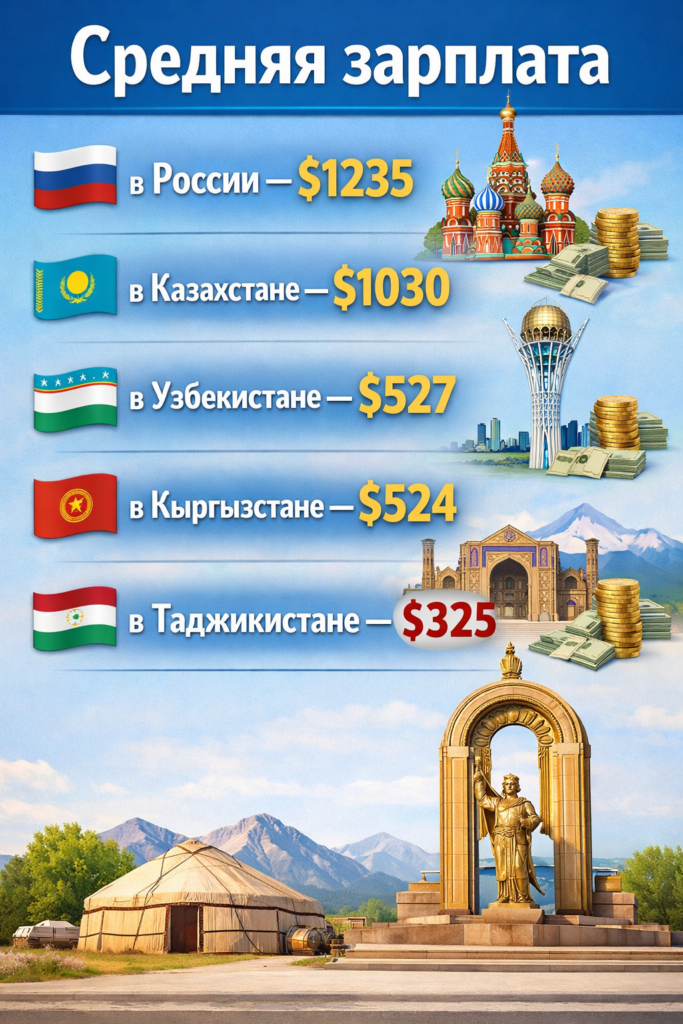
According to the latest available official data, the average salary in the region is:
Data for Turkmenistan is unavailable in open sources.
Moreover, an important condition for the introduction of toll roads is the presence of alternative free routes, which corresponds to international practice.
No alternatives exist for the Dushanbe – Chanak highway.
According to Russian legislation, the decision to use a highway or its section on a toll basis can only be made if there is an opportunity for alternative free travel on a public highway.