Home Blog Page 18

Chronicle of the month: March, 2026

0

March 2026 in Tajikistan was marked by significant events related to Iran, the celebration of the Navruz Festival, and high-level diplomatic discussions with Uzbekistan. Here are the main developments:


March 1

Nizomiddin Zohidi, the Ambassador of Tajikistan to Iran, reported that "no Tajik citizens were harmed" in the attacks on Iran. Iranian authorities confirmed the death of Supreme Leader Ali Khamenei. The Iranian Embassy in Dushanbe published condolences from President Emomali Rahmon regarding the death of Ayatollah Khamenei.


March 2

The Ministry of Foreign Affairs of Tajikistan urged citizens to refrain from traveling to the Middle East. Somon Air temporarily suspended flights on the Dushanbe-Dubai route.


March 3

The Tajik government approved a Memorandum of Understanding with the United Kingdom concerning cooperation in the critical minerals sector. Tajikistan also participated in the ITB Berlin 2026 International Tourism Exhibition in Germany, signing over 20 cooperation agreements.


March 4

President Emomali Rahmon expressed gratitude to the Asian Development Bank (ADB) for its significant contribution to Tajikistan’s economic development during a meeting with ADB President Masato Kanda. A joint intergovernmental commission meeting on trade, economic, and scientific cooperation between Tajikistan and Turkmenistan also took place in Dushanbe.

The Tajik government ordered Somon Air to organize charter flights to evacuate citizens from the Middle East, where flights had been suspended.  


March 5

The Iranian Embassy in Dushanbe opened a book of condolences. Several political, academic, and cultural figures, along with ordinary citizens, came to pay respects. Tajikistan’s Prime Minister Qohir Rasoulzoda visited the embassy to offer condolences on behalf of the government.


March 6

President Rahmon made personnel changes in the Supreme Court, the Prosecutor's Office, and the Ministry of Internal Affairs.

In honor of Mother's Day, Asia-Plus Media Group, in partnership with the Obi Zulol company, held the traditional “Madaroni Dushanbe” celebration.


March 8

More than 300 Tajik citizens were returned from the UAE via two charter flights.

President Rahmon congratulated Mojtaba Khamenei on his appointment as Iran’s Supreme Leader.


March 10

President Rahmon signed government decrees to create new state institutions at the International University of Tourism and Entrepreneurship of Tajikistan.


March 11

Somon Air resumed flights between Dushanbe and Dubai.


March 12

Faridun Shamsiddin, Muhammadsobir Faizov, Dalergjon Mirzoev, and Saidakram Rajabalizoda were sentenced to life imprisonment for their involvement in the March 2024 terrorist attack at the Crocus City Hall.

More than 300 Tajik citizens were also returned to Tajikistan from the UAE.


March 13

Seven individuals were arrested on suspicion of smuggling 100 kg of drugs from Afghanistan into Tajikistan.

Russia temporarily suspended funding for the Slavic University of Tajikistan-Russia due to undisclosed reasons.

In St. Petersburg, the First Western District Military Court sentenced a Tajik citizen to six years in prison for justifying the Crocus City attack online.


March 14

Four districts in Dushanbe opened markets offering essential goods, including meat priced at 65 somoni per kilogram.


March 15

Dushanbe police warned market managers about potential responsibility for price hikes ahead of Ramadan.


March 16

Iran’s Ambassador to Tajikistan, Alireza Hakikian, held a press conference in Dushanbe, stating that “the U.S. and Israel have not achieved any of their goals.”

The defense team for four perpetrators of the Crocus City attack filed appeals against their life sentences.


March 17

Tajikistan joined the UN Convention on Cybercrime.


March 18

Tajikistan sent humanitarian aid to Iran on 110 large trucks.


March 19

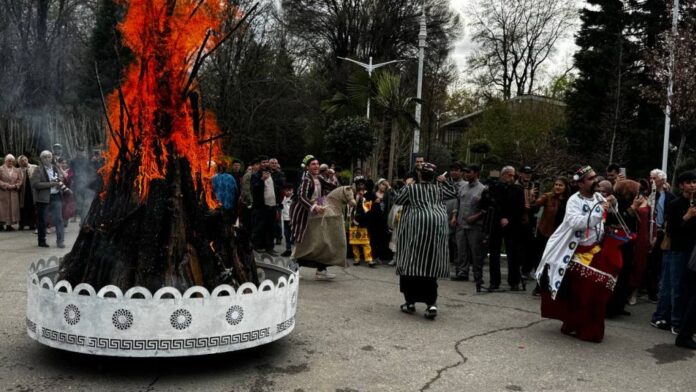
A major international delegation, including leading tourism industry figures, travel bloggers, and prominent international media representatives, arrived in Tajikistan for the Navruz celebrations.


March 20

The holy month of Ramadan in 2026 was confirmed to last 29 days, and the Eid al-Fitr festival was celebrated in Tajikistan on March 20.


March 21

During the Navruz celebrations, President Rahmon stated that “Muslims should support each other during difficult times” in his speech at the Navruzgho complex in Dushanbe.


March 22

The International Festival of Navruz, celebrating cultural and tourism heritage, was held in Dushanbe’s Iram Park.


March 26

President Rahmon began a state visit to Uzbekistan, where about 20 agreements were signed. A new building for the Tajik Embassy in Uzbekistan was inaugurated, and President Rahmon and Uzbek President Shavkat Mirziyoyev visited historic sites in Bukhara.


March 28

The Tajik government, led by President Rahmon, discussed preparations for the upcoming autumn-winter season during a government meeting.


March 29

President Rahmon began working visit to the Sughd province.


March 30

In Gulishtan, President Rahmon met with regional leaders and activists from the Sughd province.


March 31

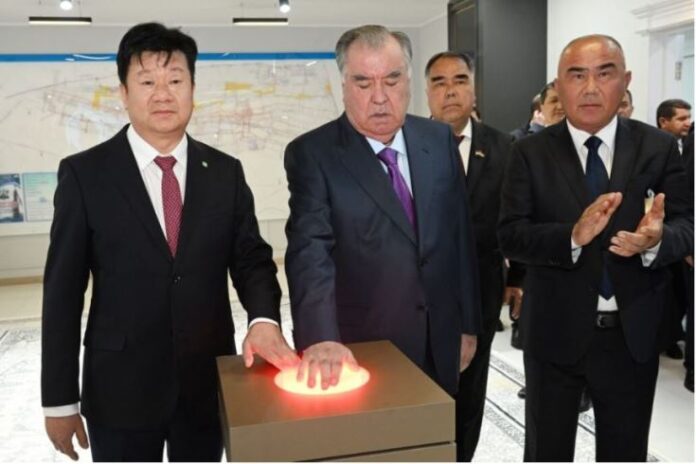
President Rahmon inaugurated a number of social and industrial facilities in the Sughd province. 
Donald Trump states US ready to end war with Iran without a Deal

0

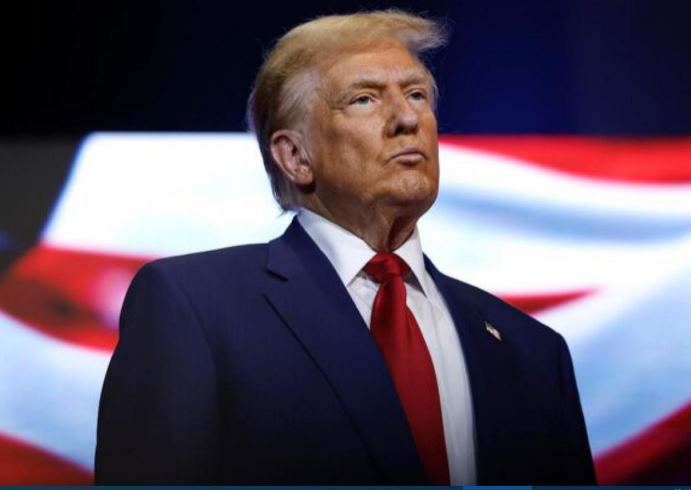
U.S. President Donald Trump has stated that the United States could halt military strikes on Iran within two to three weeks, asserting that a deal with Tehran is not a necessary condition for ending the ongoing conflict.

Just two days ago, Trump spoke about progress in negotiations and warned that failure to reach an agreement could lead to a "crushing blow" for Iran. However, his latest remarks highlight the contradictory stance of Washington on how the war, now in its fifth week, might come to an end, according to the BBC's Russian Service.

White House Press Secretary Caroline Levitt announced that President Trump would address the nation at 9:00 PM Washington time on Wednesday, providing an update on the situation with Iran.

According to Trump, the U.S. will "very soon" exit the conflict. "This could happen in two weeks, maybe in three," he told reporters. When asked whether successful diplomacy is required to conclude the U.S. operation "Epic Fury," he answered negatively. "Iran doesn't need to make a deal with me," he emphasized.

Trump further stated that the U.S. had already achieved its primary objective with the airstrikes initiated in late February: limiting Iran's capacity to develop nuclear weapons. He claimed that American forces were "finishing the job" and that Iranian authorities were "begging for a deal."

However, Iranian officials have denied these claims. They assert that no negotiations are taking place with the U.S., with contact limited to the exchange of messages through intermediaries, including Pakistan. Iran's Foreign Minister Abbas Araghchi confirmed receiving messages from U.S. Special Envoy Steve Whitcoff, but stated that this "does not mean negotiations."

Meanwhile, the U.S. is reinforcing its military presence in the Persian Gulf region. The 31st Marine Expeditionary Unit is already stationed there, and the 11th Carrier Strike Group, along with units from the 82nd Airborne Division, are heading to the area.

U.S. Secretary of Defense, Pete Hegseth, stated that Washington still hopes for a diplomatic resolution but is prepared to escalate military action if Tehran does not accept American terms. "Negotiations are real, active, and gaining momentum," he said.

At the same time, Iran's Islamic Revolutionary Guard Corps has issued threats against American companies operating in the Middle East, including Microsoft, Google, Apple, Intel, IBM, Tesla, Boeing, Hewlett Packard, Dell, and JPMorgan. The companies' representatives have been advised to leave their workplaces "for their own safety."

Iran insists that hostilities will only cease if security guarantees are provided and compensation for the damage caused is agreed upon. President Masoud Pezeshkian communicated this position in a conversation with European Council President António Costa.

Further tensions have arisen around the Strait of Hormuz, a vital waterway through which around 20% of global oil and liquefied gas supplies passed before the conflict. Shipping traffic in the area has dropped sharply, with only about ten vessels passing through per day, down from 140 previously.

In addition to the ongoing strikes, Israel has attacked targets in southern Beirut, and air defense systems have intercepted missiles near Damascus. Meanwhile, Iranian-backed Houthi rebels in Yemen launched a missile towards Israel.

Kyrgyzstan launches domestic production of national currency

0

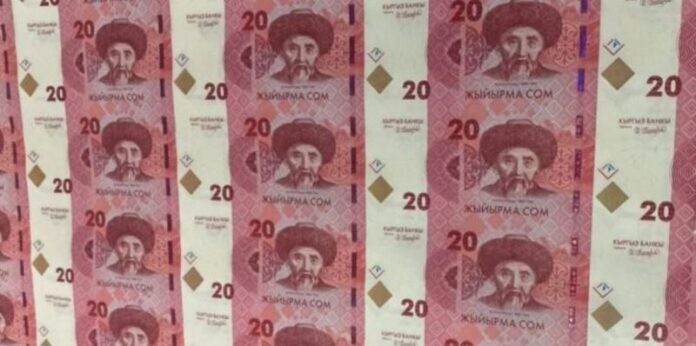
For the first time, Kyrgyzstan has begun producing its national currency independently, as announced by President Sadyr Japarov, according to 24.kg.

Previously, the country’s banknotes were produced abroad, incurring additional costs. Now, the republic is fully capable of meeting its own currency production needs and is even accepting orders from other countries.

In addition to currency production, Kyrgyzstan has reportedly also set up facilities for the production of national identification documents, including passports, ID cards, driver's licenses, and vehicle registration documents.

President Japarov emphasized that the new facility has already received an international certification, confirming its compliance with necessary standards.

According to him, the country is now receiving foreign orders both for currency printing and the production of state documents. He stressed that the security features of these products meet high international standards, while the cost of services remains competitive.

Windy April: weather forecast for Tajikistan

0

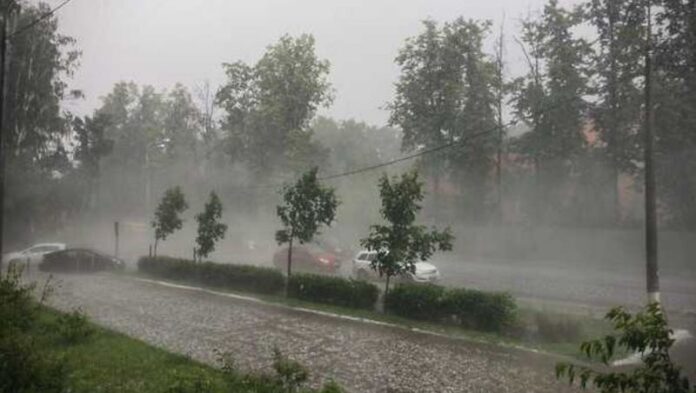
April this year is expected to be warm, but with precipitation, thunderstorms, fog, and even hail across the country. The month will also feature variable cloud cover, as reported by the Tajik Hydrometeorology Center (Hydromet).


Khatlon province and the flatland districts subordinate to the center

The average monthly temperature is expected to be within the normal range, with some areas 1-2 degrees above the climatic norm. In the flatland areas, the temperature will range from 15°C to 21°C, and in the foothill areas, it will range from 12°C to 15°C.

Throughout the month, the temperature will fluctuate in the valleys. At night, temperatures will range from 6°C to 11°C, rising to 13°C to 18°C. During the day, temperatures will range from 20°C to 25°C, reaching 30°C to 35°C in some areas.

In the foothill regions, nighttime temperatures will range from 3°C to 8°C, rising to 7°C to 12°C, and daytime temperatures will range from 19°C to 24°C, reaching 24°C to 29°C.

On some days, temperatures will decrease, with nighttime temperatures in the valleys falling to 2°C to 7°C, and daytime temperatures between 9°C and 14°C. In the foothill areas, nighttime temperatures will be between 0°C and 5°C, while daytime temperatures will range from 6°C to 11°C.

Precipitation is expected to be within the normal range, with some areas experiencing more rainfall than usual. Expect intermittent showers, thunderstorms, hail, and variable cloud cover. Westerly winds will strengthen to 15-20 m/s, and dust may appear in certain areas.


Sughd province

In Sughd, temperatures are also expected to be within the normal range, with some areas 1°C above the climatic norm. In the valleys, the temperature will range from 16°C to 17°C, and in the mountainous areas, it will range from 4°C to 9°C.

Throughout the month, temperatures in the flatland areas will fluctuate. At night, temperatures will range from 3°C to 8°C, rising to 11°C to 16°C, while during the day, temperatures will range from 17°C to 22°C, rising to 26°C to 31°C.

In the mountainous regions, temperatures at night will range from -2°C to +3°C, while daytime temperatures will range from 8°C to 13°C, reaching 17°C to 22°C.

On some days, temperatures will drop, and in the valleys, nighttime temperatures will fall to 0°C to 5°C, with daytime temperatures ranging from 6°C to 11°C. In the mountains, nighttime temperatures will range from 0°C to 5°C, with daytime temperatures ranging from 3°C to 8°C.

Precipitation in the region is expected to be less than usual, with some areas experiencing more rainfall than normal. Variable cloud cover, rain, thunderstorms, fog, and hail are expected. In some areas, wind speeds may increase to 17-22 m/s.


Mountainous areas of districts subordinate to the center and western part of GBAO

The average monthly temperature in the mountainous areas of districts subordinate to the center and the western part of the Gorno-Badakhshan Autonomous Region (GBAO) is expected to be within the normal range, with some areas 1°C above the climatic norm, and will range from 6°C to 13°C.

Throughout the month, temperatures will fluctuate. At night, temperatures will range from 1°C to 6°C, rising to 4°C to 9°C, and during the day, temperatures will range from 11°C to 16°C, reaching 20°C to 25°C. On some days, temperatures will drop, with nighttime temperatures falling to -2°C to +3°C, and daytime temperatures dropping to 4°C to 9°C.

Precipitation in this region is expected to be within the normal range, with some areas receiving more rainfall than usual. Expect intermittent showers, thunderstorms, fog, and hail, with winds strengthening to 17-22 m/s in some areas.


Eastern part of GBAO

In the eastern part of GBAO, temperatures will rise by up to 1°C, reaching between -5°C and +2°C. The temperatures will be unstable throughout the month. At night, temperatures will range from -6°C to -11°C, rising to +1°C to +4°C. During the day, temperatures will range from 4°C to 9°C, reaching 8°C to 13°C.

On some days, temperatures will drop significantly. At night, temperatures will fall to -13°C to -18°C, and during the day, temperatures will range from -1°C to +4°C.

Precipitation will mostly consist of snow and rain, with winds in some areas strengthening to 10-15 m/s. Expect variable cloud cover and some periods of fog.

Tajikistan faces continued religious freedom challenges

0

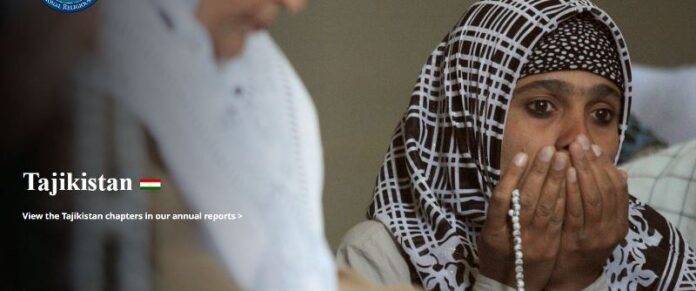
The government of Tajikistan has faced increasing international scrutiny over its treatment of religious minorities and its crackdown on religious freedoms. Despite the constitutional guarantee of the right to practice any religion or none, restrictions on religious practices, particularly Islam, have intensified in recent months, says the 2026 annual report released by the US Commission on International Religious Freedom (USCIRF).

In a move that has drawn concern from human rights organizations, Tajik authorities arrested 195 individuals suspected of involvement with extremist or terrorist groups in the first half of 2023. Among those affected were members of various religious groups, including Jehovah’s Witnesses, who have long been targeted by the government.  

Elsewhere, authorities have reportedly focused their efforts on the Ismaili Shia community, particularly in the Gorno-Badakhshan Autonomous Region (GBAO). Authorities reportedly seized several properties associated with the Aga Khan.  

In another troubling development, the Supreme Court ruled on June 14 that Pamir Daily News, an independent news outlet focusing on the GBAO region, was an “extremist organization” and banned its activities. This follows the Supreme Court's 2021 secret decision declaring Jehovah's Witnesses as an extremist group and prohibiting their operations in Tajikistan, according to the report.

The report says religious practices continue to be strictly controlled by the state. The government mandates all Friday sermon topics for imams and khatibs, and women remain barred from praying in Hanafi Sunni mosques under an Ulema Council edict. Additionally, authorities have used mosque closures to pressure young men into registering for mandatory military service. Meanwhile, literature of a religious nature is closely monitored, with many books banned each year.

Despite these governmental efforts, civil society reportedly remains reluctant to discuss issues surrounding religious diversity, with fears of harassment from state authorities lingering. Reports from minority religious groups suggest that Muslims who convert to other religions face severe social consequences, including ostracism from their families. Report notes that on social media, there was significant criticism of Ismaili Shia Muslims and Zoroastrians. Traditional state and private media reportedly did not negatively portray or target minority religious groups.

Diplomatic tensions have risen as well, with the U.S. Embassy in Dushanbe continuing to raise concerns with the government. In meetings throughout 2023, embassy officials reportedly addressed the restrictions on minors and women participating in religious services, the difficulties non-Islamic religious organizations face when registering, and the broader challenges religious groups face in practicing freely.

The U.S. has designated Tajikistan as a "Country of Particular Concern" under the International Religious Freedom Act of 1998, and on December 29, 2023, the Secretary of State redesignated Tajikistan as a CPC and announced a waiver of the required sanctions that accompany designation in the “important national interest of the United States.” 

The Judo Grand Slam in Dushanbe: what to expect

0

The Judo Grand Slam series is one of the most prestigious events in the sport, playing a pivotal role in the Olympic qualification system. It is here that athletes battle for major prize money and, more importantly, crucial ranking points that determine their qualification for the World Championships and the Olympic Games.

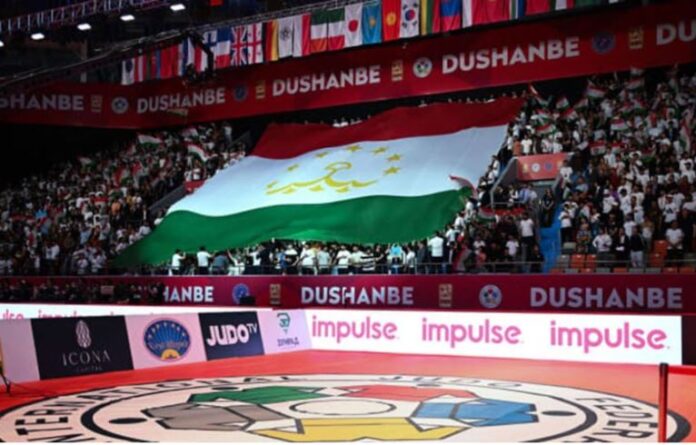
In 2026, Dushanbe will once again host one of the most important tournaments on the global judo calendar. From May 1 to 3, the capital of Tajikistan will welcome some of the world’s top judo athletes, further cementing its status as a key hub for international judo.


What is the Grand Slam and its importance?

The Grand Slam series is part of the International Judo Federation’s World Tour and ranks just below the World Championships and the Olympic Games in significance. These tournaments offer substantial prize money and, more importantly, distribute some of the most vital ranking points in the sport.

For judo athletes, success at the Grand Slam tournaments is crucial for building their careers. Without strong performances in these events, it is nearly impossible to break into the elite ranks of the sport and qualify for major championships.


How the tournament works

The tournament follows a traditional format with 14 weight categories (7 for men and 7 for women), an Olympic-style knockout system, and consolation rounds to determine two bronze medalists in each category. The event spans three days, with each day dedicated to a specific weight class.

The biggest distinction of the Grand Slam, compared to less prestigious events, is the quality of the participants. The tournament is consistently populated by world-ranked leaders, Olympic medalists, and World Championship winners.


Prize money: what do judo athletes earn?

The Grand Slam is not only about points but also offers significant prize money. The distribution is as follows: Gold – approximately €5000, Silver – approximately €3000, and Bronze – approximately €1500. Part of these prizes also goes to the athlete's coach.

While these amounts are not the largest in global sports, in judo, the true value lies in the ranking points.


The judo ranking system: the key resource

The real value of the Grand Slam lies in the ranking points awarded for each position: Gold – 1000 points, Silver – 700 points, Bronze – 500 points, 5th place – 360 points, and 7th place – 260 points. These points are crucial for determining the IJF World Ranking, which directly impacts seedings for future tournaments, qualification for World Championships, and most importantly, Olympic qualification.


Why Dushanbe is a key stop

Over recent years, Dushanbe has become a permanent fixture on the IJF calendar, and it’s easy to see why. The tournament in Tajikistan consistently attracts top-tier judo athletes, and the organization of the event has earned a reputation for meeting international standards.

For the Tajik national team, the Grand Slam holds particular significance. Firstly, it provides a rare opportunity to compete against the world’s best judo athletes without leaving the country. Secondly, it offers a chance to secure important ranking points right at home.

The domestic Grand Slam is more than just a competition; it’s a strategic resource for the entire national team. Achieving success in such tournaments is a necessary step for any judo athlete hoping to join the world elite. For countries like Tajikistan, which are still developing their judo programs, hosting such events is also a sign of status on the global sports stage.

New developments in Isfara: schools, power substation, and coal mine opened

0

President Emomali Rahmon has continued his working visit to the districts of Sughd province, marking the opening of several key infrastructure projects.

In Isfara, Rahmon today attended the inauguration of the Angisht Coal Mine No. 8, which has created 700 new jobs, according to the Tajik president’s official website.

Alongside the mine, a range of facilities have been established, including a potable water reservoir, a water supply network, residential and auxiliary buildings, a substation, and a dormitory.

Additionally, Rahmon remotely opened a new State Flag Alley in the Chorkuh jamoat, featuring a 53-meter flagpole.

The president reportedly also inaugurated three new kindergartens in the Vorukh and Khojai Alo jamoats, designed to accommodate 360 children.

As part of the CASA-1000 project, the new Isfara-1 substation was also launched on March 31.

Other openings included a sewing workshop and a medical center in the Chorkukh jamoat.

These projects are part of ongoing efforts to improve infrastructure and create more job opportunities in the region.

Iran claims drone factory in Tajikistan, but no evidence surfaces

0

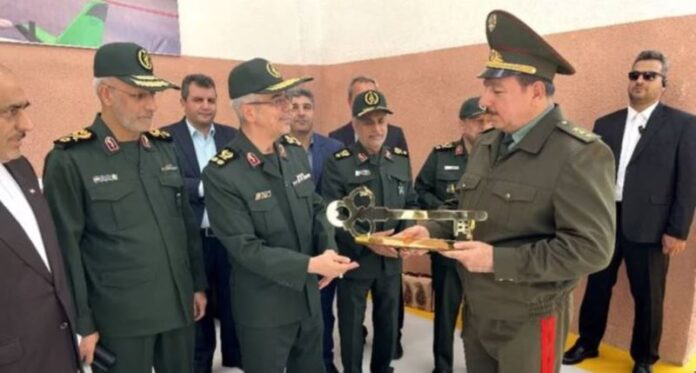
In May 2022, Iranian officials announced the opening of their first foreign drone production facility in Tajikistan. The factory was said to be producing Ababil 2 tactical reconnaissance drones, designed for short-range operations and priced lower than Iran's well-known Shahed drones. This factory, located near Dushanbe, was hailed as a major step in expanding Iran's military capabilities abroad.

At the time, Iranian Major-General Mohammad Bagheri, then head of Iran’s armed forces, expressed optimism about the project. “Today, we have reached a position where, apart from fulfilling domestic needs, we can export military equipment to allies and friendly countries to strengthen security,” he said at the opening ceremony.

Meanwhile, an article by Zamira Eshanova, a correspondent for RFE/RL's Uzbek Service, and Radio Liberty’s Tajik Service reported on March 31 that despite these claims, nearly four years later, there is no tangible evidence that the facility exists or produces drones, and no clear answers on its whereabouts or the fate of the drones have emerged.


Disappearance of the factory

Tajik authorities have remained silent on the matter, with inquiries from Radio Free Europe/Radio Liberty (RFE/RL) going unanswered by the Tajik ministries of Defense, Foreign Affairs, and Industry. However, two senior officials in Dushanbe, speaking anonymously, have privately insisted that no such facility exists.

"Creating a drone production facility is not like producing Pepsi-Cola. I am 1,000 percent sure that such a factory does not exist in Tajikistan. Absolutely no such factory," one official commented.

A Western diplomat stationed in Dushanbe echoed this sentiment, noting a lack of further reports or verification. "We heard about it once, but after that, nothing," the diplomat said. "If the factory existed, we would have certainly been notified or asked about it."


No trace in satellite imagery

Despite Iranian media reports claiming the factory was situated on the outskirts of Dushanbe, including near Ayni Airbase, which hosts both Tajik and Russian military assets, there is no publicly available evidence confirming its operation. Satellite and open-source intelligence (OSINT) experts, including Igor Semyvolos, director of the Center for Middle East Studies, reportedly argue that such a facility would have likely been detected through publicly available data by now.

Semyvolos speculated that Tajikistan may have reconsidered the project as it became politically sensitive. Cooperation with Iran, or even Russia, in military technology could invite international scrutiny, diplomatic pressure, or sanctions. As a result, the Tajik government might have quietly abandoned the plans.


Tajikistan’s official stance

In October 2022, Tajikistan's Ministry of Foreign Affairs issued a statement denying reports that drones produced in the country were being sent to Russia for use in Ukraine. While the statement did not confirm or deny the existence of the factory, it emphasized that Tajikistan does not export military equipment to third countries.

Semyvolos further pointed out that there have been no reports of Ababil 2 drones appearing in Ukraine, undermining the factory's purported significance. "We have not actually seen the Ababil 2 anywhere on the Russian-Ukrainian front," he said. "Assessing the production and operational status of this factory is extremely difficult."


A symbolic gesture?

Some analysts believe the 2022 inauguration may have been more about Iranian propaganda than a genuine military expansion. According to the article, Eric Lob, an associate professor at Florida International University, suggested that the publicized event could have been a symbolic move to counter Iran’s international isolation. "The pomp and circumstance of these meetings is a way for them to symbolically push back against isolation and signal that Iran has allies and partners," he said.

As of now, the fate of the alleged drone factory remains unclear, with no concrete evidence to support its existence or operations.

Nuclear raid or breaking the blockade: why Trump wants thousands of Marines and paratroopers off the shores of Iran

0

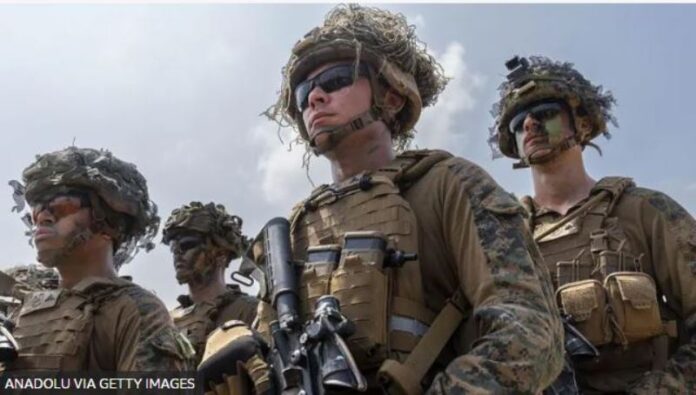
The United States is deploying rapid response forces to the Persian Gulf, with the 31st Marine  Expeditionary Group already stationed there, while the 11th Marine Expeditionary Group and units from the 82nd Airborne Division are en route. The BBC’s Russian Service reports that according to CBS News, special forces—Navy SEALs and Army Rangers—are also being sent to the region. Unlike the forces already positioned, these units are intended for ground operations.

So far, the U.S. and Israel have refrained from large-scale ground actions on Iranian territory, but the concentration of airborne units signals a potential shift in tactics. These additional forces could involve up to 8,000 military personnel—around 2,500 Marines per expeditionary unit and between 3,000 and 4,000 paratroopers. These figures are approximate, excluding sailors on ships of the aircraft carrier and amphibious groups.

Experts suggest these forces could be deployed for one of three key scenarios: the blockade of the Strait of Hormuz, the capture of Hark Island, or a raid to extract enriched uranium from the country. The presence of rapid-response forces indicates the U.S. is expanding its military options, potentially escalating the conflict beyond its initial scope.


Breaking blockade of the Strait of Hormuz

Iran blocked the Strait of Hormuz shortly after the Allies' air campaign began in late February. Technically, it is easy to do: at its narrowest, the strait is only 50 kilometers wide, and it is vulnerable to missile attacks, mining, and drone boat assaults.

The scale of the problem is underscored by economic statistics: According to the U.S. Energy Information Administration for 2024, approximately 20% of the world’s liquefied natural gas trade passes through the strait, while in the first half of 2025, around 25% of the world’s oil shipments will flow through it. Shipping vessels, including supertankers, cannot navigate the strait not only due to physical threats but also because leading insurance companies have sharply increased premiums, making passage untenable for many shipowners.

U.S. President Donald Trump has demanded Iran reopen the strait by April 6, threatening to escalate airstrikes. However, if Tehran does not comply, the U.S. may deploy its troops for a forced reopening.


The seawall fortress

The blockade is supported by a series of islands, such as Abu Musa, Greater and Lesser Tomb, which are the subject of territorial disputes between Iran and the UAE. These islands host airstrips, air defense positions, and missile systems. The key target is Qeshm Island—the largest in the Gulf, which acts as a natural naval fortress. Nearby are the islands of Larak, Hormuz, and Hengam, home to underground missile bunkers and shelters for attack boats.

To force the opening of the strait, the U.S. would need to capture each of these islands. Given Iran’s defensive strategy, these islands are likely heavily fortified, making the operation highly risky.


The key oil terminal

Another scenario would involve seizing Hark Island, through which 90% of Iran’s oil trade passes. Cutting off Tehran’s access to the Hark terminal would target the financial foundation of Iran’s military programs, particularly its missile and nuclear projects. However, such an escalation would almost certainly provoke retaliatory strikes on critical infrastructure in the Gulf countries, which Iran has so far avoided.

In this context, a ground assault to capture the island is viewed as the most pragmatic approach. Unlike destructive airstrikes, establishing physical control would immediately block oil exports while keeping the infrastructure intact for future use by a new government.

The U.S. has already carried out a series of airstrikes targeting military installations on Hark Island. A priority for any amphibious operation would be the capture of the local airfield, which, after rapid repairs, could serve as an air bridge for deploying additional forces and equipment.


Islands and strategic positions

The capture of small islands near the coast is usually considered a prelude to a mainland invasion. Islands function as "unsinkable ships," providing air defense and support for landings. However, if no further advance is planned, troops on the islands become easy targets for coastal artillery.

In a situation where intercepting artillery shells is more difficult than missiles, holding the islands without control over the surrounding coast is extremely dangerous. Analysts note that for a full-scale invasion of the mainland, the current U.S. grouping is clearly understrength.


Uranium seizure

A further priority mission for the American forces could be the operation to seize Iran’s stockpiles of enriched uranium in Natanz and Isfahan. According to the Wall Street Journal, the Trump administration is considering a scenario in which U.S. special forces forcibly remove nuclear materials, which would require their presence on Iranian soil for several days.

Earlier, Washington had issued Tehran an ultimatum: lift sanctions in exchange for turning over all enriched uranium to the International Atomic Energy Agency (IAEA), including hundreds of kilograms enriched to 20% and 60%.

Executing such a raid would be technically complex. Experts say the operation’s success would depend on the complete suppression of Iranian air defense and the establishment of a temporary stronghold on the site.

The main threat during the transportation of uranium is not radiation, but the chemical properties of the material. Uranium is stored as uranium hexafluoride—a highly aggressive compound. Thus, the operation would require not only assault actions but also sophisticated engineering and chemical logistics under combat conditions.


Tajikistan ranked among countries with moderate terrorist threat level

0

Tajikistan has been ranked among the countries with a moderate terrorist threat level, securing the 41st spot in the updated Global Terrorism Index (GTI) for 2026. According to the Institute for Economics and Peace (IEP), Tajikistan's threat index stands at 2.602, indicating a relatively stable situation compared to the most affected regions, but the risk persists.

The top three countries with the highest levels of terrorist activity are Pakistan (8.574), Burkina Faso (8.324), and Niger (7.816). Other highly unsafe countries include Nigeria, Mali, Syria, Somalia, and the Democratic Republic of Congo, where terrorism continues to significantly impact public security.


Tajikistan and its neighbors

Tajikistan falls into the category of countries with moderate terrorist threats, while its neighbors Uzbekistan and Kazakhstan report lower threat indices. Uzbekistan, with an index of 0.114, ranked 96th, while Kazakhstan, Kyrgyzstan, and Turkmenistan ranked 100th with an index of 0, indicating minimal threat levels in these countries.


Global terrorism: improvements, but challenges remain

Despite significant reductions in terrorism in 2025, the report authors warn that the situation could worsen due to new global conflicts. In 2025, deaths from terrorist attacks decreased by 28%, and the number of attacks fell by nearly 22%. Improvements were noted in 81 countries, while the situation worsened in 19 countries, marking the lowest number of deteriorations in the history of the index.

The analysis highlights a shift in the nature of terrorism, which is now largely concentrated in border areas. Over 41% of attacks occur within 50 km of borders, and 64% occur within 100 km. These regions often remain weakly controlled, making them centers of terrorist activity.


Geopolitical situation and 2026 forecasts

The geopolitical situation continues to deteriorate, raising serious concerns for the future. The authors of the report suggest that the improvements recorded in 2025 may be temporary rather than the start of a sustained decrease in terrorism. The forecast for 2026 indicates the continuation of terrorism threats, particularly in border and unstable regions.


About the Global Terrorism Index (GTI)

The GTI is calculated based on several factors, including the number of terrorist incidents, casualties, severity of consequences, the number of hostages, and the effectiveness of counterterrorism efforts. These data provide crucial information for international organizations such as the UN and World Bank and influence foreign investment decisions.


Conclusion

The 2026 Global Terrorism Index highlights that while global violence has decreased, the threat of terrorism remains significant and concentrated in certain regions, including Tajikistan. Experts call for further improvements in counterterrorism approaches and increased cooperation among countries in the field of security.