Home Blog Page 19

Somon.tj strengthens its position as a key labor market platform with brand recognition over 86%

0

The platform Somon.tj continues to solidify its position as one of the main digital tools in Tajikistan's labor market. According to internal analytics, the brand awareness level has reached 86.1%, and the Top of Mind score stands at 53.9%. This means that more than half of users immediately think of Somon.tj when it comes to job searching or posting vacancies.

The growing popularity of online job platforms is linked to changing behaviors of employers and job seekers. Companies are increasingly looking to publish vacancies quickly, reducing the time spent searching for employees and engaging directly with candidates. Job seekers, in turn, are turning to digital services as their primary job search channel, gaining quick access to current job offers.

Amid these changes, Somon.tj is gradually moving beyond being a traditional job board. The platform is becoming not only a place for job postings but also a kind of analytical center for the labor market. By analyzing data on job vacancy trends, in-demand professions, and employer requirements, Somon.tj tracks economic changes in near real-time.

Labor market experts believe that the further development of online channels will enhance market transparency, allowing companies to close vacancies more quickly and helping job seekers find the most suitable opportunities more effectively.

Thus, digital platforms are becoming an essential infrastructure element of the modern labor market, and Somon.tj is one of the key points of concentration in Tajikistan's labor market.


Tajikistan ranks third among countries with the most polluted air

0

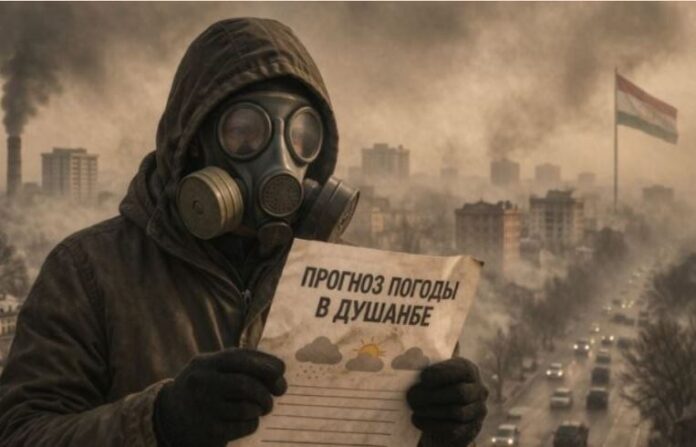
Tajikistan has once again found itself among the countries with the most polluted air in the world.

According to the "2025 World Air Quality Report" by the international organization IQAir, Tajikistan ranks third globally for air pollution, behind only Pakistan and Bangladesh. Environmentalists warn that if nothing changes, by 2040, air pollution levels in Dushanbe could rise by 50%.


More monitoring, less clean air

In 2025, IQAir analyzed data from 9,446 monitoring stations across 143 countries and territories. Twelve new countries were included in the report for the first time, indicating that air quality monitoring is becoming more widespread and accurate. However, the data shows that air quality is not improving. Only 14% of cities globally meet the World Health Organization's annual PM2.5 level recommendations, a decrease from the previous year.

Top 5 countries with the most polluted air:

1.     Pakistan

2.     Bangladesh

3.     Tajikistan

4.     Chad

5.     Democratic Republic of the Congo 

The closure of the air quality monitoring program at US embassies and consulates in 2025, which provided independent data in 44 countries, has further exacerbated the problem, leaving six countries without any monitoring.


Dushanbe: breathing is becoming harder

In 2025, the annual average concentration of PM2.5 in Tajikistan reached 57.3 µg/m³, which is 11.4 times higher than the World Health Organization's recommended level. This is also worse than the 2023 figure of 49.1 µg/m³, indicating a worsening trend.

Dushanbe remains one of the most polluted cities in the region. According to the World Bank, the PM2.5 levels in the city have consistently stayed above 50 µg/m³ in recent years.


Causes of air pollution in Dushanbe

Air pollution in Dushanbe is highly seasonal. In winter, the concentration of harmful particles increases due to the heating season, when the use of coal and wood for heating rises.

In summer, dust becomes the main contributor to pollution, accounting for up to 70% of total pollutants according to some estimates.

What pollutes the air:

·         42% – Heating of private homes with wood and coal

·         15% – Transport

·         12% – Burning of waste

·         25% – Dust from construction and natural sources


What needs to change?

Environmentalists and experts urge the authorities to take decisive action. Timur Idrisov, co-founder of the "Medvezhiy Ugol" initiative group, believes that it is essential not only to expand the monitoring network but also to rethink urban planning, energy efficiency, and emissions control approaches. "Without this, even the most modern air quality data won't solve the problem," said Idrisov.

Key recommendations include aligning national pollution standards with World Health Organization standards, as the current permissible concentrations in Tajikistan are significantly higher than international norms.

Experts also propose expanding the government’s monitoring system and installing automated stations in cities with open access to data. Supporting public monitoring through affordable air quality sensors will help citizens see real-time data.


What else needs to be done?

Emissions can be reduced by modernizing thermal power plants and industrial enterprises, as well as implementing the "polluter pays" principle. A significant step would be the development of eco-friendly transportation, including public transport, cycling infrastructure, and car-free zones. Improving the energy efficiency of buildings would also reduce the use of coal and other fuels during the heating season.

Green initiatives, such as creating parks, squares, and planting greenery along roads and near industrial sites, will also significantly improve air quality.


The future and consequences without change

According to the World Bank, if the situation remains unchanged, air pollution levels in Dushanbe could increase by 50% by 2040. Emissions of major pollutants such as SO2 and NOx could rise by 33% and 70%, respectively, while PM2.5 concentrations could reach 77 µg/m³.

However, experts believe that with comprehensive measures, the situation can be radically changed. The key is decisive action from the authorities to improve the environmental situation.

President Rahmon opens new schools, factories, and a hospital in Sughd’s Mastchoh district

0

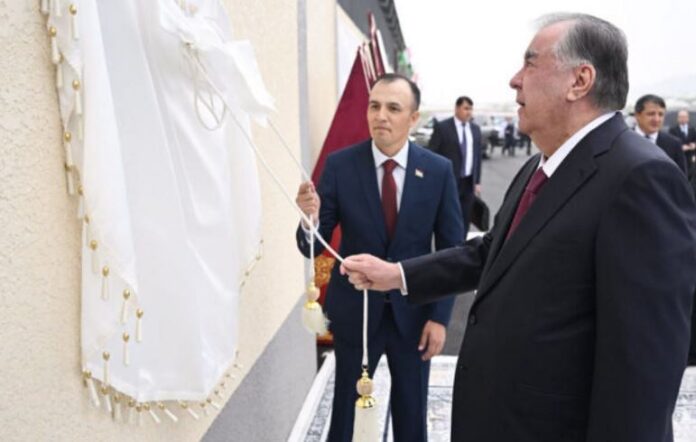
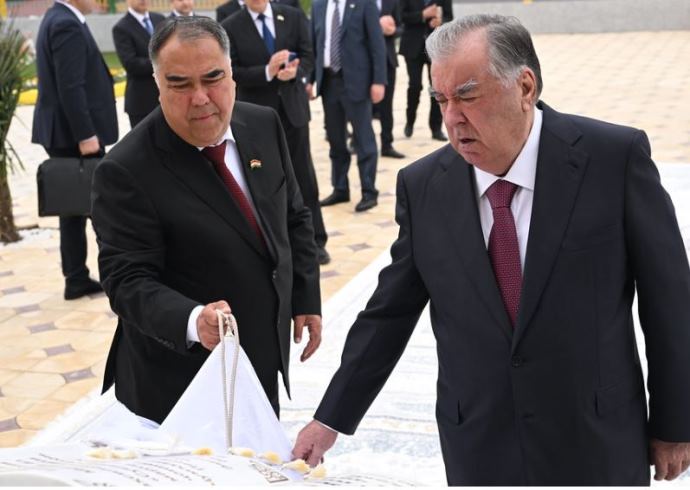
During a working visit to the Sughd province, President Emomali Rahmon on March 30 inaugurated several new facilities in the Mastchoh district. According to the press service of the head of state, one of the significant events was the opening of school No. 14 in the settlement of Buston, which has a capacity for 1,000 students in two shifts. The two-story building includes modern classrooms, laboratories, a dining hall, and specialized rooms for biology, mathematics, music, labor education, and military training.


New brick factory

The district also saw the opening of the Jafar-2014 brick manufacturing plant. The plant has a daily production capacity of up to 80,000 bricks, or more than 24 million bricks annually. The factory is equipped with modern automated technologies. Construction of the facility began in 2024 and was completed in 1 year and 8 months. This is the second plant of the company, with the first one operating in the Obshoron area. The launch of the new factory has created more than 50 jobs, with production running in three shifts.


Poultry industry enterprises

Additionally, three new poultry production facilities were launched in the district: a slaughter and poultry processing plant with a capacity of up to 5,000–6,000 birds per day, a poultry farm with an annual output of up to 500 tons, and another complex with a capacity of up to 400 tons per year. In total, around 20 jobs have been created.


New hospital and water supply for 12,000 residents

Among the most important projects inaugurated during the visit was the new building of the central district hospital with 200 beds. The medical facility is equipped with modern equipment and includes 8 departments and 5 operating rooms. The opening of the hospital has created more than 250 jobs.

Furthermore, two 2,000-cubic-meter drinking water reservoirs were put into operation, which will provide water for over 12,000 residents of the district. These new facilities are aimed at improving medical services and the living conditions of the local population.


Tajikistan reportedly expands 4G network and improves mobile service quality

0

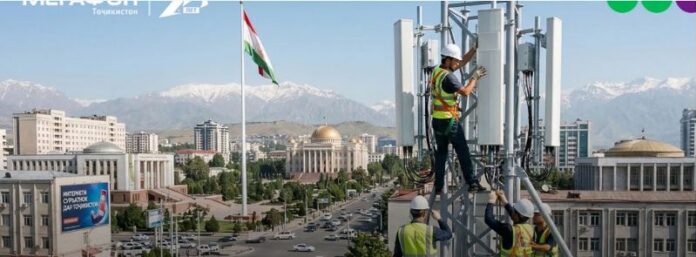
In January–February 2026, MegaFon Tajikistan reprotedly commissioned around 30 new 4G/LTE base stations and began upgrading its voice communication infrastructure.

According to press release issued by the company, the new base stations have been deployed across all regions of the country. In the Sughd province, the network was reportedly strengthened in Buston, Panjakent, and Khujand, as well as in the districts of Ayni, Devashtich, Zafaroboad, and Istaravshan. In the Khatlon province, upgrades were carried out in the Qubodiyon and Farkhor districts.

In the Gorno-Badakhshan Autonomous Region (GBAO), new equipment was reportedly installed in the Murgab district.

The project also covered Dushanbe, Vahdat, Hisor, Tursunzoda, and the districts of Varzob, Rasht, and Roudaki.

In areas where new base stations were launched, mobile internet speeds reportedly increased by two to three times.

The press release says the expansion of the 4G network not only boosts data speeds but also improves voice communication quality. Users now have access to VoLTE calls with clearer sound. According to the company, the share of VoLTE users has grown from 5% to 15% over the past year.

At the same time, the company is reportedly modernizing voice switches and the core network (CS Core), including software and hardware upgrades and architectural optimization. These measures enhance network stability under peak loads, reduce call setup time, and improve call quality.

“Digitalization in Tajikistan is a step-by-step process made up of many small improvements. Each new base station and every kilometer of fiber-optic lines brings us closer to this goal,” said Alijon Ghaniyev, Technical Director of MegaFon Tajikistan.

Uzbekistan and Afghanistan establish Business Council to boost bilateral trade to $5 billion

0

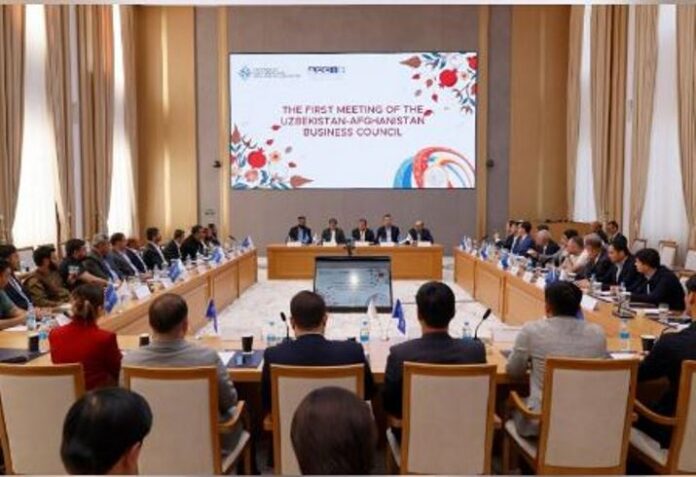
Uzbekistan and Afghanistan have established a joint business council aimed at increasing bilateral trade to $5 billion, Fergana news agency reported on March 26, citing the press service of the Chamber of Commerce and Industry (CCI) of Uzbekistan.

The council includes 32 representatives. The Uzbek side is represented by the leadership of the Chamber of Commerce and Industry and sectoral associations, while the Afghan side includes representatives of the Chamber of Commerce and heads of major private companies.

The first meeting of the council was held in Tashkent under the co-chairmanship of Heads of Chambers of Commerce, Davron Vahabov of Uzbekistan and Mohammad Karim Hashimi f Afghanistan.

During the meeting, participants discussed expanding trade and economic cooperation, strengthening direct ties between businesses, and implementing joint projects. The key objective is to increase bilateral trade to $5 billion in the short term. To achieve this, the parties agreed on a concrete action plan.

Priority areas include expanding export potential, introducing digital customs systems, developing financial and insurance services, and ensuring transparency in trade processes.

Special attention was also given to enhancing business-to-business interaction through regular exhibitions, business forums, and B2B meetings.

It is expected that the implementation of these agreements and a focus on priority areas will elevate bilateral economic cooperation to a new level and significantly increase trade volumes.

According to Davron Vahabov, the initiative will create opportunities for direct dialogue between entrepreneurs, the formation of new partnerships, and increased investment activity.


Tajikistan to allocate nearly 14 billion somoni for education in 2026

0

In 2026, nearly 14 billion somoni will be allocated from Tajikistan’s state budget to the education sector, according to the Ministry of Education and Science.

The ministry reported that the funding will increase by 25.4% compared to 2025 and will be 5.5 times higher than in 2015.

In 2025, state budget expenditures on education amounted to 10 billion 909 million 496 thousand somoni, accounting for 6.6% of the gross domestic product (GDP) and 21.1% of total government spending.

In 2025, budget funds were allocated as follows:

·         General education — 6 billion 195 million somoni (increase of 35.6%)

·         Primary and secondary vocational education — 576.2 million somoni (increase of 18.7%)

·         Preschool education — 606.9 million somoni (increase of 21.9%)

·         Higher professional education — 1 billion 511 million somoni (increase of 22.1%)

·         Other sector expenses — 1 billion 511 million somoni (which is 40% more than in 2024) 

Compared to 2024, funding for the sector last year increased by 2 billion 677 million somoni, or 32.5%. In 2024, the education budget stood at 8 billion 231 million 867 thousand somoni.

Tajik language in the US: a Tajik native teaching at the University of Kansas

0

Teaching the Tajik language in Europe and the United States is not uncommon; however, in most universities it is taught as part of Persian and uses the Persian script. At the University of Kansas, Tajik is taught in its national form.

Bakhtiyor Davlatmurodov, a native of Tajikistan, teaches classes three times a week, each lasting one hour. He uses the textbook “Tajik for Foreigners” by renowned instructor Azim Baizoyev, as well as his own teaching materials. The course is offered under the title Survival Tajik.

In an interview with Asia-Plus, Davlatmurodov spoke about his career path and teaching experience in the United States.


An English teacher who teaches Tajik

By training, Davlatmurodov is a teacher trainer in English. In Tajikistan, he taught English to journalists through courses organized by the US Embassy in Dushanbe. He also served as a regional coordinator for the “English without Borders” project and worked with several organizations.

“Essentially, I am an English teacher, but I have a strong interest in teaching Tajik. My work goes beyond vocabulary and grammar—I introduce students to Tajik culture, art, traditions, and way of life,” he said.

According to him, some students aim to study Tajik at an advanced level. Their interest is driven by academic research, work in Central Asia, diplomacy, and volunteer activities.

He noted that one of his students, John, became interested in Tajik after hearing Tajik poetry, while another student, Milo, is studying the language out of cultural interest and plans to visit Tajikistan.

Interest in Language and Culture

Every Thursday, Davlatmurodov conducts open in-person sessions on Tajik culture, attended by 15 to 20 students.

One session focused on falak, a traditional musical genre from the Khatlon province, and his performance generated strong interest among students.

He also introduced participants to basic Tajik phrases during International Languages Day and performed a Pamiri dance at a “Hidden Culture” event, where more than 100 people joined in.

He plans to continue introducing students to the cultural diversity of Tajikistan’s regions.

According to him, foreigners are particularly drawn to Tajik hospitality, music, poetry, and the Navrouz holiday, which he sees as an opportunity to promote the language and culture.

“With growing interest in Central Asia, the study of Tajik will also expand, especially with more grant programs, qualified teachers, and high-quality educational materials,” he emphasized.

Tajik is taught at the University of Kansas under the Fulbright FLTA (Foreign Language Teaching Assistant) program, which typically lasts one academic year and aims to promote less commonly taught languages and cultures while developing teaching professionals.


A cultural ambassador 

Davlatmurodov previously taught Tajik to staff at the Indian Embassy in Tajikistan and other foreigners. This experience helped him secure a place in the Fulbright FLTA program and become, in effect, a cultural ambassador of Tajikistan.

His responsibilities include teaching the language, representing the country, and organizing cultural events.

He grew up in a working-class family and developed an early interest in languages. He says he has a strong command of Tajik grammar and teaching methodology.

In March, he plans to organize a Tajik Culture Day at the university and has already begun preparations.

After completing the program, he intends to return to Tajikistan, share his experience with colleagues, and later pursue a PhD at the University of Kansas.

Pakistan offers to host US-Iran talks

0

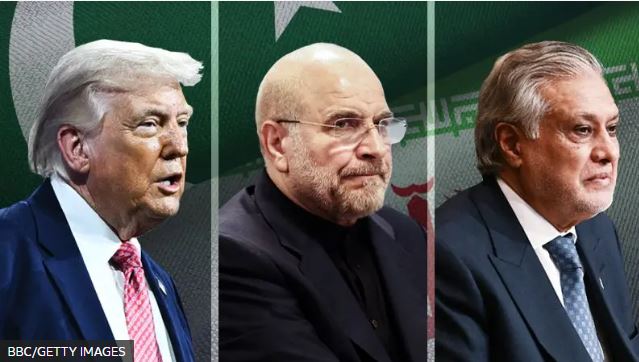
A meeting of the foreign ministers of Pakistan, Saudi Arabia, Turkiye, and Egypt was held in Islamabad to discuss the situation in the Middle East. Following the talks, Pakistan reaffirmed its readiness to serve as a venue for potential negotiations between the United States and Iran, which could take place “in the coming days,” the BBC’s Russian Service reported on March 30.

Foreign ministers of Pakistan, Saudi Arabia, Turkiye, and Egypt gathered in Islamabad over the weekend to discuss the situation in the Middle East.

Following the first day of the meeting, Pakistan’s Deputy Prime Minister and Foreign Minister Ishaq Dar stated that his country is ready to host talks between Iran and the United States “in the coming days.”

“It would be an honor for Pakistan to serve as a venue and mediator for meaningful negotiations between the two sides in order to achieve a comprehensive and long-term resolution of the conflict,” Dar said, according to the NNC’s Russian Service.

Although Islamabad has previously expressed its willingness to facilitate dialogue, no specific dates for the talks have been announced. According to Dar, both Tehran and Washington view Pakistan as a neutral mediator, and the initiative has received support from the foreign ministers of Saudi Arabia, Turkiye, and Egypt.

International leaders, including Chinese Foreign Minister Wang Yi and UN Secretary-General António Guterres, have also expressed support for Pakistan’s peace efforts. However, representatives of Turkiye, Saudi Arabia, and Egypt have not officially commented on the outcome of the meeting.


Uncertainty surrounds negotiations

Pakistan has previously acted as a mediator between Washington and Tehran, including delivering a 15-point peace plan proposed by the United States to the Iranian leadership. Former US President Donald Trump has claimed that Tehran agreed to most of the provisions.

Meanwhile, Iranian Parliament Speaker Mohammad Bagher Ghalibaf, who is considered a potential representative of Iran in the talks, said the US proposal aims to achieve goals “that could not be accomplished during the war.”

Iran responded with its own five-point proposal, including demands for sovereignty over the Strait of Hormuz. Iran’s Foreign Ministry later confirmed that there are no direct negotiations with the United States and expressed skepticism about reports of Washington’s willingness to engage in dialogue.

Amid these developments, U.S. President Donald Trump stated that the United States is “engaged in serious negotiations with a new, more reasonable regime” to end military operations in Iran. He added that if an agreement is not reached soon, Washington may take serious action against Iran.

The question of whether meaningful negotiations between Tehran and Washington are underway remains unresolved. US Special Envoy for the Middle East in the Biden administration, David Satterfield, noted that it is unclear whether the statements about dialogue are an attempt to buy time ahead of a possible military operation. He also suggested that despite claims of a regime change in Iran, significant concessions from Tehran are unlikely.

Emomali Rahmon attends Navrouz celebrations in Mastchoh district

0

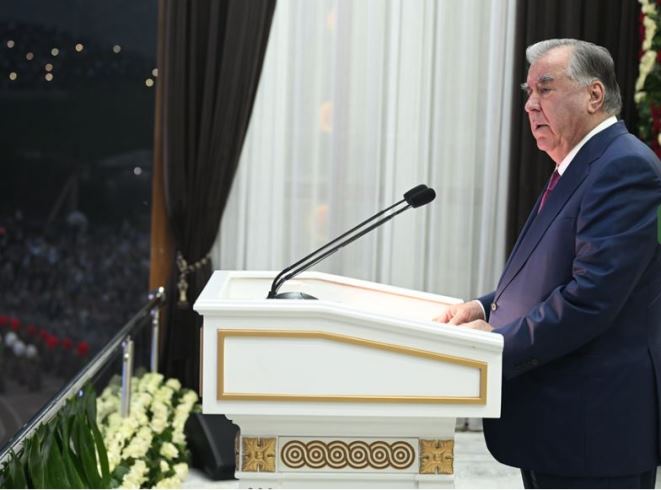
On March 30, President Emomali Rahmon, during a working visit to the Mastchoh district, took part in and addressed a ceremonial cultural event dedicated to the celebration of Navrouz, according to the Tajik president’s official website. The festivities were held at the district’s Central Stadium and attended by numerous residents and guests.

At the beginning of his speech, the head of state congratulated the residents of the district and the people of the country on Navrouz—the ancient New Year of their ancestors—wishing every Tajik family happiness, prosperity, and well-being, and continued development for Tajikistan.

The president emphasized that for the Tajik people, Navrouz is not only a celebration of the arrival of spring, but also a reflection of ancient history, a symbol of national identity, and continuity between generations.

According to Rahmon, throughout their long history, the Tajik people have repeatedly faced serious challenges, but each time overcame them thanks to wisdom, constructive traditions, and values, including those associated with Navrouz.

The head of state noted that during the period of independence, this ancient holiday was revived and is now celebrated in an atmosphere of peace, stability, and national unity.

It was particularly emphasized that this year Navrouz is being celebrated at an important stage of national development and beautification efforts ahead of the 35th anniversary of Tajikistan’s state independence.

Rahmon also highlighted the significant achievements of the Mastchoh district, which over the years of independence has become more developed and modern, with a substantial improvement in living standards.

He noted that in the past five years alone, 38 new industrial enterprises and workshops have been commissioned in the district, creating hundreds of jobs, while industrial output has increased by 2.2 times.

The president described these achievements as a valuable contribution by entrepreneurs and residents to the upcoming anniversary of state independence.

The head of state also recalled that Navrouz symbolizes the connection between humans and nature and marks the beginning of agricultural work, calling for the effective use of the spring season to ensure the country’s food security.

It was also reported that, as part of the improvement plan for the independence anniversary, 735 facilities are planned for construction and reconstruction in the Mastchoh district, most of which have already been completed.

Rahmon expressed gratitude to the district’s residents for their contribution to regional development and noted that additional projects, job creation, and infrastructure improvements are expected by the end of the year.

Following the official remarks, a festive cultural program featuring performances by artists added to the celebratory atmosphere.

Emomali Rahmon launches new preschool facility in northern Tajikistan

0

During his working visit to the Sughd province, President Emomali Rahmon yesterday inaugurated a new preschool institution, Sughdiyon, in the Mastchoh district. This was reported by the president’s official website.  

The Sughdiyon kindergarten, located in the village of Ganjobod, is designed to accommodate more than 300 children and was built as part of preparations for the 35th anniversary of the country’s state independence. The facility provides modern conditions for the upbringing and education of children. The building comprises 15 rooms and 10 groups, including rooms for sleeping, classes, music, creative activities, and intellectual development.

It is reported that 30 educators have been employed at the kindergarten, who will work with children using modern teaching methods, including foreign language instruction and the development of patriotic education.

The facility also includes a sports hall, two swimming pools, eight gazebos, and playgrounds. Approximately 20 local specialists were employed during the construction of the facility.

During the visit, Emomali Rahmon interacted with the children, presented them with gifts, and gave recommendations to the educators.