Home Blog Page 20

Central Asia gains strategic importance as oil crisis disrupts global markets

0

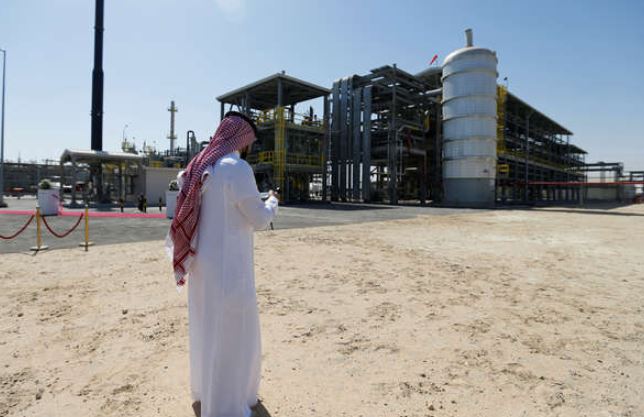
The global energy market is experiencing one of its most serious disruptions in decades following the effective closure of the Strait of Hormuz, a key route for around 20% of global maritime trade and roughly one-third of the world’s liquefied natural gas (LNG) supplies.

According to an analysis by Radio Liberty’s Uzbek Service and RFE/RL’s Azattyq Asia, the disruption comes amid escalating conflict involving the United States, Israel, and Iran. Coordinated Israeli airstrikes targeting major Iranian gas facilities in South Pars and Asaluyeh, combined with Iranian retaliatory attacks on energy infrastructure in Saudi Arabia, the United Arab Emirates, and Qatar, have effectively paralyzed tanker traffic in the region.

The market reaction has been swift. Brent crude prices surged to $116.38 per barrel on March 19, while European natural gas prices rose sharply due to tightening physical supply. The spike in gas prices has already forced fertilizer producers to cut output ahead of the planting season, raising concerns over potential crop losses and food insecurity in parts of Asia, Africa, and Latin America.

Against this backdrop, the strategic importance of Central Asia’s energy resources—particularly those of Turkmenistan and Kazakhstan—has increased significantly.


Turkmen gas seen as fast-track relief option

Turkmenistan, which holds an estimated 19.5 trillion cubic meters of proven natural gas reserves, could provide one of the quickest alternative supply options. Most of its gas is currently exported to China via the Central Asia–China pipeline, with limited additional routes available.

Experts say the current crisis highlights the potential for Turkmen gas to be redirected toward Europe through the Caspian region. John Roberts, a senior fellow at the Atlantic Council, noted that relatively short pipeline connections—ranging from about 78 to just over 100 kilometers—could link Turkmen offshore fields to existing infrastructure in Azerbaijan, allowing gas to enter the Southern Gas Corridor.

Such a solution, he said, could be implemented within months by leveraging existing infrastructure, offering a rare “quick and clean” option in a market where new supply routes typically take years to develop.


Kazakhstan faces structural export constraints

In contrast, Kazakhstan’s oil sector faces more significant logistical and geopolitical challenges. The country holds around 30 billion barrels of proven oil reserves and produces approximately 1.4 million barrels per day, but about 80% of its exports depend on the Caspian Pipeline Consortium route to Russia’s Black Sea port of Novorossiysk.

Experts note that diversifying these export routes would require years of investment. Existing alternatives, such as shipping oil across the Caspian Sea to Azerbaijan, are limited by tanker capacity and infrastructure constraints.

“The crisis clearly shows that Central Asia’s energy infrastructure was built for a geopolitical reality that no longer exists,” Joseph Epstein, director of the Turan Center for Post-Soviet Studies, said in an interview with RFE/RL's Azattyk Asia.


Strategic shift toward Europe

Amid the disruption, attention is increasingly turning to closer energy cooperation between Central Asia and the European Union. Turkmen President Serdar Berdymukhammedov is preparing for a visit to Brussels, where energy cooperation is expected to be a central topic.

A Turkmenistan-EU forum held in Ashgabat has already brought together policymakers and business leaders to explore opportunities in energy, transport, and sustainable development.

Analysts say the current crisis could mark a turning point, but whether Central Asia can capitalize on it will depend on infrastructure investments and political agreements in the coming years.

Russia to restrict Apple ID top-ups via mobile accounts

0

Starting April 1, iPhone users in Russia will face new restrictions, as topping up Apple ID balances via mobile phone accounts will no longer be available for subscribers of the country’s major telecom operators, RBC reported, citing industry sources.

According to the report, the decision was communicated to executives of the “big four” mobile operators during a meeting with Digital Development Minister Maksut Shadayev on March 28.

Despite a decline in Apple’s share of new device sales, iPhones still account for a significant portion of the active user base in Russia. Operator data indicate that iOS usage remains substantial; for example, it reached 22% in MTS’s network at the end of last year. Analysts at T-Data estimate the overall share of iOS devices in Russia at around 40–42% in recent years.

Sources suggest that one of the reasons behind the move may be to limit users’ ability to pay for VPN services. Currently, direct carrier billing remains available for MTS and Beeline subscribers, while T2 and MegaFon customers rely on similar options through partner arrangements. Most operators have declined to comment, and requests sent to MTS and the Ministry of Digital Development have gone unanswered.

Apple’s subscription-based services remain widely used, including iCloud+, Apple Music, Apple TV+, Apple Arcade, Apple Fitness+, Apple One, and Apple Match.

Since February 2022, mobile billing has become one of the primary methods for funding Apple ID accounts in Russia after Apple Pay was suspended and the use of bank cards, including Mir cards, was restricted.

With the new restrictions, digital gift cards remain the only alternative method for adding funds to Apple ID accounts. Although physical cards have largely disappeared from retail stores, digital codes are still available through online marketplaces and specialized platforms.

However, this method comes with additional challenges: intermediaries typically charge commissions of 15–20%, and the codes must match the region of the user’s account. It remains unclear whether the new restrictions will also affect the sale of such gift cards or if they will remain доступным payment option. 

Entrepreneur in Sughd fined for violating the law on traditions and rituals

0

A court in Bobojon-Ghafourov district of Sughd province has fined a local entrepreneur for violating laws regulating traditions, celebrations, and ceremonies.

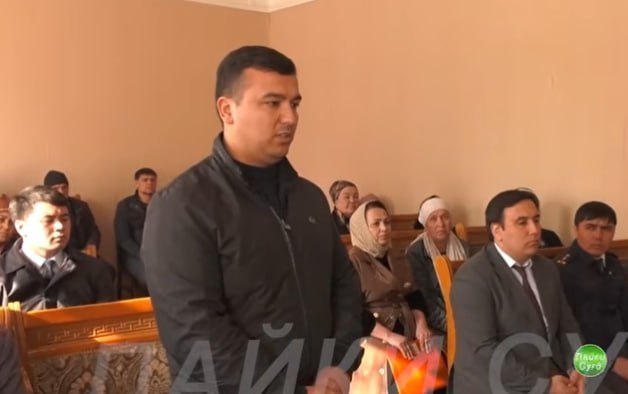
According to TV program “Militsiya Khabar Medihad” (Police Reports) of the Sughd Police Department, a 29-year-old Amirjon Kholmatov, a resident of the Haydar-Usmon jamoat and head of the company Sikhkabobi Amiri, celebrated his birthday on February 1 at his café. The event was streamed live on social media.

Law enforcement officials stated that such public displays may encourage others to imitate similar violations.

The court reportedly found Kholmatov guilty under Article 481 (8) of Tajikistan’s Code of Administrative Offenses and imposed a fine of 1,500 calculation units. With one unit set at 78 somoni, the total fine amounts to 117,000 somoni.

Kholmatov’s position on the case has not been disclosed.

Tajikistan has had the Law on Observing National Traditions and Rituals in place since June 2007.  The law  governs the organization of historical, cultural, public, and family events.  

Tajikistan President Emomali Rahmon signed the law on streamlining the traditions, celebrations and ceremonies in Tajikistan on June 8, 2007, justifying it “by protecting the true values of national culture, respect for folk customs and improving the social and economic standard of living of citizens.”

The Law on Observing National Traditions and Rituals has regulated private celebrations and funeral services, including weddings, funerals, and Mavludi Payghambar (the birthday of the Prophet).

The stated intent of the law was to protect the public from spending excessive amounts of money on celebrations.  The law limited number of guests, eliminated engagement parties, and controlled ceremonial gift presentations and other rituals.

Asian Boxing Championships in Ulaanbaatar mark start of new Olympic cycle

0

The 2026 Asian Boxing Championships, set to take place from March 30 to April 11 in Mongolia’s capital, Ulaanbaatar, are expected to be one of the key tournaments of the season and the first major continental event under the auspices of World Boxing.

The new governing body, which now oversees Olympic boxing, is shaping a new global system for the sport. In this context, the tournament in Mongolia goes beyond a traditional continental championship, serving as a starting point for a new competitive hierarchy ahead of the 2028 Olympic Games.

Tajikistan will be represented by a nine-member squad led by coaches Saidkhuja Mamourov and Khurshed Jurayev. The men’s team includes Anushervon Fozilov (55 kg), Akmal Ubaidov (60 kg), Ruslan Ghafourov (65.5 kg), Shamsher Saidov (70 kg), Nekrouz Salimov (80 kg), Parviz Karimov (90 kg), and Muhammad Abroriddinov (over 90 kg).

In the women’s competition, Tajikistan will be represented by Mijgona Samadova (57 kg) and Bibinishtamo Kholova (60 kg).

The tournament itself will run for nearly two weeks and will feature competitions in Olympic weight categories for both men and women under a single-elimination format. As is customary in amateur boxing, semifinalists will receive bronze medals, while finals will determine the champions in each division.

Bouts will follow the standard format of three three-minute rounds, judged using the 10-point scoring system in line with international standards.

Ahead of the tournament, an international training camp was held in Ulaanbaatar, allowing teams to conduct joint training sessions and sparring while adapting to local conditions.

Top Asian teams, including Kazakhstan, Uzbekistan, Japan, China, India, and South Korea, are expected to compete, ensuring a high level of competition.

Experts note that the championship will serve as an early benchmark in the new qualification system. While direct Olympic quotas may not be at stake, results will influence athlete rankings and future participation in qualification events.

For Tajikistan, the tournament holds particular importance. The national team has shown steady progress in recent years, with strong performances at major competitions, including the Asian Games.

The Ulaanbaatar event will be a key test under the new system, where competition is expected to intensify and standards become more demanding.

Participation itself is also strategically important, as national teams seek to establish their positions in the evolving global boxing structure.

For Tajik boxers, this is an opportunity to gain international exposure, build experience, and lay the groundwork for the Olympic cycle leading to 2028.

Saudi Arabia boosts oil exports via alternative routes bypassing Strait of Hormuz

0

Saudi Arabia has sharply increased oil exports through alternative routes bypassing the Strait of Hormuz, Bloomberg reported, citing sources.

According to the report, the kingdom has ramped up the East–West pipeline to its maximum capacity of around 7 million barrels per day. The route allows crude to be transported to the Red Sea, avoiding vulnerable shipping lanes in the Persian Gulf.

Following the effective closure of the Strait of Hormuz, tanker traffic has been redirected to the Red Sea port of Yanbu. Current crude export volumes through the port are estimated at around 5 million barrels per day.

Of the total pipeline capacity, between 700,000 and 900,000 barrels per day are exported, while approximately 2 million barrels are supplied to domestic refineries within Saudi Arabia.

The East–West pipeline, stretching over 1,000 kilometers, was built in the 1980s specifically to ensure export continuity during crises or maritime disruptions. It connects oil fields in eastern Saudi Arabia with terminals on the Red Sea coast.

Data from analytics firm Kpler show that oil flows through the Strait of Hormuz — previously about 15 million barrels per day — dropped by 95% between March 1 and March 26.

On March 25, Iranian authorities announced they would allow vessels from friendly countries, including China, Russia, India, Iraq, Pakistan, and Malaysia, to pass through the waterway. 

Dushanbe to host 16th International Half Marathon with prize fund announced

0

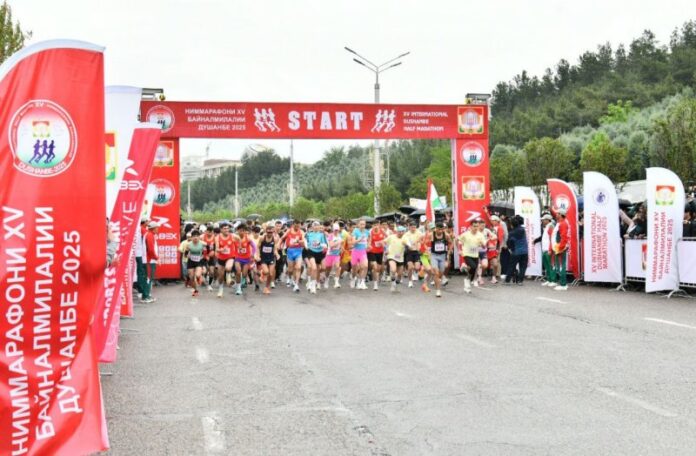
The 16th International Half Marathon will take place in Dushanbe on April 18, 2026, as part of celebrations marking Capital City Day. The event is considered one of the country’s most anticipating sporting highlights of the year.

Organizers are focusing on a strong field of participants, a substantial prize fund, and a festive citywide atmosphere. The Dushanbe Half Marathon is included in the international competition calendar under the auspices of World Athletics and regularly attracts runners from the capital’s sister cities.

The race distance remains the standard 21.0975 kilometers. The route runs through central streets of the city, from the Saadi Sherozi — Hofizi Sherozi area to the Chorbogh checkpoint, and then along Roudaki Avenue to Dousti Square.

Invited participants will be provided with accommodation and meals from April 16 to 20, allowing time for acclimatization and preparation. Each team will consist of one official representative and two athletes — one male and one female.

Strong participation is expected from athletes representing Central Asia, Eastern Europe, and Africa, regions that have consistently produced top performers in the event.


Prize fund

The Dushanbe Half Marathon remains one of the most attractive races in the region in terms of prize money. Winners in both the men’s and women’s categories will receive $3,500, with second-place finishers awarded $3,000 and third-place finishers $2,500.

Cash prizes will be awarded up to sixth place: 4th place — $1,500; 5th place — $1,300; and 6th place — $1,000.

Separate prizes are предусмотрены for local participants from Dushanbe and districts subordinate to the center:

 ·         1st place — 7,700 somoni,

·         2nd place — 5,500 somoni,

·         3rd place — 3,300 somoni.


Previous results and history

In 2025, Uzbekistan’s Shohrukh Davlatov won the men’s race, marking another victory in Dushanbe. In the women’s event, Yekaterina Tinguskova, also representing Uzbekistan, took first place.

Tajik athletes did not reach the podium last year: Zuhursho Najmiddin finished 11th in the men’s race, while Rajabmoh Abdulloyeva placed 12th among women.

The first Dushanbe Half Marathon was held in 2010 and has since become an integral part of Capital City Day celebrations. Over the years, winners have come from Kazakhstan, Russia, Ukraine, Kenya, Ethiopia, Kyrgyzstan, and Uzbekistan.

In recent years, runners from Central Asia and East Africa have dominated the race, with Uzbek athletes increasingly securing top positions, reflecting the growing strength of athletics in the region.


Gold bar prices in Tajikistan drop by 14% in March

0

Prices for standard gold bars issued by the National Bank of Tajikistan (NBT) fell by an average of about 14% in March 2026, according to data from the regulator.

NBT data show that the price of a 5-gram gold bar declined from 8,132.52 somoni on February 28 to 7,003.24 somoni on March 30. A similar trend was observed across other weight categories.

The price of a 10-gram bar dropped from 16,143.12 to 13,884.56 somoni, while a 20-gram bar fell from 32,152.81 to 27,635.70 somoni.

Larger bars also recorded comparable declines: 50-gram bars decreased from 80,164.96 to 68,872.19 somoni, and 100-gram bars from 160,254.77 to 137,669.22 somoni.

Overall, gold prices declined by around 14% across all weights.


Price decline in March (February 28 – March 30)

Weight

  Was (somoni)

  Became (somoni)

  Decrease

  Decrease (%)

5 g

     8132.52

      7003.24

  -1129.28

     -13.9%

10 g

   16143.12

    13884.56

  -2258.56

    -14.0%

20 g

   32152.81

    27635.70

  -4517.11

    -14.1%

50 g

   80164.96

    68872.19

-11292.77

    -14.1%

100 g

 160254.77

  137669.22

-22585.55

    -14.1%

Chart: Asia-Plus

Source: National Bank of Tajikistan (NBT) 


The decrease affected both selling and buyback prices, indicating a broad decline in gold value rather than changes in bank pricing policies.

Economist Farrukh Nabiyev said the trend is likely linked to a correction in global gold prices following earlier gains.

“For the local market, this means that gold bar prices closely follow global trends,” he noted.

According to Nabiyev, the price drop could signal a buying opportunity for investors.

“Traditionally, demand for gold increases during periods of instability. If prices stabilize or begin to rise, those who buy now may benefit,” he said.

He added that interest in gold could grow, particularly among those who view it as a safe-haven asset.

According to the NBT, after a sharp 43% increase in gold bar prices in 2020, prices declined by 4.1% in 2021 and 9% in 2022. They then rose by 21.5% in 2023, 25.8% in 2024, and nearly 40% in 2025.

The National Bank of Tajikistan began issuing refined gold bars for open circulation in June 2017. They can be purchased by any citizen without restriction.

Prices are set daily based on the London morning gold fixing for a troy ounce (31.1034768 grams), taking into account production, transportation, insurance, and customs costs. The gold used is sourced domestically.


Market paradox: gold falls amid geopolitical tensions

March marked a rare case where, despite heightened geopolitical tensions in the Middle East, gold prices declined rather than increased. According to RBC, prices have fallen by 14–20% since the escalation began, despite gold’s traditional role as a safe-haven asset.

Analysts attribute this to a shift in investor preference toward other assets, particularly the U.S. dollar and oil. Rising oil prices have boosted inflation expectations and strengthened the dollar, reducing gold’s appeal, Reuters reported.

Experts believe the decline represents a correction following record highs rather than a reversal of the long-term trend.

Key support factors remain in place, including strong demand from central banks, which continues to exceed historical averages. Geopolitical uncertainty and gold’s safe-haven status also continue to support investor interest.

However, analysts warn that the market may remain volatile in the short term, as gold prices are sensitive to speculative activity, U.S. Federal Reserve policy, and movements in the dollar.


Key drivers behind the decline

RBC analysts cite several factors behind the drop in gold prices, including a correction after previous gains, a stronger U.S. dollar, rising oil prices amid Middle East tensions, and expectations regarding U.S. monetary policy.

Additional pressure came from profit-taking and speculative trading, which amplified the short-term decline in prices.

President Rahmon meets Sughd regional administrators, outlines development priorities

0

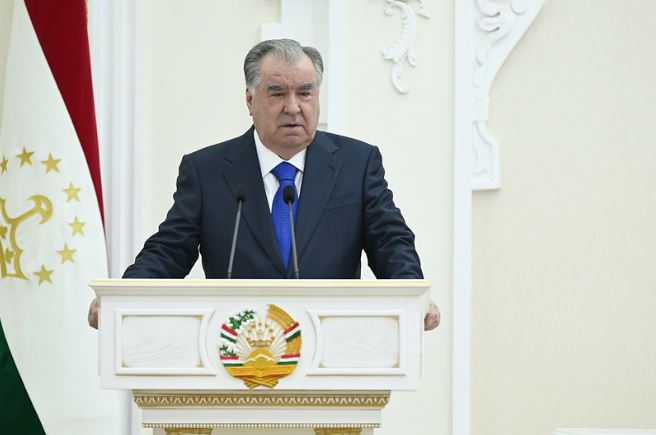
During a visit to the northern Tajik province of Sughd, President Emomali Rahmon has emphasized the importance of ensuring sustainable socio-economic development and outlined development priorities, the Tajik president’s official website reported on March 30. 

He stated this today during an address to a meeting of regional administrators in the city of Gulistion. 

According to the president’s official website, an analysis of the province’s performance for January–February 2026 revealed both progress and existing challenges. In this regard, Rahmon reportedly set specific tasks for officials, including accelerating economic growth, creating new jobs, and ensuring thorough preparations for the 35th anniversary of state independence.

Particular attention was given to industry, agriculture, and exports. The president stressed the need for more efficient use of resources, increased investment, and expansion of production capacities.

Rahmon instructed authorities to intensify efforts to address shortcomings in the industrial sector, restart idle enterprises, and strengthen the domestic market for locally produced goods, including school uniforms. 

In agriculture, he called for accelerating the sowing campaign, ensuring full use of farmland, and meeting targets for establishing orchards and vineyards.

The president also highlighted the contribution of residents, entrepreneurs, and local activists to regional development, noting that more than 13,300 facilities have already been commissioned.

He further emphasized the need to modernize the banking sector, accelerate the transition to cashless and digital payments, and improve public services, particularly in remote areas.

Concluding the meeting, Rahmon stressed the importance of preparing for the independence anniversary at a high level and expressed confidence that the region would make a significant contribution to achieving national strategic goals.

Following his remarks, Sughd Governor Rajab Ahmadzoda and local officials reported on the implementation of previous government directives and stated that an additional 3,000 facilities are expected to be commissioned ahead of the celebrations. 

Houthis raise stakes as Middle East escalation threatens global oil crisis

0

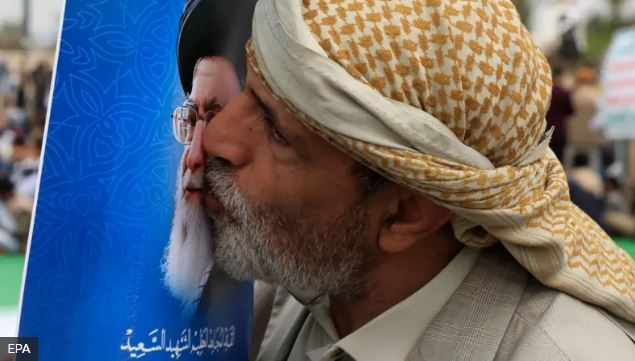
Escalating tensions in the Middle East are approaching a critical threshold, increasing the risk of a large-scale global energy crisis. Yemen’s Houthi movement, allied with Iran, has for the first time actively entered the conflict a month after the confrontation involving Iran, the United States, and Israel began.

According to the BBC’s Russian Service, the group’s attacks have so far been largely demonstrative and directed at Israel. However, the Houthis are seen as capable of targeting Saudi oil infrastructure, including pipelines and Red Sea export terminals.

After Iran effectively blocked the Strait of Hormuz — a route for roughly 25% of global oil and 20% of gas supplies — Saudi Arabia redirected part of its exports through a pipeline to the Red Sea port of Yanbu al-Bahr, originally built during the Iran-Iraq war.

These measures have helped contain price increases to some extent. Before the conflict, Saudi Arabia exported around 6 million barrels of oil per day via the Strait of Hormuz; currently, about 5 million barrels are being transported through the alternative route.

Much of this oil is shipped to Asia via the Bab el-Mandeb Strait, a chokepoint previously targeted by the Houthis, a Shiite group controlling large parts of Yemen with Iranian backing.

Analysts warn that if Saudi Arabia loses this alternative export route, global supply shortages could trigger another surge in oil prices, which have already risen from $70 to $115 per barrel over the past month.

Over the weekend, the Houthis launched their first overt attacks, firing missiles at Israel in the morning and threatening further strikes, followed by another attack later that day. A spokesperson described the happened as the group’s “first military operation” and said attacks would continue “until aggression ends on all fronts of resistance.”

Observers say the Houthis’ involvement effectively opens a new front in the Red Sea region and heightens risks to global shipping amid the effective closure of the Strait of Hormuz.

According to Joe Floto, head of the BBC’s Middle East bureau, the group’s active involvement was expected given its close ties to Tehran, which provides military, financial, and political support.

Yemen expert Mike Knight told the BBC that the Houthis are highly resilient and ideologically driven, suggesting they could remain a key force even if other Iranian allies weaken.

Amid rising tensions, the U.S. amphibious assault ship USS Tripoli, carrying thousands of Marines, has arrived in the region. U.S. President Donald Trump has previously stated that he does not plan to launch a ground operation in Iran.

Nevertheless, analysts increasingly view the Houthis as a significant lever of Iranian influence, capable of threatening strategic oil routes and impacting the global energy market.

Teen detained in Dushanbe over a series of car break-ins

0

Officers of police station-1 in Dushanbe’s Sino district have detained a 16-year-old resident of the capital on suspicion of carrying out a series of thefts from vehicles.

According to the city police, investigators believe the teenager smashed car windows and stole cash, mobile phones, and other valuables.

So far, four theft incidents have been confirmed, with total damages exceeding 20,000 somoni. The investigation is ongoing.

Earlier, officers from police station-2 in Dushanbe’s Shohmansour district detained three suspects in connection with similar crimes following оперативно-search operations.

According to law enforcement, the suspects had been operating for some time in the Khovaron neighborhood, targeting parked vehicles.

“During the preliminary investigation, it was established that the suspects broke the windows of more than 24 vehicles over the course of several days, stealing cash and mobile phones and causing material damage to the victims,” the statement said.