Home Blog Page 60

Tajikistan attracts $7 billion in foreign investments in 2025

0

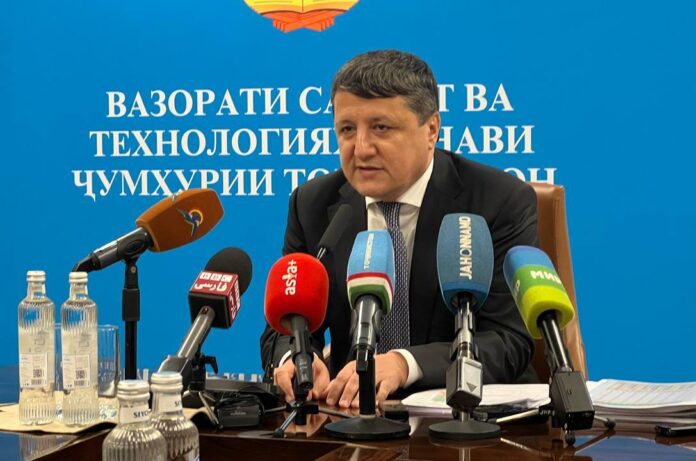
In 2025, Tajikistan attracted approximately $7 billion in foreign investments, marking an increase of nearly $2 billion, or 35.1%, compared to 2024. This was reported by Sulton Rahimzoda, Chairman of the State Committee on Investment and State-owned Property Management (GosKomInvest), during a news conference in Dushanbe.

According to Rahimzoda, the inflow of foreign investments into Tajikistan’s economy reached $6.96 billion in 2025, which is $1.8 billion more than in 2024.

He highlighted that investments from CIS countries amounted to $3.3 billion, or 43.8% of the total foreign investments, representing a $1.67 billion increase (54.4%) compared to 2024.

Rahimzoda also noted that foreign investments from non-CIS countries totaled nearly $3.9 billion, accounting for 56.2% of the total, reflecting a rise of $731.3 million, or 23.1%, compared to the previous year.

“To attract direct foreign investments into the country’s economy, create new jobs, enhance production and export potential, and promote the production of import-substituting goods, the Committee signed 9 investment agreements totaling $681.2 million during the reporting period, leading to the creation of over 3,778 new jobs,” said Rahimzoda, adding that these agreements cover priority investment projects across various sectors of the economy.

GosKomInvest head emphasized that one of the key factors in ensuring the inflow of foreign investments is the improvement of the regulatory and legal framework, aligning the country’s investment legislation with modern requirements. To this end, on May 14, 2025, a new version of the Law of the Republic of Tajikistan "On Investments and Stimulating Investment Activities" was adopted, following the Committee's initiative. 

Tajikistan leads CIS in industrial growth in 2025

0

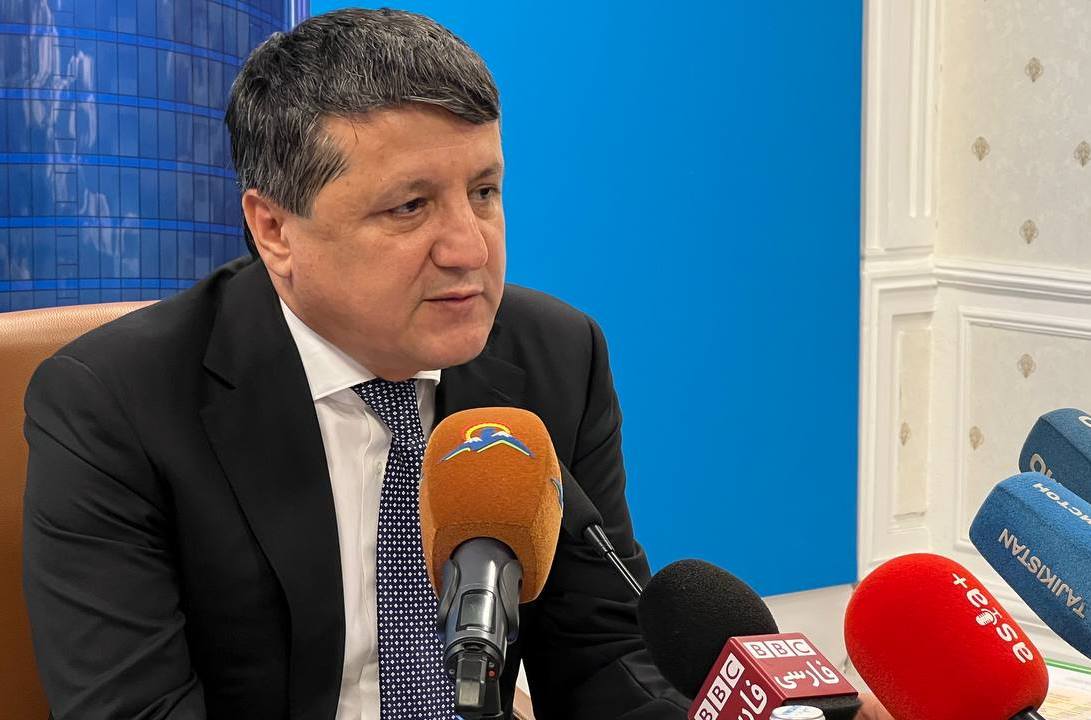
In 2025, Tajikistan produced industrial goods worth 66.7 billion somoni (over $7.1 billion), marking an increase of 13.3 billion somoni (more than $1.4 billion) compared to 2024. This was reported by Sherali Kabir, the Minister of Industry and New Technologies of Tajikistan, during a news conference in Dushanbe on February 11.

According to Kabir, Tajikistan achieved the highest industrial growth rate in the Commonwealth of Independent States (CIS) in 2025, surpassing Kyrgyzstan by 10%. Countries such as Kazakhstan, Uzbekistan, Moldova, Russia, Armenia, Azerbaijan, and Belarus showed slower growth rates, with some nations, like Azerbaijan and Belarus, even experiencing negative growth.

The mining and quarrying sector remains the leader in Tajikistan’s industrial structure, contributing 40.3% of total industrial output. This is followed by the food industry (18.6%), electricity production (17.2%), machinery manufacturing (7.9%), and construction materials production (6.2%).

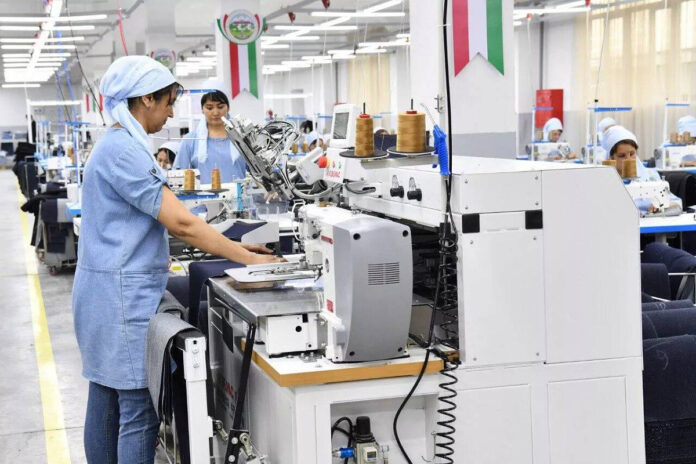
A particular focus of Kabir’s statement was the growth in the processing industry, which accounted for 51.8% of the total production. Notable sectors within this category include chemicals, which saw a 26.1% increase, rubber and plastic production with a 21.1% growth, food products with a 16.1% rise, textiles and garment manufacturing with a 14.4% boost, and pharmaceuticals, which grew by 10.6%.

Over 13,700 alimony defaulters in Tajikistan have their exit banned

0

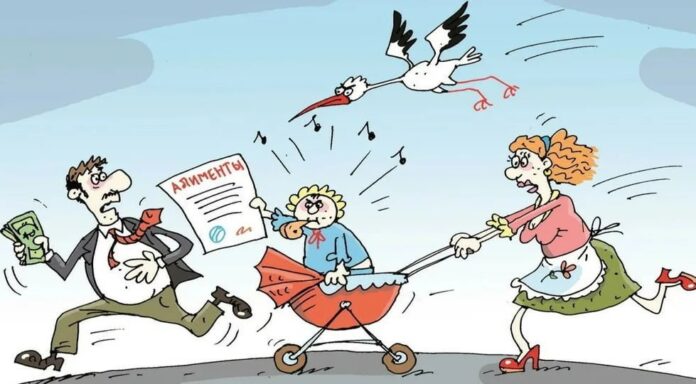
In 2025, the authorities in Tajikistan have initiated criminal proceedings against 270 individuals, primarily fathers, for evading child support payments. According to the country's legislation, non-payment of alimony can result in penalties ranging from corrective labor to up to three years in prison.

This information was provided on February 10 by Alijon Aminzoda, the head of the Organization and Control Department of the Penal Execution Service, in an interview with Asia-Plus. He did not specify the prison sentences received by the 39 individuals who were arrested.

Aminzoda stated that in 2025, 753 people were put on the wanted list by law enforcement for avoiding alimony payments and hiding their whereabouts, compared to 514 in 2024.

Meanwhile, the head of the Penal Execution Service, Akhtam Abdullozoda, reported that a total of 13,765 individuals are currently listed as alimony debtors, and as a result, they have been banned from leaving the country. Of these, 8,332 people were added to this list in 2025 alone.

Abdullozoda noted that in 2025, Tajikistan collected 179.9 million somoni in child support payments for mothers and children, which was an increase of 147.2 million somoni compared to the previous year.

According to Tajikistan's legal framework, individuals who evade alimony payments for over three months are subject to prosecution. These individuals are placed on the debtor's list, and their ability to travel abroad is restricted.

"If a citizen pays alimony, the law also requires an advance payment for the next six months. Once this payment is made, the restriction on leaving Tajikistan is lifted," Abdullozoda explained.

He also mentioned that the agency cannot directly contact foreign governments for alimony enforcement; requests must go through the appropriate authorities and are only made upon the citizen's request.

"However, we don't face significant challenges in collecting alimony abroad. In 2025, our service received only 13 foreign court and arbitration decisions," said Abdullozoda.

The issue of evading alimony payments is not new in Tajik society, and the government has raised concerns about it in past years. In recent times, the ban on international travel for alimony defaulters has been presented as one of the key measures to address the issue.


Sherali Kabir: “Artificial intelligence is like a wild horse: don’t fear it, ride It”

0

Sherali Kabir, the Minister of Industry and New Technologies of Tajikistan, has called for embracing artificial intelligence (AI) as a tool to improve the quality of life, rather than fearing its potential. Speaking at a news conference in the capital, Kabir emphasized that AI is not the future, but the present, and how it is used depends entirely on us.

"When we introduced AI at our ministry, I personally ensured that all employees used it. Today, I can see the results — the quality of their work has changed significantly. Whether we like it or not, technology will become a part of our everyday lives. We have also suggested that the Agency of Public Service introduce AI in other government departments across Tajikistan. The quality of documents prepared by the ministry has already improved. So, there is no need to fear AI; it is a truly revolutionary technology," Kabir stated.

The minister also shared an intriguing example of AI's capabilities: “In just one minute, AI read the entire 'Avesta' to me in its original language. In Tajikistan, there is only one scientist who speaks the Avestan language, while in St. Petersburg, there are two or three, and a few more in France. You can see how technology is changing the world for the better,” he remarked.

Responding to concerns raised by journalists about the potential negative consequences of AI, Kabir reassured the audience that AI does not pose a threat: "People fear that AI will get out of control and become dangerous. But this is not true. Without electricity or the servers that power AI, it simply will not work. The control will always remain with humans. Therefore, there is nothing to fear. Artificial intelligence is like a wild horse: don't fear it, ride it. We have no other way forward."

Kabir is confident that AI will enhance both the personal and professional lives of individuals and encouraged everyone to adopt new technologies to foster progress.

In addition, Kabir revealed that Tajikistan is actively working on preparing a new generation of specialists for the digital economy. The country is already implementing educational programs that teach the basics of statistics and AI from early school years.

One of the key steps in this process, according to Kabir, was the establishment of the first data center in Tajikistan, "Daryo," which actively utilizes AI to support local businesses and service domestic startups.

Debt recovery from bankrupt banks in Tajikistan: 10 years later, citizens still await refunds

0

Ten years after the bankruptcy of several banks in Tajikistan, citizens are still waiting for the return of their savings. During a news conference on February 10, 2026, the High Economic Court of Tajikistan discussed the debts owed by four bankrupt banks, which have been unable to repay depositors for periods ranging from 3 to 10 years.

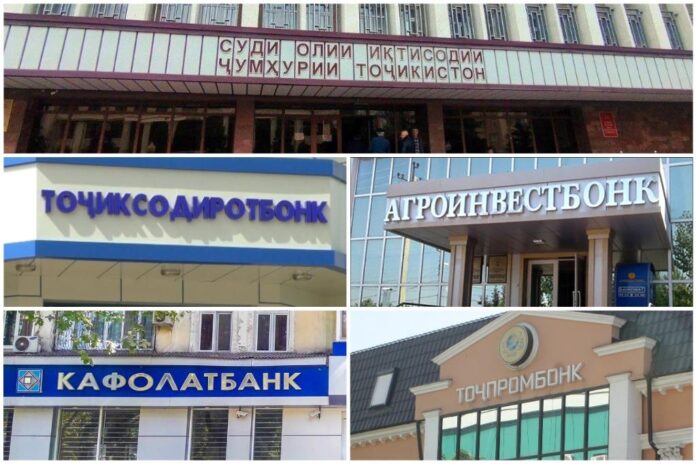
Zokir Aminzoda, Deputy Chairman of the High Economic Court, stated that the liquidation process for the banks Tojiksodirotbonk (TSB), AgroInvestbonk, Tajprombank, and Kafolatbonk is still ongoing.


Tojiksodirotbonk: from 326 million to 42.5 Million somoni owed

According to Aminzoda, Tojiksodirotbonk initially owed 326.4 million somoni to 9,816 depositors. As of now, the bank has repaid 283.9 million somoni to 8,916 depositors. The remaining debt stands at 42.5 million somoni, with 900 depositors still waiting for their funds.

The bank’s license was revoked by the National Bank of Tajikistan on May 26, 2021, following a banking crisis in 2016. From 2021 to 2025, the bank repaid a total of 278 million somoni, with a further 117.3 million somoni returned between August 2024 and 2025.


AgroInvestbonk: 444 million somoni still owed

AgroInvestbonk has repaid 82.2 million somoni to 5,711 depositors since its insolvency in 2021. However, 444 million somoni is still owed to 3,474 depositors. The bank, which faced liquidity issues due to the 2016 banking crisis, has made limited progress, and depositors continue to await full repayment.

In August 2025, the bank’s total liabilities amounted to 1.6 billion somoni, with 200 million somoni repaid to depositors. The liquidation process is ongoing.


Tajprombank: 18 million somoni left to pay

Tajprombank has repaid 159.3 million somoni to 4,929 individual depositors and 67.7 million somoni to 338 legal entities. However, it still owes 17.9 million somoni to 100 individuals and 2.4 million somoni to 140 legal entities. The bank has until October 2027 to fully repay its depositors.

The bank’s liquidation began in March 2017, and its license was revoked in February 2017. Former head of the bank, Jamshid Zioyev, was sentenced to 8.5 years in prison in 2020 for financial crimes related to the bank’s insolvency.


Kafolatbonk: 78.8 million somoni owed to Iranian banks

Kafolatbonk has repaid 1.3 million somoni to 420 depositors by January 2026. However, it still owes 78.8 million somoni to Iranian banks, including Sarmayeh Bank and Bank Saderat Iran, which are involved as co-creditors.

The liquidation process for Kafolatbonk is still ongoing, and its assets are currently being sold off to repay creditors.


Court’s actions

Aminzoda emphasized that all assets pledged by the bankrupt banks remain in place. Once these assets are sold by the appointed manager, the funds will be distributed to depositors. The liquidation proceedings for these four banks are continuing, with the court extending the deadlines until 2027 due to the incomplete fulfillment of obligations and the unsold assets.


Public outcry

Despite the ongoing liquidation processes, many citizens continue to express frustration over the slow progress of the debt recovery process. Complaints about the sluggishness of repayment efforts have been widespread on social media and in the media.

Out of the five major bankrupt banks in Tajikistan, only Fononbank has been fully liquidated. The others remain in the liquidation stage, and many depositors are still waiting for their money, some more than a decade later. The delay in repaying funds has raised significant concerns among the public, especially as the banking crisis of 2016 continues to affect ordinary citizens.

Toiksodirotbonk, Agroinvestbonk, Tajprombank and Fononbank were impacted by Tajikistan’s 2016 banking crisis. While Fononbank has since been fully liquidated, Tajprombank, Tojiksodirotbonk, and Agroinvestbonk remain in forced liquidation.

Meanwhile, as it had been reported earlier, the government provided financial assistance to TSB and Agroinvestbonk in 2017.  Tojiksodirotbonk received a total of 2.250 billion somoni and Agroinvestbonk received 1.070 billion somoni.  The bailout process reportedly ended up with the government owning 85.9 percent of shares in Tojiksodirotbonk and an 87.3 percent stake in Agroinvestbonk.

As far as Kafolatbonk is concerned, the National Bank of Tajikistan (NBT) issued a resolution on withdrawing the license of CJSC Kafolatbonk on October 27, 2021.

The NBT granted the operating license to CJSC Kafolatbonk on June 1, 2011. 

Sarmayeh Bank, which assumes the 92% ownership interest in Kafolatbonk, is a major Iranian banking establishment offering retail, commercial and investment banking services. 

Resignation of Kyrgyzstan’s GKNB head Kamchybek Tashiyev: revolution or power crisis?

0

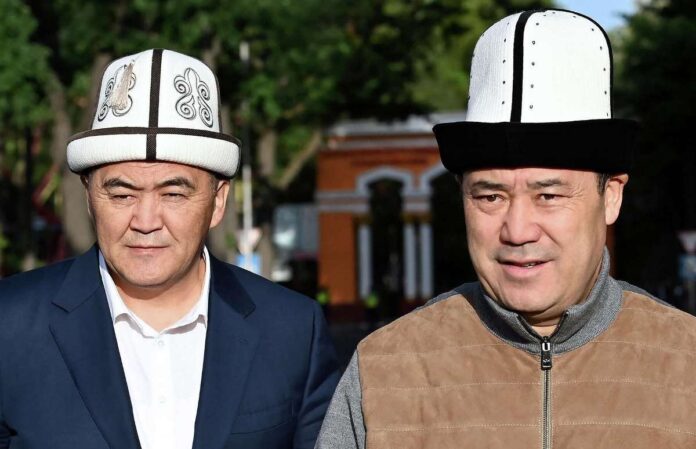
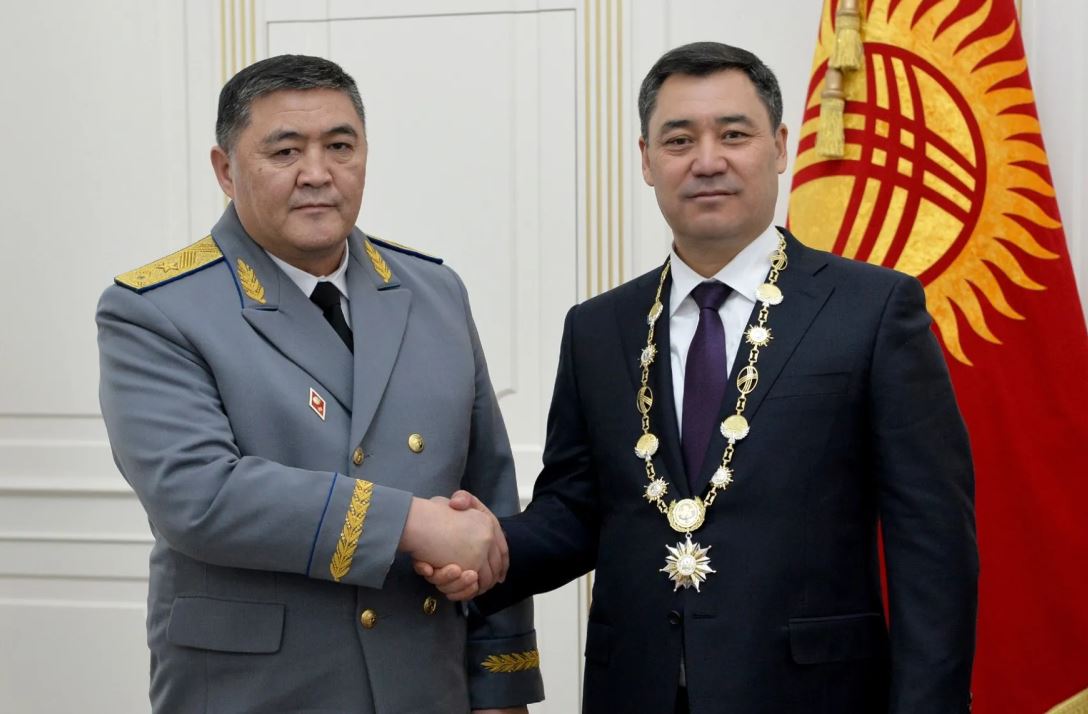
In a stunning move, Kyrgyz President Sadyr Japarov on February 10, 2026, dismissed his political ally and close friend, Kamchybek Tashiev, from his positions as Deputy Prime Minister and head of the State Committee for National Security (GKNB). Following this decision, Tashiyev's deputies also left their posts.

Additionally, Japarov transferred the responsibility for the security of high-ranking officials and key facilities from the GKNB to a newly created entity—the State Guard Service—directly subordinating it to himself. This move has sparked speculation about the future implications for the Japarov regime, as analyzed by Daniil Kislov, director of the international news agency Fergana.Media.

Tashiyev and Japarov are not just friends but political partners who played key roles in the 2020 revolution that ousted the previous regime. Following the revolution, Tashiyev became Japarov’s right-hand man, heading the GKNB and effectively controlling the country’s security forces. The duo's alliance has long been based on mutual interests, but beneath their strong friendship, tensions had been simmering—tensions that have now led to a break.


Ambitions and competition

One of the main reasons for the split lies in personal ambitions and competition. Tashiyev, who was popular among nationalists, security forces, and southern elites, increasingly positioned himself as a rival power center. In recent years, he openly criticized ministers and even interfered in economic matters, causing friction with Japarov.

Japarov, who consolidated power through constitutional reforms and suppression of the opposition, began to see Tashiyev as a threat, particularly with rumors circulating that Tashiyev was preparing for a presidential run in 2027. In Kyrgyz politics, friendships often end where the struggle for power begins, and Japarov likely decided to eliminate a potential rival before Tashiyev gained too much influence.


Key issues and diverging approaches

Another factor in the split was their differing approaches to key issues. While both shared similar goals, their methods often clashed. Tashiyev, as head of the GKNB, took a more radical approach, cracking down on opposition but also targeting clans close to the president. His stance on the Tajikistan border issue was particularly hardline, leading to conflicts and losses, while Japarov seemed more open to finding compromises for the sake of Kyrgyzstan’s international image.

Economic disagreements also played a role. Tashiyev’s anti-corruption campaigns reportedly affected business interests tied to Japarov’s family and allies. Insider leaks from Kyrgyz Telegram channels hint at a scandal surrounding infrastructure contracts, with Tashiyev allegedly blocking deals that would have benefitted Japarov’s inner circle. What once was a friendship now seemed more like a reluctant partnership, fraying at the edges.


Health issues and strategic timing

A third key factor was Tashiyev’s health and his absence from the country. He was in Germany for medical treatment—reportedly for heart issues—since late January 2026, providing Japarov with a convenient opportunity to act. Tashiyev’s physical absence meant he could not resist or mobilize his supporters.

This is a classic tactic used by authoritarian regimes: removing an opponent while they are vulnerable. Although rumors of poisoning or forced treatment are circulating, they remain unsubstantiated. Nonetheless, the fact remains that Tashiyev’s dismissal was carried out in his absence, underscoring the urgency and potential fear of a rebellion within the GKNB.

Simultaneously, three of Tashiyev’s deputies were dismissed, signaling a purge of his faction within the security services. The appointment of Jumgalbek Shabdanbekov as acting head of the GKNB is seen as a strategic move by Japarov to install a loyal, temporary figure without the charisma or independence of his predecessor.


Why this move was necessary

Japarov’s decision to remove Tashiyev was crucial for consolidating his own power. Tashiev had become too influential, and Japarov likely wanted to prevent a potential coup. Tashiyev’s health problems provided a perfect pretext for this move. Had he been in Kyrgyzstan, Tashiev might have resisted, relying on loyal security forces or media support.


What’s next?

Tashiyev’s dismissal marks a ticking time bomb for Japarov’s regime. Over the next few months, widespread purges in the security forces are likely. The GKNB, a key instrument in maintaining control over all branches of government, will be staffed with fully loyal individuals. However, this may provoke discontent among officers loyal to Tashiyev, leading to potential arrests or “voluntary” resignations in the Ministry of Internal Affairs and the military as Japarov seeks to suppress any potential rebellion.

If Tashiyev returns to Kyrgyzstan, he could very well shift to opposition. With his strong popularity in the southern regions, particularly Osh and Jalal-Abad, Tashiyev has the ability to mobilize protests.

This situation mirrors the 2020 revolution, where Tashiyev played a key role in bringing Japarov to power. Now, Tashiyev risks becoming a “victim of the regime.” However, if Japarov plays hardball—through arrest or accusations of corruption—Tashiyev may choose exile, following in the footsteps of many Kyrgyz opposition figures before him.

Public discontent is already growing, with inflation, corruption, and media suppression all contributing to the disillusionment. Tashiyev’s dismissal is likely to exacerbate societal polarization: nationalists may see it as betrayal, while the opposition will use it as evidence of the regime’s authoritarian nature.


The future of Kyrgyz politics

I have met with Kamchybek Tashiev personally several times between 2010 and 2011, and I have always thought he was not someone who would simply let go of power. In my view, there are two possibilities. Either his dismissal is the result of a calculated agreement between him and Japarov, and Tashiev has received significant compensation, with no further consequences. Or, Tashiev was blindsided by the move, and he will feel deeply insulted, creating significant political fallout for Japarov. In the second scenario, we could see yet another “revolution.”

There is, however, an unexpected theory: a political “swap.” In early February 2026, 75 prominent figures in Kyrgyzstan—scientists, former prime ministers, ex-MPs, and public figures—called for early presidential elections. Their argument is based on the fact that Japarov was elected under the old constitution, which implied a six-year term, but the new constitution reduced presidential powers to five years. According to the signatories, early elections are needed to “avoid various interpretations and public disputes” and to “give new momentum to Kyrgyzstan’s development.”

Some in Bishkek are speculating that Japarov and Tashiyev have struck a deal: Tashiyev will run for president and, likely, win—without using administrative resources. Japarov would then become his prime minister, and their partnership would continue in a new form.

New IT Park building to be constructed in Dushanbe

0
2a301d6d-a600-433f-9f91-1a3e153efd2d

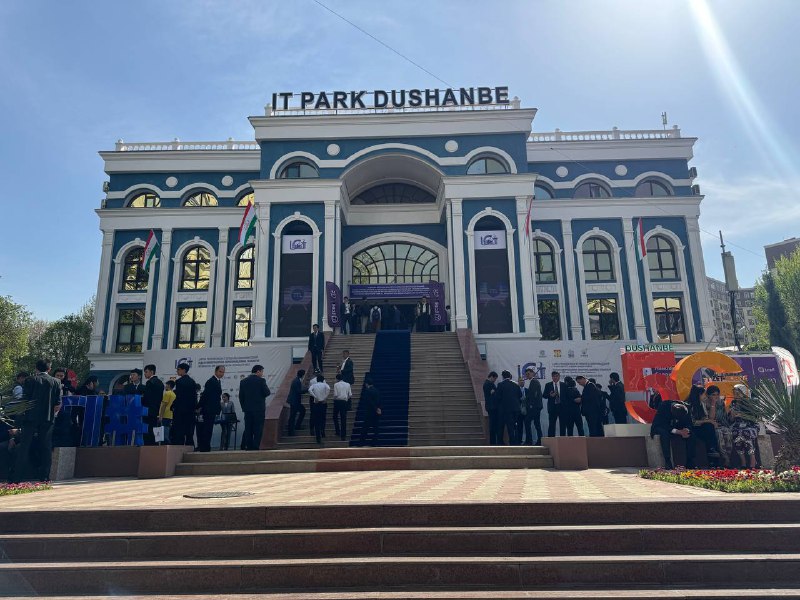
A new building for the IT Park will be constructed in Dushanbe as part of Tajikistan's collaboration with the Republic of Korea, according to the Innovation and Digital Technology Agency.

The primary goal of the project is to foster the development of startups, attract local and international experts, and create a conducive environment for research in the field of digital technologies.

The IT Park will serve as an innovation hub and a digital platform for startups and technology companies, laying the foundation for the growth of the digital economy and boosting the IT sector’s human resource potential.

Details about the location of the new building and the construction timeline have not yet been disclosed. Currently, the IT Park, which was opened in April 2024, operates from the former registry office building on Mirzo Tursunzoda Street (opposite the Russian-Tajik Slavic University, or RTSU).

As of the summer of 2025, the IT Park had 18 resident companies, including well-known entities like Alif, zypl.ai, and Planet9. A full list of residents, along with their names and areas of activity, can be found on the IT Park’s website.

Being part of a large, well-known company is not a requirement for joining the IT Park – individual entrepreneurs are also welcome. Prospective residents can apply online through the IT Park's website. Applications are reviewed by a special commission, which will contact applicants with the results.

As an IT Park resident, businesses can benefit from tax and customs incentives, providing a significant advantage for growing tech ventures.

Tajikistan extends legalization of assets and funds for another year

0

The Government of Tajikistan has extended the deadline for the legalization of citizens' funds by another year, until January 5, 2027.

“We have extended only the monetary aspect of the law for another year. The legalization of other assets, such as property, concluded on January 5,” Firdavs Tolibzoda, head of the National Bank of Tajikistan (NBT), told Asia-Plus.

Tolibzoda highlighted that around 42% of the legalized funds were directed toward investments, while about 29% were deposited into bank accounts. The remaining funds were used for currency exchange, with foreign currency being exchanged for the national currency.

Initially introduced on July 5, 2021, the law was meant to allow individuals to declare and legalize assets and money that were either undeclared or acquired illegally. The law’s term has already been extended four times—on June 20, 2022, June 22, 2023, February 23, 2024, and January 4, 2025.  

Since the law came into force, approximately 11.7 billion somoni (over $1.2 billion at the current official exchange rate) in funds have been legalized. In 2025 alone, nearly 4 billion somoni were legalized, accounting for 34.2% of the total amount.

The law, following its latest amendments, allows for voluntary declaration of funds. Legalizing these funds automatically grants immunity from administrative or criminal liability, as well as waives taxes, interest, and penalties related to those funds.

The law aims to encourage the legalization of both assets and money, providing immunity from administrative and criminal liability for those who comply. Under the law, precious metals and gems that were mined or acquired illegally—whether in Tajikistan or abroad—can also be legalized. However, assets and money subject to confiscation or under investigation for criminal or administrative violations are excluded from this amnesty.

This law allows Tajik nationals, including individual entrepreneurs and the founders or shareholders of legal entities, to legalize their assets and money. Legalization is facilitated through commissions set up in all cities and districts, while the process for legalizing money takes place in banks, where individuals receive a relevant certificate.

Information about the legalized assets and their owners is confidential and can only be disclosed by a court order.

Tajikistan has previously carried out similar amnesties. The first such initiative took place in 2003, aiming to attract additional investment into the country’s economy. During that amnesty, $190 million owned by 18,000 individuals was legalized. The next round, conducted in 2008-2009, focused solely on the legalization of assets, with more than 87,000 assets legalized, amounting to a total value of 19 billion somoni (around $5 billion at the time). Another amnesty occurred in 2010-2011, allowing individuals to legalize money for investments in the OJSC NBO Roghun, which was established for the completion of construction of the Roghun Hydropower plant. The results of that amnesty were not disclosed, likely due to a small volume of legalized funds.  

How radars and cameras improve road safety in Dushanbe

0
IMG_0425

In recent years, automated traffic control systems have become a common tool in large cities. Their main goal is to reduce the number of dangerous situations on the roads through continuous monitoring.

When drivers know that speeding or running a red light will be recorded, they are more likely to follow the rules, which directly impacts the accident rate.

In Dushanbe, radars and automated violation detection cameras started operating on June 20, 2024. The system detects speeding, running red lights, driving in the wrong lane, and several other violations.

The cameras and radars autonomously capture violations, record the vehicle's license plate, and transmit this information to the country's traffic police (UGAI). Afterward, an inspector verifies each case, and only after confirming the violation is a fine imposed.

The implementation of radars and cameras is part of a larger urban project called NERU. The project includes not only the automated violation detection system but also paid parking spaces and charging stations for electric vehicles. The mission of the project is to restore order on the roads, reduce traffic congestion, and create a safer urban environment.


Is the accident rate really decreasing?

The effectiveness of automatic violation detection systems is also supported by international research. According to reports by the European Commission on road safety, the use of speed and intersection cameras can reduce accidents by an average of 15-20%.

The Cochrane Systematic Review, based on the analysis of dozens of studies, shows that in areas with camera installations, the total number of accidents decreases by 14-25%, and in some cases, the reduction reaches almost 50%. The effect is particularly noticeable in accidents with severe consequences.

Similar approaches are used in other Central Asian countries. In Uzbekistan, cameras and radars are installed in areas with high accident rates and near social facilities. Uzbek media reported that after the installation of radars and a reduction in the speed limit to 60 km/h, the number of accidents in certain areas decreased by about 30%.

In Kazakhstan, the "Sergek" system is widely used in major cities. Official data from Kazakh authorities links its implementation to a steady decrease in accidents and fatalities on the roads.


Why is this especially important for Dushanbe?

In the capital:

·         Speeding remains one of the key factors in severe accidents, and automatic control directly influences adherence to speed limits.

·         Constant violation detection helps form more predictable and stable behavior among drivers.

·         The system operates as part of a comprehensive approach to urban traffic management within the NERU project.

Thus, the implementation of radars and cameras in Dushanbe aligns with international practices and the experiences of neighboring countries. With proper configuration and transparent rules of application, such systems are seen as an effective tool for improving road safety and reducing the number of traffic accidents in the city. 

Teacher shortage and quality issues: what’s wrong in Tajikistan’s schools?

0

"The shortage of teachers in Tajikistan's schools has been completely resolved," recently declared the Ministry of Education. The statistics look convincing: thousands of new teachers, formally closed vacancies, no shortage of staff.

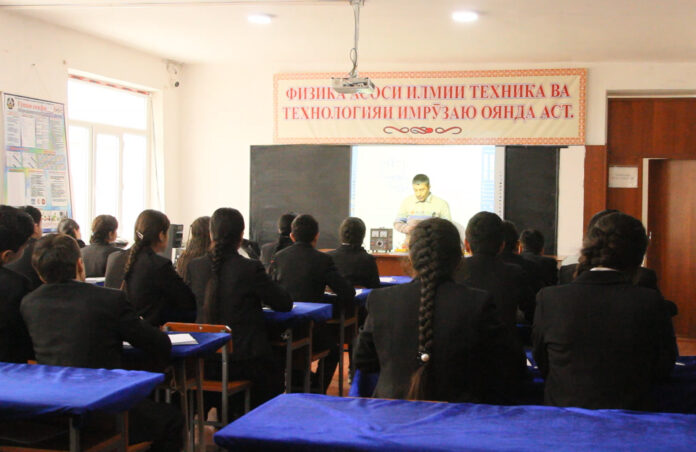
But once you step away from the reports and enter the classrooms, the reality seems entirely different—teachers in the country are "plentiful" only on paper.


From shortage to "full staffing"

In the 2025-2026 school year, over 9,000 new teachers were hired in Tajikistan’s schools. This was announced at a recent press conference by Deputy Minister of Education Ravshan Karimzoda, who emphasized that the issue of teacher shortages has now been fully resolved.

Just six months earlier, in the summer of 2025, Education Minister Rahim Saidzoda had spoken about the shortage of nearly 4,000 teachers across the country. Since then, the situation, according to reports, has drastically changed.

Officially, the number of teachers has increased by more than 5,000 compared to the previous year, which is said to indicate that the system has reached a stable level. However, the Ministry acknowledged that around 700 teachers are working outside of their specialty, and a significant number of teachers are temporarily replacing colleagues on maternity leave. These nuances are described as technical details, and they seemingly do not change the overall picture: schools are considered staffed.

But the crucial question remains—have parents and students felt these changes? "Asia-Plus" asked directly, and the answers were, unsurprisingly, telling.


"No problem," but teachers are still lacking

The statements claiming that the teacher shortage has been entirely resolved don’t align with what parents and educators see on the ground—there is still a shortage of teachers.

A telling example comes from the Ziyodullo Shahidi Music School in Dushanbe, where, according to parents, there has been no algebra teacher in the 11th grade since the beginning of the school year. Similar situations are reported from other schools. Parents note that after a teacher leaves, the school often goes without a replacement for an indefinite period:

·         "At the Presidential Lyceum in Buston, the primary school teacher left for another school, and there has been no replacement for two weeks."

·         "School No. 46 in the Rudaki district lacks a foreign language teacher in the primary classes."

·         "In School No. 54 in Dushanbe, the senior classes with Russian as the language of instruction have no math teacher."

·         "In School No. 54 in Dushanbe, only two out of five lessons were held today. There were no teachers for the other subjects. A teacher might be giving lessons to three classes at the same time."

These cases are not isolated.

·         "We moved our children from a public school to a private one precisely because of the shortage of teachers."

·         "In School No. 32 in Dushanbe, there is no Russian language teacher."

·         "Teachers are still lacking. And don’t be deceived. The real situation in schools is very different from what is presented in press conferences."


A teacher exists, but not for their subject

Many parents pointed out that the real problem today isn’t whether there is a teacher, but rather who is teaching the classes.

Parents and educators speak of schools where algebra and geometry are taught by a physicist, history by a mathematician, and English by a graduate of an entirely different faculty.

·         "Even in a fairly expensive gymnasium, the algebra and geometry teacher teaches physics. Well, teaches? They just write notes," complained a reader from Dushanbe.

Formally, lessons are held according to the schedule, but according to parents, the content of the classes increasingly boils down to copying notes and mere "seat warming."

·         "Worse still is when the teacher teaches a subject outside their specialty. It’s as if the teacher is there, but in reality, it’s better if they’re not," confessed one commenter.

Others noted that such practices have become a forced norm, especially in regions where schools are ready to accept any specialist just to fill gaps in the schedule:

·         "We graduated from the Faculty of History and Law, and one of my classmates is now teaching English in his village school because there’s simply no teacher."

Under these conditions, children quickly lose interest in the subject and their motivation to learn because, in essence, there’s little difference between having a lesson or not.

·         "All the skilled teachers left for work in Russia. 90% of them received citizenship, took out mortgages, and now live in their own homes. I wanted to write about the problems I face as a teacher in a public school, but let's not dwell on the bad…" said one teacher.

Many readers note that even teachers often lack basic literacy, and attempts to "fill the gaps" with students do not resolve the issue:

·         "There needs to be a strict selection process in education. We must understand the significance of teachers on a large scale. When will the issue of professional competency be addressed? More than 90% of current teachers do not meet the requirements, and this is a huge social problem. It’s time to invest in education; it’s the best investment in the nation's future."

·         "It’s not the shortage of teachers in schools; it’s the shortage of 'intellect.' Instead of providing children with knowledge, they focus on their hairstyles and appearance! That’s where you need to focus your attention."


One teacher for fifty students

Even in schools that are formally staffed, parents complain about another problem—overcrowded classrooms with 40-50 students:

·         "We have 52 students in the class. They can’t divide the class because there’s no teacher."

·         "In one class in Buston, there are 48 students."

Parents acknowledge that with such overcrowding, discussions about the quality of education become irrelevant.

·         "Poor teachers are exhausted by the third lesson, I can only imagine their workload," writes a mother of a student at a Dushanbe gymnasium, where classrooms hold 42-47 students. "Sadly, with so many students in each class, what can you expect from the quality of education?"

Some commenters point out that the problem is not only the shortage of teachers but also the lack of schools and basic conditions:

·         "There are not enough teachers, and not enough places for students. Three students sit at each desk."


Problems in Russian-language classes

Parents also report issues in Russian-language classes. Many consciously choose these classes, expecting a certain level of instruction, but find themselves faced with a completely different reality:

·         "My daughter has spoken only Russian since childhood. Since I’m sending her to a Russian school and a Russian class, I expect proper education. If I wanted her to study in Tajik, I would have sent her to a Tajik school. Can we at least ensure they do their work competently and skillfully, as we are sending children to school to learn and gain knowledge?"

And these are not isolated cases:

·         "My daughter went to the first grade. The teachers are unqualified, write with mistakes, and speak Tajik in the Russian class. Not all families can afford private or expensive schools, and the public system doesn't provide the desired quality."

·         "Osimi Gymnasium in Dushanbe lacks a Russian language and literature teacher."

·         "At the Presidential Lyceum in Buston, the primary school teacher left, and there has been no replacement for two weeks in the Russian group."

In the comments, there is also concern about the culture of communication in schools. One mother recalls overhearing teachers yelling and swearing into the microphone during a ceremony:

·         "Where is their competent speech, tactics, and methods of education?"


Physical education without physical education and schools without men

Some comments address subjects that are effectively excluded from the educational process. Physical education is frequently mentioned:

·         "In many schools, there are no physical education classes; either they write notes, or just walk around the school."

Others specify that there are almost no qualified physical education teachers left:

·         "The critical situation surrounding this subject is already bearing unwanted fruits. In almost all general education schools (and even in lyceums and gymnasiums), both junior and senior classes lack good physical education teachers. It’s terrible. And I won’t even mention other subjects…"

Some commenters also highlight a systemic issue—the near-total absence of male teachers in schools:

·         "95% of teachers are women, and there are almost no men. This affects the development of children."

The root of all these problems is well-known and has been discussed for years. Salaries for Tajik teachers remain among the lowest in the region, while workloads are excessive. The situation is particularly dire in rural and remote schools. Additionally, teachers are often burdened with endless paperwork and checks.

An ongoing issue is the practice of involving teachers in the cotton harvest campaigns, which lasts for months and effectively removes them from the educational process, as well as compulsory meetings with high-ranking guests and mandatory community workdays.

Until these systemic issues are addressed, the annual graduation of new educators is unlikely to change the situation. Young specialists either leave for other sectors, go abroad for work, or remain in schools without significant motivation.