Home Blog Page 96

Uzbek law enforcement agencies reportedly seize 32 Kg of narcotic drugs smuggled from Tajikistan

0

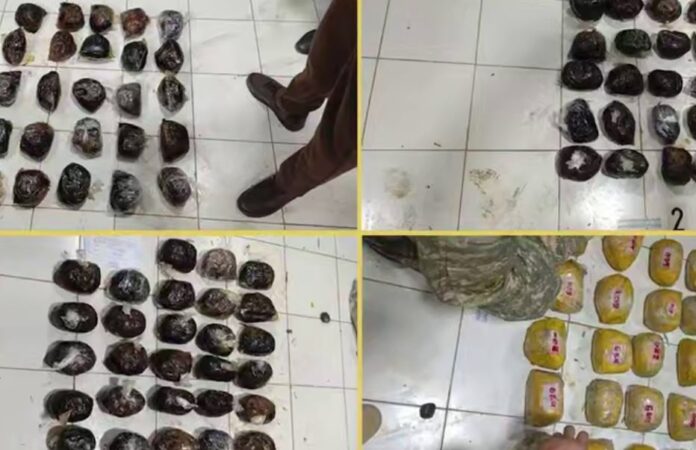
In Uzbekistan, law enforcement agencies seized about 32 kilograms of narcotics illegally imported from Tajikistan during a series of special operations. This was reported by the Telegram channel XAVFSIZLIK, which publishes information from Uzbekistan’s law enforcement agencies.

According to the source, officers from the State Security Service (SSS) of Uzbekistan, together with customs and internal affairs officers, conducted a search in the home of a local resident born in 1984 in Kokand, who was suspected of being involved in drug trafficking.


Seized narcotic drugs

During the search, 4 kg 572 g of opium and 1 kg 58 g of hashish were found and seized in the kitchen. Additionally, based on geolocation data shared by Tajik drug traffickers via WhatsApp, 9 kg 980 g of opium were discovered, previously hidden in the Dangara district of Uzbekistan.

It was also revealed that a Kokand resident born in 1969 had organized a drug laboratory in his home. During the search, 7.226 kg of opium were seized.


Arrests and drug seizures

In another case, a Lacetti car was stopped in Kokand, and 5 kg 22 g of opium, bought for $34,000, was found during the inspection.

Further actions led to the arrest of the suspected drug dealer — a local resident, and his accomplice, a Tajik citizen. In the home of the Tajik citizen in Uzbekistan, 2 kg 362 g of opium were also seized.

Additionally, during a search of a Nexia car in Kokand, 982 g of hashish, hidden by Tajik drug couriers, was found in the bag of a 1992-born passenger.


Fergana and other cases

Another case was registered in Fergana, where a man born in 2000 was detained for attempting to sell 989 g of hashish smuggled from Tajikistan.

Criminal proceedings have been instituted over all identified facts. The suspects have been detained, and investigation is ongoing.


Previously, over 26 Kg of drugs seized

It is worth noting that last year, Uzbekistan seized more than 26.8 kg of narcotic drugs smuggled from Tajikistan. A special operation, conducted jointly with border troops and the SSS, resulted in the arrest of several suspects. Among them was a 39-year-old Tajik citizen, from whom 14 kg of hashish were seized. In total, 26 kg 805 g of narcotic drugs were confiscated in that case.

Criminal proceedings have been instituted against the detained individuals under the relevant articles of Uzbekistan’s Criminal Code, and investigation is under way.  
 

Cotton prices rise on global markets after long period of decline

0

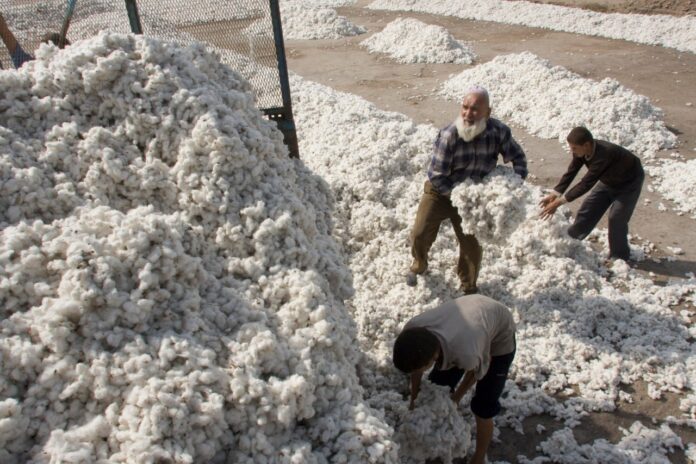
Since the beginning of 2026, cotton prices have been on the rise again. In early January, cotton futures surged to 64.8 cents per pound, the highest level since late December, after several days of decline. However, in year-on-year terms, the price is still about 5.4% lower, and the demand for cotton remains weak.

According to Trading Economics, the price increase was driven by the return of investors to the market after the New Year holidays, leading to the closure of "short positions" — meaning the repurchase of contracts on which investors had profited during the price decline. This pushed the prices up. Additional support came from oil, which rose slightly, making polyester — one of cotton’s main substitutes — more expensive, thus making natural fiber more attractive again.

As of January 6, 2026, the price of cotton held steady at around 64.82 cents per pound, which is approximately $1.43 per kilogram. However, compared to January of last year, the price is still 5.4% lower.


Risks remain

Despite the price recovery, risks for the market persist. Trading Economics notes that market participants remain concerned about weak demand, surplus stocks, and the potential impact of tariffs on U.S. cotton. The U.S. Department of Agriculture's report also heightened concerns, as net cotton export sales for the week ending December 25, 2025, totaled only 134,000 bales, which is perceived as a sign of weak demand.


Impact on Tajikistan

For Tajikistan, the dynamics of cotton prices are especially important given the expected increase in production. According to the Forecast of Key Macroeconomic Indicators of Tajikistan for 2025–2027, the cotton harvest in 2025 is estimated at 390,000 tons, with the production of cotton fiber is estimated at 139,000 tons.

Additionally, Tajikistan is increasing its cotton fiber exports. Since the beginning of 2025, Iran has purchased more than 30,000 tons of Tajik cotton fiber for $45.7 million.

Tajikistan ranks 89th in the global Women’s Security Index

0

Tajikistan has ranked 89th out of 181 countries in the global Women, Peace and Security Index (WPS) for 2025/26, scoring 0.685 points. This ranking reflects the country’s standing in key areas related to women's safety, rights, protection, and inclusion in social processes.

Other Central Asian countries also appeared in the ranking: Kazakhstan ranked 72nd (0.722), Turkmenistan 74th (0.720), Kyrgyzstan 84th (0.697), and Uzbekistan 98th (0.674).


Tajikistan’s strengths and weaknesses in the index

Tajikistan’s strong point in the WPS Index is daily security. According to the data, 93% of women in the country feel safe walking alone at night in their neighborhoods, which is the best result among the countries in the comparison group.

However, there are also weaker aspects. Indicators related to rights and protection show lower performance. “Access to justice” was rated at 0.7 on a scale from 0 to 4, marking the lowest score in the group. Partner violence remains a serious issue, affecting 14% of women — the worst result in the comparison group.


Indicators in the “inclusion” block

In the “inclusion” category, the picture is mixed. The average number of years of education for women in Tajikistan is 10.9 years. The employment rate for women aged 25-64 is 28.8%, and financial inclusion stands at 39.4%. 68% of women use mobile phones, and the percentage of women in parliament is 26.6%.


The WPS Index and its significance

The WPS Index evaluates the status of women across 13 indicators, such as participation in public life, access to justice, safety, and more. The final score ranges from 0 to 1, where a higher score indicates better conditions for women in the country.

The study was prepared by the Georgetown Institute for Women, Peace, and Security (GIWPS) and the Peace Research Institute Oslo (PRIO) with support from the Norwegian government.


Global picture and ranking leader

Denmark remains the leader in the global ranking with a score of 0.939, while Afghanistan traditionally ranks last with 0.279. Yemen, the Central African Republic, Syria, and Sudan also occupy places at the bottom of the list.

The report highlights a slowdown in global progress in several areas, including maternal mortality and political representation of women, as well as an increase in the rollback of women’s rights and a lack of resources for programs supporting them.


Prices for NBT-produced gold bars surge by nearly 40% last year

0

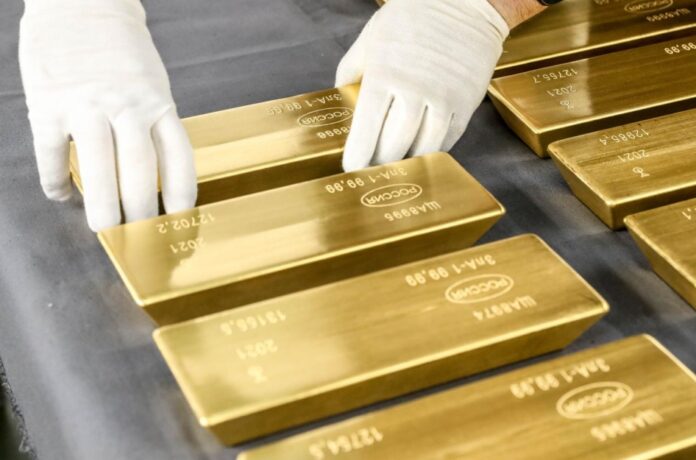
In 2025, the price of gold bars issued by the National Bank of Tajikistan (NBT) surged by a record 39.03%, driven by the global rise in gold prices. However, in the first five days of 2026, gold prices have continued to rise at an even faster pace — an average of 3%. This seems to be linked to the accelerated rise in global precious metal prices, influenced by developments in Venezuela.

As it had been reported earlier, a record increase of 43% was reported in 2020 during the pandemic, but the next two years saw slight decreases of 4.1% in 2021 and 9.0% in 2022. In 2023, the price rose by 21.5%, and in 2024 by 25.8%.

According to NBT, the price of a 5-gram gold bar increased by 1,832.19 somonis over the past year, reaching 6,610.42 somonis as of January 1, 2026.

Meanwhile, the cost of a 100-gram bar rose by 36,737.98 somonis (39.47%), with price of 129,812.90 somonis on the same date.

Tajikistan’s central bank also offers measured gold bars weighing 10, 20, and 50 grams.

As of January 1, 2026, the selling prices for these gold bars reached 13,506.42, 26,879.42 and 66,981.47, respectively.

The 5-, 10-, 20-, 50- and 100 gram gold bars produced by the National Bank of Tajikistan were released into free circulation in June 2017.  The gold bars are sold by the NBT Department of Monetary Circulation and Cash Operations.

The then-head of the NBT Jamshed Nourmahmadzoda told reporters in Dushanbe on February 5, 2020 that gold bars with a total weight of 100 kilograms are waiting for their customers in storage of Tajik central bank.

“By president’s order we have produced gold bars with a total weight of 100 kilograms and we are gradually selling them,” Nourmahmadzoda noted.

According to him, citizens of the country can buy the NBT-produced bars using their passports.  “No other documents are required,” Nourmahmadzoda said.

Each citizen of Tajikistan can buy gold bars totally weighing one kilogram per year.


Investor Activity in Gold

Several factors contributed to this increase: geopolitical tensions, the weakening of the U.S. dollar, and a growing demand for gold.

Investor interest has also been strong in exchange-traded funds (ETFs), with approximately $77 billion invested in gold since the beginning of 2025, and gold reserves increased by more than 700 tons by the end of November. This highlights the strengthening of gold as one of the key "safe-haven" assets in times of uncertainty.

As of January 5, 2026, the price of gold on the LBM (London Gold Fixing) market stood at $4,436.70 per troy ounce (31.1 grams). At the beginning of 2025, the price was $2,646.30, marking a 67.7% increase over the year.


Outlook for 2026

According to analyst Gayane Zamaliyeva, gold is likely to retain its status as one of the key defensive assets in 2026. However, she predicts more moderate and uneven dynamics compared to the rally in the second half of 2025: "The dynamics will be more restrained and uneven," she said.

Yelena Kozukhova, an analyst at VELES Capital, believes that the increasingly tense global situation will support gold prices in 2026. "The ongoing Ukrainian conflict, the escalation of relations between the U.S. and Venezuela, potential Israeli strikes on Iran, and tensions in Asia remain key factors," she adds.

Nikolai Dudchenko from Finam notes that when the dollar falls, prices for safe-haven assets like gold tend to rise. He predicts that the Federal Reserve may cut interest rates in 2026, which will weaken the dollar and support gold and other commodities.


Gold as a diversification tool

Dudchenko emphasizes that gold remains one of the best tools for diversifying investment portfolios, due to its lack of default risk and its ability to hedge against inflation. "This is especially relevant in light of recent economic decisions, such as the passage of the 'Big Beautiful Bill' in the U.S., which may significantly increase the U.S. budget deficit," he said.

Ludmila Rokotyanskaya, an expert from BCS Mir Investments, points to the holiday season in the U.S., India, and China at the beginning of 2026, when demand for gold from the jewelry industry will increase, further driving up its price. "Additionally, annual gold supply is limited and usually cannot keep up with the sharp rise in demand," she notes.

Imon International announces unprecedented interest rate reduction — up to 8% below standard terms

0
06

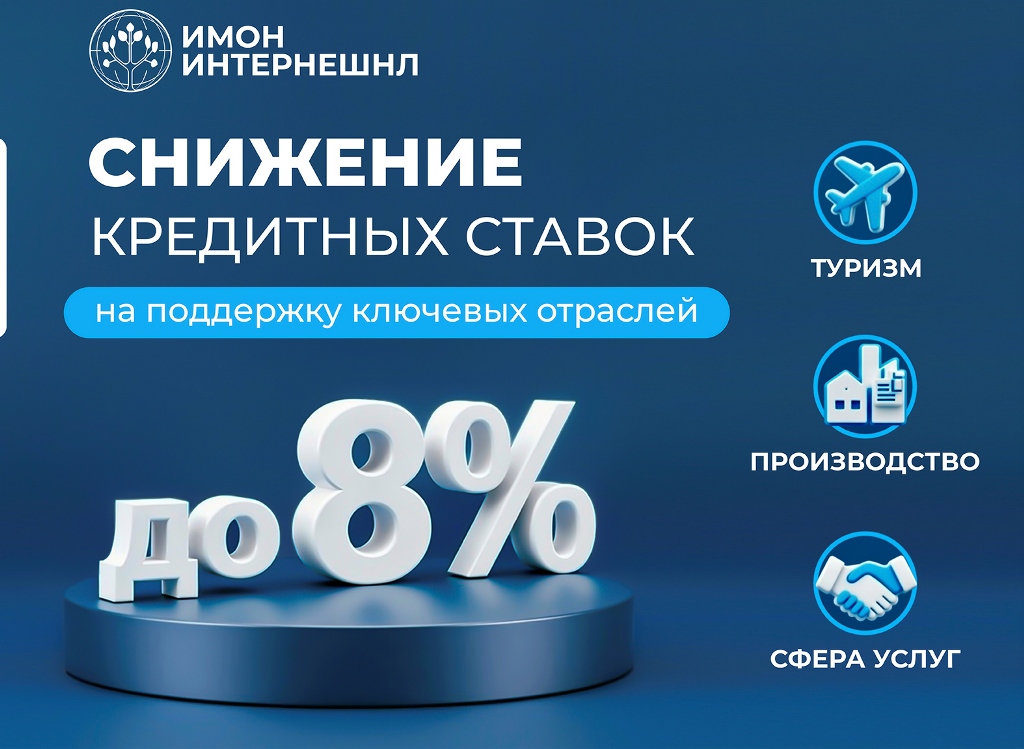
For the first time in its history, Imon International is launching a lending program with interest rates reduced by up to 8% below standard terms for priority sectors of the economy.

This decision marks a new stage in the bank’s development and is part of its strategy to expand business access to more favorable, balanced, and sustainable financing. The program aims to stimulate economic activity, support entrepreneurship, and foster regional development.


Support for key industries

The program is focused on sectors that form the backbone of economic growth, employment, and investment activity:

·         Tourism: financing projects in the hospitality industry, services, and tourism infrastructure

·         Manufacturing: supporting the expansion of production capacity, modernization of equipment, and launching new projects

·         Services: promoting small and medium-sized businesses focused on the domestic market and everyday needs of the population

The reduction in interest rates to -8% allows clients to significantly reduce the cost of borrowing, increase the investment attractiveness of projects, and allocate additional resources for sustainable growth, scaling, and enhancing competitiveness.

Special terms apply in all cities and regions where Imon International service points are located. Regardless of location, the bank’s clients can access the new lending terms and receive professional consulting support.

“We have decided to reduce interest rates by up to 8% to support industries that play a key role in the development of Tajikistan’s economy. Tourism, manufacturing, and services require accessible financing for growth and scaling. Our goal is to offer conditions that help businesses implement their projects more quickly, and help people move forward with confidence,” said Giorgio Parola, Chairman of the Board of Imon International.


Looking ahead

The launch of the rate-reduction program is the first step in a new stage of development for Imon International. The bank is steadily expanding its range of financial solutions for businesses and individuals, laying the foundation for further initiatives aimed at long-term partnerships, sustainable growth, and strengthening the country’s economy.

Imon International has been operating since 1999. Initially established as a women’s support fund, the organization was restructured into a microdeposit organization (MDO) in 2005.

In December 2025, 25 years after its founding, Imon International received a banking license, marking a new phase in the development of financial services across the country.

Imon International — when a bank truly supports growth.


US power play in Venezuela sends shockwaves through Eurasian energy markets

0

The United States’ bold move to detain Venezuelan leader Nicolás Maduro and signal a takeover of the country’s oil sector has triggered sharp condemnation from Russia and China — but drawn a muted response from Central Asia. As the geopolitical fallout unfolds, oil markets and energy exporters in the region are bracing for what could become a major shake-up. As of January 5, none of the Central Asian republics had issued an official statement regarding Maduro’s capture or Washington’s apparent intent to restore and dominate Venezuela’s oil industry.

Eurasianet says regional governments appear to be treading carefully, especially in light of increased U.S. diplomatic outreach. President Donald Trump has extended invitations to Kazakh President Kassym-Jomart Tokayev and Uzbek President Shavkat Mirziyoyev to attend the 2026 G20 summit — making open criticism of U.S. actions politically unwise.

"The priority is to maintain stability and caution, observing events from the sidelines," said regional analyst Marat Shibutov, quoted by Kazakh outlet Arasha.kz. While speaking specifically about Kazakhstan, his remarks reflect a broader sentiment across the region.

In contrast, Russia and China reacted vociferously. The Russian Foreign Ministry blasted Washington’s “aggressive actions” and accused the U.S. of violating Venezuelan sovereignty. China’s Foreign Ministry labeled the U.S. operation a “hegemonic act” and a “serious breach of international law.” Foreign Minister Wang Yi later accused the U.S. of playing “global judge.”

While diplomacy plays out on the surface, concerns are mounting over the broader implications for global energy markets — especially for Russia and oil-exporting states in Central Asia.

Kazakhstan, the region’s top oil producer, is reportedly watching developments closely. Analysts say the short-term impact on Kazakh oil exports and revenues will likely be minimal, but the long-term risks are real.

Venezuela holds up to 20% of the world’s proven oil reserves. While production once peaked at 3.5 million barrels per day in the late 1990s, output has since collapsed to under 1 million bpd due to years of neglect and infrastructure decay. President Trump has pledged to revitalize Venezuela’s oil sector through U.S. energy firms, though no concrete plan has been unveiled.

Kazakh analysts remain skeptical about any rapid resurgence. “The main issue with Venezuelan oil is its quality — it’s thick, difficult to extract, and costly,” said Askar Ismailov of the Global Gas Centre in Geneva, speaking to Forbes.kz. “A fast ramp-up is almost physically impossible.”

Ismailov added that while the U.S. may seek to expand market share, it is unlikely to flood markets at a loss, meaning oil prices could remain relatively stable in the short term.

Others, like Kazakh economist Baurzhan Shurmanov, reportedly warn of political uncertainty affecting supply dynamics. If Venezuela eventually returns to producing 3–3.5 million bpd, “it could shift the balance of power in global energy markets,” he told Arbat.Media.

China and Cuba, currently major recipients of Venezuelan oil, could face immediate disruptions. China imported around 470,000 bpd of Venezuelan oil in 2025, while Cuba relies on Caracas for 40% of its energy imports. A potential cutoff would be especially devastating for Cuba, echoing the “special period” economic crisis of the 1990s.

Kazakh outlet Zakon.kz called the U.S. operation “the most significant geopolitical upheaval of the decade,” adding that if Venezuelan production increases by 1.5 million bpd, it could act as a “powerful brake on global oil prices,” potentially pushing them down to $50–$55 per barrel.

According to Eurasianet, that scenario would spell trouble for Russia — and to a lesser extent, Kazakhstan. Shurmanov noted that sustained low prices could reduce Kazakhstan’s standing as a key supplier and erode state revenue.

For Russia, the stakes are existential. Sanctioned oligarch Oleg Deripaska reportedly warned that U.S. control over Venezuela’s oil sector could be a “calamitous development” for President Vladimir Putin, whose regime depends on energy revenues to fund both domestic governance and the war in Ukraine.

“A $50-per-barrel price could seriously undermine the Russian budget and shake the Putinist system,” Deripaska wrote on Telegram. He warned that the Kremlin’s model of state capitalism — reliant on grand projects and limited private sector involvement — is unsustainable in the face of reduced income.

Deripaska also noted that private businesses in Russia are being squeezed to cover budget gaps, and will likely bear the brunt of taxation in the coming year, further suppressing economic growth and potentially sparking unrest among the financial elite.


Independent audit reveals issues in financial statements of OJSC NBO Roghun

0

Audit firm Baker Tilly Tajikistan has reviewed the financial statements of Open Joint-Stock Company (OJSC) NBO Roghun for the year 2024, issuing a qualified opinion — confirming the report only partially due to a number of significant concerns and risks.

The financial statements reflect the company’s current status, the construction phase of the hydropower plant, investment volumes, and key risks. The report is available on company’s official website.

Baker Tilly Tajikistan is a registered audit and consulting firm in Tajikistan and part of the global Baker Tilly International network, present in over 140 countries and ranked among the world’s top 10 auditing networks.


Asset revaluation lacking

Auditors stated they did not participate in the year-end inventory of cash, fixed assets, or materials as of December 31, 2024. This limited their ability to verify the existence and condition of certain assets, increasing the risk of misstatements.

They also noted that the company’s fixed assets had not been revalued for a long time, despite indicators of a significant deviation between book and market values. Under IFRS, such assets must be revalued regularly.


Discrepancy of nearly $540 million

Auditors reported a discrepancy between the company’s charter capital recorded in its financial statements (40.03 billion somonis) and the Unified State Register (45 billion somonis) — a gap of about 4.97 billion somonis (~$540 million). Management failed to provide adequate documentation to confirm the reported figure, possibly understating capital.


Company’s financial position

As of December 31, 2024, the company’s total assets stood at 49.48 billion somonis. Most of this — 35.33 billion — relates to construction in progress, reflecting the active build phase. Fixed assets were valued at 9.28 billion somoni. In 2024, much of the spending went toward investments in equipment and construction.


Revenue and losses

The company earned 258.4 million somonis in revenue in 2024, primarily from electricity sales. However, the cost of sales exceeded revenue at 367.4 million somoni, resulting in a net loss of 277.3 million somoni — lower than 2023’s loss of 332.8 million. Losses are systemic, as the hydropower plant (HPP) remains under construction and has yet to reach full operational capacity.


Equity and liabilities

As of year-end, the company’s equity was 38.07 billion somoni with accumulated losses of 1.99 billion. Long-term liabilities reached 4.8 billion somoni, mainly from loans by the Ministry of Finance and the Social Protection Agency. Short-term liabilities amounted to 6.6 billion somoni, including debts to contractors and short-term loans.


Cash flows and government support

Despite losses, OJSC NBO Roghun generated over 3.2 billion somonis in positive operating cash flow in 2024, enabled by increased settlements with government bodies and founder contributions. The company’s operations rely heavily on government funding, with construction allocated funds in the national budget each year.


Uncertain future

Auditors highlighted substantial uncertainty regarding the company’s ability to continue as a going concern. Its sustainability hinges on completing construction, securing funding, and boosting electricity sales. Management views Roghun HPP as a long-term strategic project essential for national energy security and regional electricity exports.


About OJSC NBO Roghun

Tajikistan founded OJSC NBO Roghun with an authorized capital of 116 million somonis for completing the construction of the Roghun HPP in April 2008 after it formally revoked a contract with Russia’s RusAl aluminum company for the construction of the Roghun HPP in August 2007.  The Tajik government accused the Russian company of failing to fulfill the contract signed in 2004.  Tajik authorities and RusAl became bogged down in the hydroelectric plant's dam model and height, crucial factors in its capacity.

To raise funds to complete construction of the Roghun HPP the government started to sell shares in Roghun to people on January 6, 2010.  Tajikistan has reportedly issued 6 billion somonis worth of Roghun shares.

22,000 people are reportedly holders of the Certificates of Shares (the face value of one Certificate of Shares is 5,000 somonis) and nearly 2 million people are holders of shares of the face values of 100, 500 and 1,000 somonis.


About Roghun HPP

With a planned capacity of 3,780 MW, Roghun HPP is set to become the largest hydropower plant in Central Asia. Once completed, it will generate over 14.5 billion kWh annually. The powerhouse will host six units of 630 MW each, with final commissioning expected by 2029. Two units, launched in 2018 and 2019, are currently operating. In 2024, the plant generated over 1.2 billion kWh — about 5.5% of Tajikistan’s total electricity output.

Uzbekistan launches program to train five million AI specialists

0

The government of Uzbekistan has approved an ambitious educational initiative titled Five Million AI Leaders. The program aims to rapidly scale up the number of skilled professionals in the digital economy and introduce a motivation system for students and teachers who achieve top results, Fergana News reports.

This new project continues the earlier One Million Uzbek Coders initiative. The Uzbekistan – 2030 strategy outlines specific targets: by 2026, 500,000 people are expected to receive AI training, with the total number reaching five million by 2035.

One of the program’s key components is content localization — by May 2026, courses from leading global educational platforms must be translated into Uzbek. To engage students and educators, a national annual competition will be introduced.

The program includes an incentive system. One hundred teachers whose students show the best results will receive one-time bonuses of $1,000. Ten of them will be awarded international trips. Among students, 1,000 winners will be selected: 500 will receive laptops, while the rest will be awarded tablets, smartwatches, and other valuable prizes. Cash prizes will be given to three universities, and the two best-performing schools will receive electric vehicles as gifts from the president.

A special commission, chaired by Minister of Digital Technologies Sherzod Shermatov, will oversee implementation. The commission will set regional targets and monitor the use of funds. Program funding — including training and prize procurement — will come from the Digital Technologies Development Fund and the Reconstruction and Development Fund.

The initiative also includes the expansion of the Heirs of Muhammad al-Khwarizmi project. A model tested in Khorezm region will now be rolled out in the Republic of Karakalpakstan and regional centers. Gifted 8th-grade students will be placed into special groups offering free training in IT subjects and foreign languages.

Another new measure relates to reimbursement for international IT certifications. Young professionals will be eligible for a 100% refund of certification costs for professional-level credentials, provided they demonstrate English proficiency at B2 level or higher. For beginner and intermediate levels, partial refunds of 30% and 40% are available. Training centers preparing applicants must be officially licensed.

The launch of the Five Million AI Leaders initiative was first announced in November 2025, when it was revealed that experts from the UAE had joined the effort. President Shavkat Mirziyoyev stated that by 2030, the program aims to train 4.75 million students, 150,000 teachers, and 100,000 civil servants. AI integration is planned across schools, vocational institutions, and universities.

A total of $100 million has been allocated to the program. In 2026, in cooperation with U.S.-based Nvidia, Uzbekistan plans to launch a large-scale supercomputer cluster to support the development of its AI ecosystem. These efforts are expected to help increase the country’s IT service exports to $5 billion by 2030 and create thousands of high-paying jobs.

January in Tajikistan to be warm and dry

0

According to the country’s Hydrometeorology Agency (Hydromet), January 2026 is expected to be relatively warm across most parts of Tajikistan. The average monthly air temperature is forecast to be 1–2°C above the climatic norm, while precipitation levels will be around or below normal.


Khatlon province and valley districts subordinate to the center:

In valley districts, the average temperature will range from +4°C to +5°C, and in foothill regions — from +1°C to +2°C. Nighttime temperatures will vary between –5°C and +2°C, and daytime temperatures will range from +2°C to +12°C. Dry weather is expected from January 5 to 14. In the second half of the month, rain, sleet, and snow are possible. Some days may see fog and wind gusts of up to 15–20 m/s.


Sughd province:

Temperatures will be near or slightly above the seasonal norm. In the valleys, nighttime temperatures will range from –3°C to –8°C, and daytime temperatures from +2°C to +13°C. In mountainous areas, nighttime lows could reach –16°C, with daytime temperatures from –6°C to +6°C. The first half of the month is expected to be mostly dry, while the second half may bring rain and snow, with snowfall predominant in mountainous zones. Wind gusts of 17–22 m/s and fog are possible in some areas.


Mountainous districts subordinate to the center and western GBAO:

Average monthly temperatures in mountainous districts subordinate and the center and western part of the Gorno-Badakhshan Autonomous Region (GBAO ) will range from –3°C to –9°C, which is above normal. On certain days, nighttime lows could drop to –18°C — –20°C, while daytime temperatures will range from –5°C to +4°C. Precipitation will be around or below normal, with wind gusts up to 12–17 m/s.


Eastern GBAO:

The eastern part of GBAO will remain the coldest region. Average temperatures will range from –14°C to –17°C. In the third ten-day period of the month, nighttime lows may reach –35°C and daytime temperatures –15°C. Little precipitation is expected.

Overall, January 2026 in Tajikistan is forecast to be warmer than usual, with below-average precipitation and sharp temperature fluctuations, especially in mountainous areas.

Around 20% of land in Central Asia is degraded — UN Report

0

Roughly one-fifth of all land in Central Asia, including Tajikistan, is classified as degraded. According to the latest UN Environment Programme (UNEP) report, Global Environment Outlook 7 (GEO-7), the figure stood at 20.2% in 2015 and 20.3% in 2019, indicating little to no progress in recent years.

Globally, land degradation affected 11.3% of land in 2015 and increased to 15.5% in 2019, highlighting the severity of the issue both regionally and worldwide.

The report attributes land degradation to a combination of factors, including unsustainable land use and farming practices, environmental pollution, deforestation, and land cover changes. Key processes driving degradation include aridification, vegetation loss, water and wind erosion, soil salinization, and a decline in organic carbon stocks.

In Tajikistan, more than 20% of land is already considered degraded and approximately 70% is at risk of degradation. Soil erosion, salinization, and nutrient depletion are reducing crop yields, increasing farmers’ dependence on fertilizers and external resources. Water scarcity and growing climate risks further undermine rural livelihoods.

The issue is closely tied to the sustainability of agriculture and pasturelands in Tajikistan, as well as to food security. Declining soil quality leads to lower productivity and greater vulnerability to climate extremes. GEO-7 also notes that progress toward Sustainable Development Goal 15.3 ("Land Degradation Neutrality") is measured through changes in land cover, productivity, and carbon stocks.

Previous reports have shown that land degradation in Central Asia is already causing direct economic losses. According to World Bank soil degradation expert Asferachu Abate, the region loses around 4% of its GDP annually due to this issue. Between 20%–40% of soils in the region are affected by degradation to varying degrees.

Key drivers include unsustainable agricultural practices, expansion of farmland, inefficient irrigation (leading to salinization), overgrazing, and deforestation. Climate change further intensifies degradation through desertification and erosion.

The RESILAND CA+ project in Tajikistan (“Restoring Sustainable Landscapes”) emphasizes the need for a systemic approach to combat land degradation — including protection of smallholder land rights (especially for women), investment in irrigation and drainage, adoption of soil improvement technologies, and economic incentives for sustainable agricultural practices.