
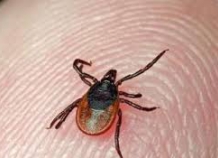
On the night of 14 to 15 August, a man died of the Crimean-Congo hemorrhagic fever (CCHF) in the Qorghanteppa provincial hospital.
According to the Deputy Minister of Health and the Head Sanitary Doctor of the country, Navrouz Jaffarov, the man was brought very late to the hospital with the virus, which caused by tick bites. The man was hospitalized for eight days.
Dr. Jaffarov said: “Unfortunately, he came to the hospital very late. He was bitten by a tick on 26 July, but came to the hospital on 6 August. The disease is characterized by fever, severe intoxication, and hemorrhages in the skin and internal organs. Since the disease develops very fast, the man came to the hospital in a very bad condition. The incubation period of the disease is one to fourteen days – mostly 2-9 days.”
Meanwhile, a letter arrived to Asia-Plus from a resident of Qoghanteppa, who reported about this and said: “The man died of a disease transmitted by air within one or two hours. They say that currently all doctors, who had contact with the patient are quarantined.”
However, Navrouz Jaffarov is certain that there is no need to panic, because the Crimean-Congo hemorrhagic fever virus does not transmitted through the air. The Head Sanitary Doctor said: “The disease is only transmitted through direct contact with the blood of the patient. Therefore, all the doctors and nurses, who were trying to save the life of the late patient, will be under special supervision for ten days.”
He also added that usually the virus, which usually is transmitted to humans by tick bites, is mostly present in the southern parts of the country, and among those, who are engaged in agricultural work.
According to Dr. Jaffarov, annually there are approximately 15 cases of the virus registered in Tajikistan.
He noted that doctors recommend that to prevent a bite by infected ticks, farmers tightly cover their bodies, including hands and legs during farming works, and “in case of a bite to immediately contact a doctor,” says Dr. Jaffarov.