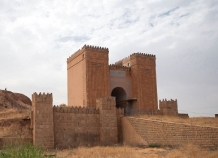
DUSHANBE, April 13, 2016, Asia-Plus – The Islamic State of Iraq and Syria (ISIS) terrorist group has destroyed a 2,000-year-old ancient structure near the Iraqi city of Mosul.
The Independent
reports the Mashqi Gate, also known as the Gate of God, was one of a number of grand gates which guarded the ancient Assyrian city of Nineveh.
Referenced in the Bible, Nineveh dates to the 7th century BC and was once the largest city in the world.
The act is the latest incident in a campaign of cultural vandalism ISIS has undertaken in territory it controls.
A source at the British Institute for the Study of Iraq confirmed to
The Independent
that the gate had been attacked.
The Antiquities Department in Baghdad had not denied the attack, according to the source, who also said there were unconfirmed reports the group was dismantling part of the Walls of Nineveh and selling the stone blocks.
Activists in Mosul told Kurdish news outlet
ARA News
the ISIS militants had used military equipment to destroy the gate.
The destruction of the Mashqi Gate is the latest in a series of historical artifacts to be destroyed in Isis-held territory by the militant group, who view many relics predating Islam as sacrilegious.
It is not the first time Mosul’s heritage has suffered under ISIS.
In February 2015, the group released propaganda footage of militants vandalizing Mosul”s museum. It showed ancient statues being destroyed, including a winged-bull Assyrian protective deity which dated back to the 7th-century BC.
Around the same time, Mosul”s library was also ransacked by ISIS, who burned more than 100,000 old books and manuscripts, some of which were recognized as historical rarities by UNESCO.
Outside of destroying historical artifacts, ISIS had turned on science, transforming laboratories in the University of Mosul into bomb-making factories.
The university has reportedly turned out chemical weapons and suicide bombs and also served as a training ground for teaching recruits how to use the devices.
ISIS has also destroyed numerous historical mosques, churches and shrines in and around Mosul, one of the largest cities controlled by the militant group.
The campaign of cultural destruction has also wreaked havoc outside Iraq, most notably in Syria, where the ancient city of Palmyra was heavily damaged while under Isis occupation.
After Syrian government forces drove ISIS from the site, they found ancient temples blown up, statues decapitated and the museum badly damaged.
In Libya, Sufi shrines near Tripoli were damaged, and historians have expressed fears over the looting of ancient Greek and Roman artwork and antiquities.