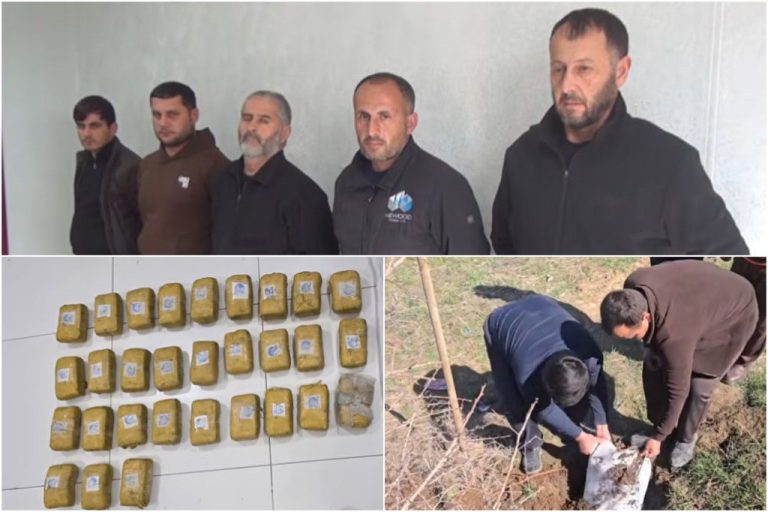
DUSHANBE, July 21, 2016, Asia-Plus – Five members of an ultraconservative Islamic Salafist movement have been jailed in Dushanbe.
According to the press service of the Prosecutor-General’s Office, a court in Dushanbe’s Ismoili Somoni district has sentenced five members of the ultraconservative Islamic Salafist movement to five years in prison each on charges of membership in an extremist organization. They will serve their terms in a high-security penal colony.
The press service of the Prosecutor-General’s Office says Manouchehr Khojayev has accepted extremist ideas of Salafism and inveigled four his associates into the Salafist movement.
They were reportedly holding their meetings in one of Dushanbe cafes.
We will recall that a court in Dushanbe has sentenced the leader of the Islamic Salafist movement in Tajikistan to eight years in prison.
As
Radio Liberty’s Tajik Service
, locally known as
Ozodi
, reported on July 19, Muhammadi Rahmatullo’s case has been shrouded in secrecy and marked as classified information, so few details are known.
Not much is known about Rahmatullo.
EurasiaNet.org
reports Rahmatullo first emerged as a self-described Salafist in the early 2000s, when the current first established itself in the country, having been brought back by Tajiks that had taken refuge in Pakistan during the civil war. In 2008, Rahmatullo claimed in an interview that his movement counted 20,000 Tajik citizens.
The movement was banned by a Supreme Court decision after a wave of mysterious blasts in Dushanbe in 2009. Rahmatullo fell out of public view around that time. During that time, it is believed he busied himself converting migrants working outside Tajikistan, particularly in the regions of Russia, and studying at the Faculty of Shariah and Law of the International Islamic University in Islamabad, Pakistan.
According to Ozodi, Rahmatullo returned to Tajikistan in 2011, but what he got up is not a matter of public record.
In January 2015, local media carried reports based on information supplied by Rahmatullo’s family that the religious leader had been detained by the authorities. Interior Minister Ramazon Rahimzoda swiftly denied those reports, however, according to EurasiaNet.org.
The Salafi movement or Salafist movement is an ultra-conservative orthodox movement within Sunni Islam that references the doctrine known as Salafism. The movement first appeared in Tajikistan in the early 2000s, having been brought back to the country by Tajiks that had taken refuge in Pakistan during the civil war.
The movement claims to follow a strict and pure form of Islam, but Tajik clerics say the Salafists’ radical stance is similar to that of the Taliban in Afghanistan.
Salafists do not recognize other branches of Islam, such as Shi”a and Sufism. The movement is frequently referred to as Wahhabism, although Salafists reject this as derogatory.
The Tajik authorities banned Salafism as an illegal group on January 8, 2009, saying the Salafist movement represents a potential threat to national security and the Supreme Court added the movement to its list of religious groups prohibited from operating in the country.
On December 8, 2014, the Supreme Court of Tajikistan formally labeled the banned Salafi group as an extremist organization. The ruling reportedly followed a request submitted to the court by the Prosecutor-General’s Office. The ruling means that the group’s website and printed materials are also banned.
The overwhelming majority of Tajiks are followers of the Hanafi madhab, a more liberal branch of Sunni Islam.